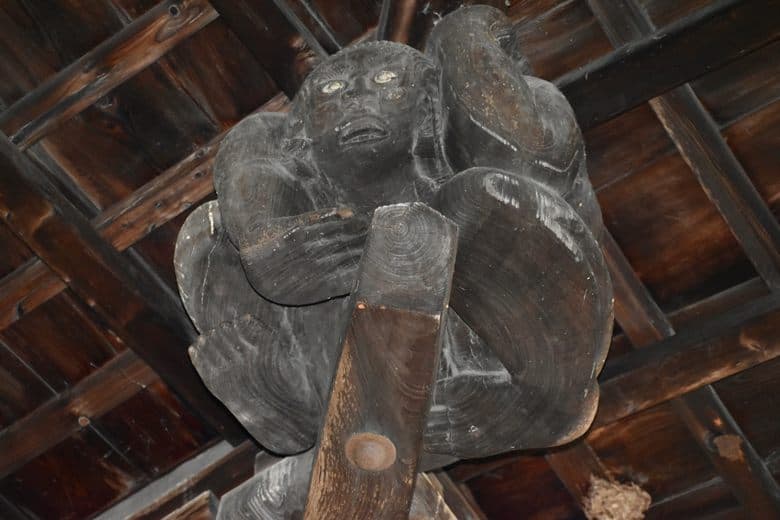
The Night-Crying Sumo Wrestlers are a fascinating, albeit niche, attraction located within Senshōji Temple, one of Yamagata City's largest temples. These four guardian statues, said to be carved by the legendary Hidari Jingorō, are notable not just for their craftsmanship but for the enduring local legends surrounding them. The most popular tale suggests they cry at night, either because they were once avid sumo wrestlers whose feet were nailed to the pillars by monks to prevent their nightly escapades, or simply from the immense weight of the temple roof they support.
Visitors consistently find the statues to be unique and interesting, appreciating the blend of art and folklore. The intricate details of the carvings, even if not immediately obvious, become more compelling once the stories behind them are known. While not a grand, sprawling attraction, the guardians offer a glimpse into local cultural narratives and the whimsical side of Japanese temple legends. There are no specific warnings from visitors, but it's important to approach this site with an appreciation for its historical and folkloric context rather than expecting a large-scale visual spectacle.
To best experience the Night-Crying Sumo Wrestlers, visitors should allocate about 30-60 minutes. This allows sufficient time to locate the statues within the temple, observe their details, and reflect on their accompanying legends. The temple itself is generally quiet, making for a peaceful visit. There is no specific best time of day mentioned in reviews, but a daytime visit during temple operating hours is recommended. As this is a temple, respectful attire is always appropriate. There are no specific items to bring, but a camera might be useful for capturing the unique statues.
Senshōji Temple is located in Yamagata City. While specific public transport routes directly to the temple are not detailed in reviews, Yamagata City is well-served by public transportation. Visitors can typically reach the city center via train and then use local buses or taxis to get to the temple. Walking from the nearest major bus stop or train station might be an option depending on its proximity, but it's advisable to check local maps or use navigation apps for the most current and precise directions.
Common complaints are not extensively documented, likely due to the niche nature of the attraction. However, some visitors might find the experience underwhelming if they arrive without prior knowledge of the folklore, expecting a more visually dramatic or interactive exhibit. To mitigate this, it is highly recommended to read up on the legends of the Night-Crying Sumo Wrestlers before your visit to fully appreciate their significance and the artistry involved.