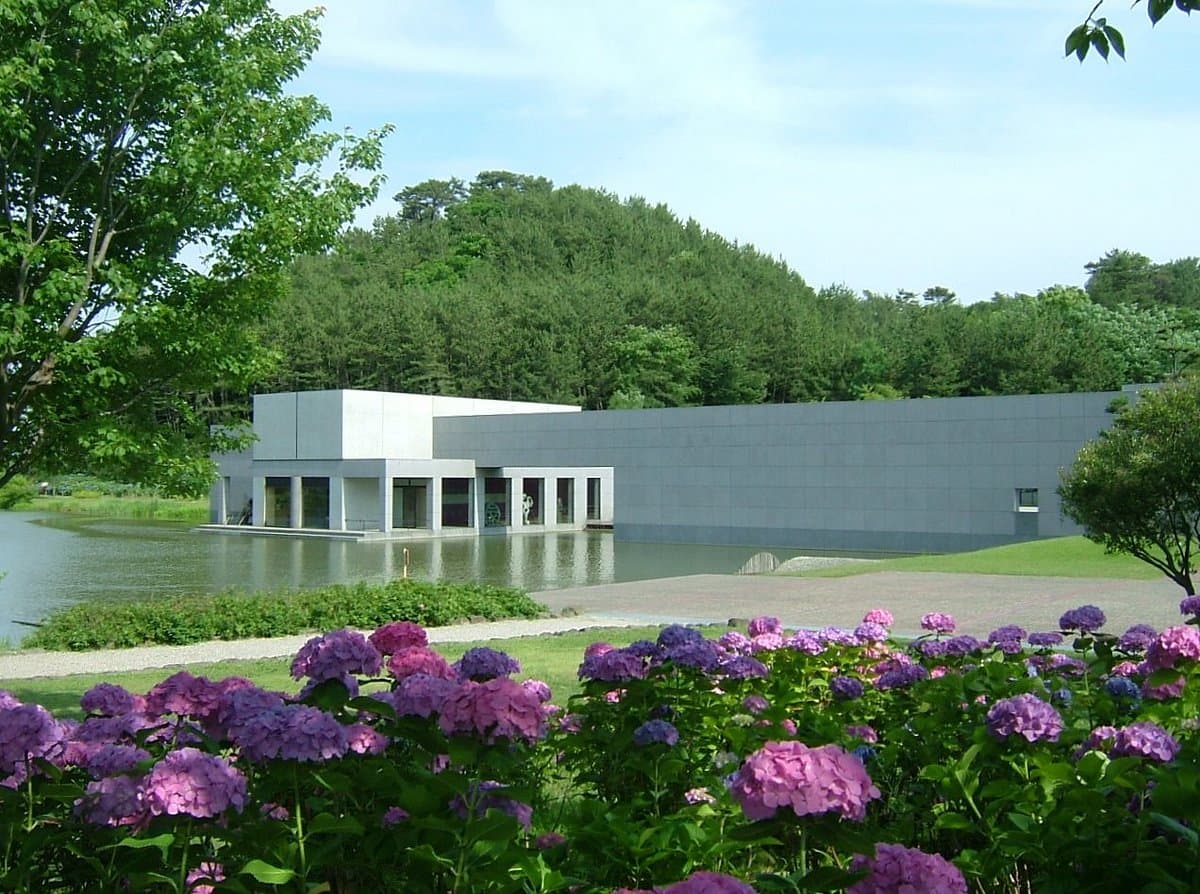
The Ken Domon Museum of Photography is Japan's first museum dedicated solely to photography, honoring the legacy of Ken Domon, a master of realism and social documentary photography. It houses a vast collection of his works, including iconic series on Buddhist statues, children, and the post-war Showa period. The museum itself is an architectural marvel, designed by Yoshio Taniguchi, and is seamlessly integrated into its natural surroundings, offering a contemplative space for appreciating art.
Visitors frequently highlight the museum's beautiful architecture and its harmonious integration with the surrounding landscape, including a pond and views of Mount Chokai. Many find the exhibits deeply moving, with Domon's photographs, particularly those of children and Buddhist statues, leaving a lasting impression. Reviewers often describe the experience as inspiring and thought-provoking, appreciating the unique perspectives captured by the photographer. The display of old cameras also adds an interesting dimension for photography enthusiasts.
To make the most of your visit, allocate at least 2-3 hours to fully explore the exhibits and enjoy the serene environment. Several visitors recommend taking the time to walk around the gardens and appreciate the building's design. While the admission fee of 900 yen is mentioned by some as slightly high, the overall consensus is that the experience is well worth the cost. Consider visiting during daylight hours to fully appreciate the natural light within the museum and the outdoor scenery. There is no café on site, so plan accordingly if you wish to have refreshments.
The museum is located somewhat far from Sakata Station. The most common way to reach it is by community bus, which takes approximately 30 minutes from the station. Some visitors have rented bicycles from the station to reach the museum, enjoying the scenic ride. Driving is also an option, and the location is generally considered good for those with their own transport. Be prepared for a journey to get there, as it's not within easy walking distance of the main train station.
A common point raised by visitors is the museum's somewhat remote location, making it less accessible for those without a car or who are unfamiliar with local bus routes. To mitigate this, research bus schedules in advance or consider renting a bicycle if you enjoy cycling. While the lack of a café is a minor complaint, it can be easily addressed by bringing your own snacks or planning to eat before or after your visit.