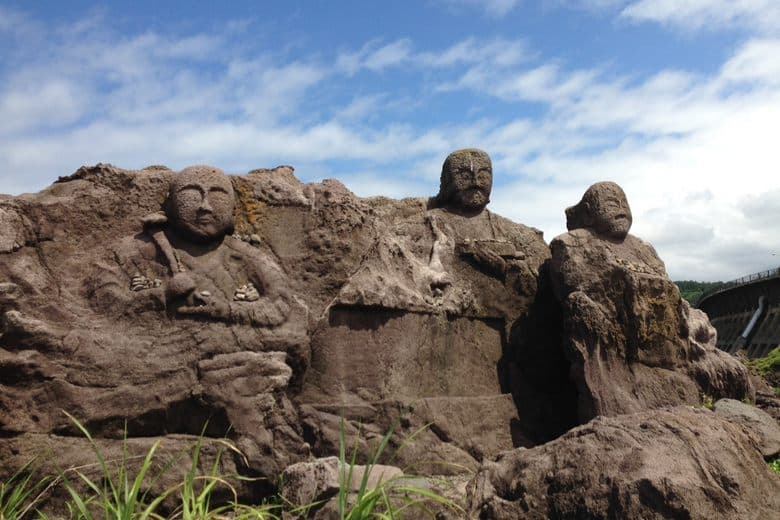
Jūroku Rakan Iwa, meaning "16 Rakan Rocks" despite featuring 22 figures, is a significant cultural site where Buddhist statues are carved directly into volcanic rocks on the seashore. These carvings, created by the Zen Buddhist priest Ishikawa Kankai between 1864 and 1868, serve as a memorial to fishermen lost at sea, acting as silent guardians overlooking the ocean.
Visitors consistently praise the unique and serene atmosphere of the site, highlighting the impressive craftsmanship of the carvings against the backdrop of the sea. The blend of natural beauty and historical artistry is a recurring theme in positive feedback. Some reviewers appreciate the sense of peace and reflection the location offers, especially during quieter times. However, some visitors note that the site is relatively small and might not occupy a significant amount of time, suggesting it's best combined with other local attractions.
To make the most of a visit, it's recommended to allocate about an hour to fully appreciate the carvings and the coastal scenery. Bringing a camera is advisable, as the views can be quite picturesque. The best time to visit is during daylight hours, particularly on a clear day, to fully experience the details of the carvings and the ocean vista. There is an annual illumination ceremony in late July, which offers a different perspective of the statues.
The site is conveniently located just a few minutes' walk from Fukura Station. Public transport is a viable option, making it accessible even without a car. For those driving, parking availability should be checked in advance, though the proximity to the train station suggests good public access. The walk from the station is generally easy and suitable for most visitors.
A common complaint, if any, is the relatively short duration needed to explore the site, which might lead some to feel it's not a standalone destination. To mitigate this, consider combining your visit with other nearby attractions in the Yuza or wider Yamagata region, such as local seafood restaurants or other scenic spots along the coast.