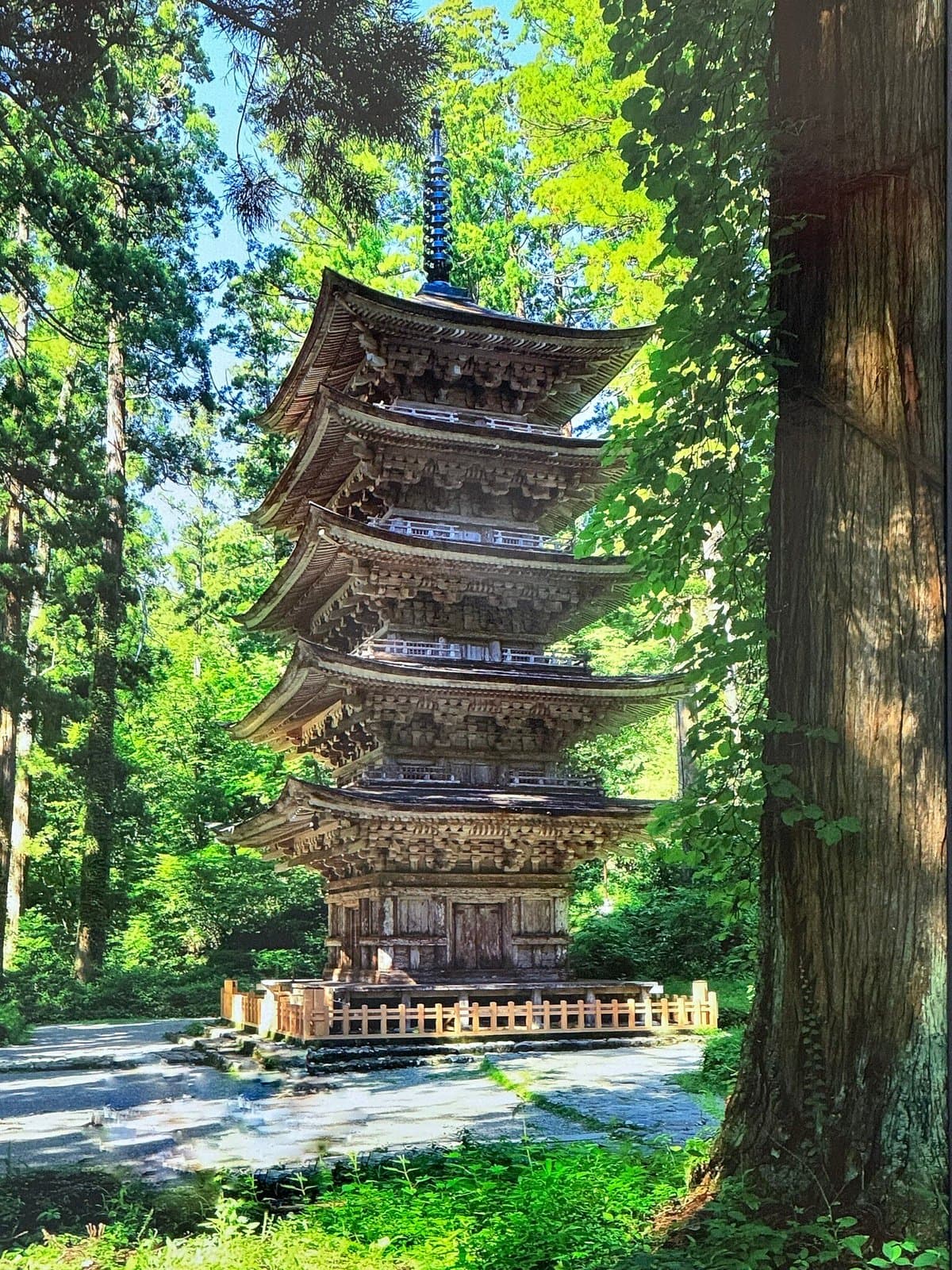
The Hagurosan Five-Story Pagoda is a designated National Treasure of Japan, standing as a testament to ancient Japanese carpentry and spiritual devotion. Believed to have been founded by Taira no Masakado and rebuilt approximately 600 years ago, this 29-meter-tall pagoda is the oldest in the Tohoku region. Its significance lies not only in its age and architectural ingenuity—reportedly built without nails—but also in its harmonious integration with the sacred natural landscape of Mount Haguro, a key site of the Shugendo mountain ascetic tradition.
Visitors consistently highlight the pagoda's striking appearance, especially when viewed through the towering cedar trees that envelop it. Many describe the experience as 'magical' or 'sublime,' noting the peaceful and almost hidden quality of the site. The craftsmanship, particularly the internal structure visible during special openings or restoration work, often draws admiration. The surrounding natural environment, including the 'Grandpa Cedar Tree' (Jiji-sugi) and the sounds of frogs and waterfalls, significantly enhances the spiritual and aesthetic appeal of the visit. Reviewers frequently mention the pagoda's beauty in various seasons, from lush summer foliage to snow-covered winter scenes.
To make the most of your visit, allocate approximately 1-2 hours, which allows for a leisurely walk to and from the pagoda and time to appreciate its details and surroundings. Comfortable, sturdy footwear is highly recommended, as the path involves stone steps that can be slippery, especially in wet or snowy conditions. While the pagoda is beautiful year-round, visiting during autumn offers vibrant fall colors, and winter provides a unique, quiet, and often less crowded experience, though access might be more challenging due to snow and ice. If you are interested in collecting Goshuin (temple stamps), you can often apply for them at the entrance and pick them up after your visit to save time.
The pagoda is located on Mount Haguro, accessible from the Zuishinmon Gate, which serves as the main entrance to the pilgrimage trail. From the gate, it's about a 10-15 minute walk (approximately 300 meters) down a path through the cedar forest. While the full ascent to the main shrine of Mt. Haguro involves 2,446 stone steps, the pagoda is situated relatively early on the trail, requiring a much shorter walk of about 260 steps down to it and back up. Public transport options to the Zuishinmon Gate typically involve buses from Tsuruoka Station. Driving to the area is also an option, with parking usually available near the gate.
A common complaint among recent visitors has been the presence of scaffolding and curtains due to ongoing restoration work, which can obscure the pagoda's full view. While restoration is essential for preservation, it's advisable to check the official website or local tourist information for current conditions before your visit, especially if seeing the pagoda unobstructed is a priority. Some visitors also note that the pagoda itself, while impressive, might be considered 'nothing special' without appreciating its historical context and natural setting; understanding its significance beforehand can enhance the experience.