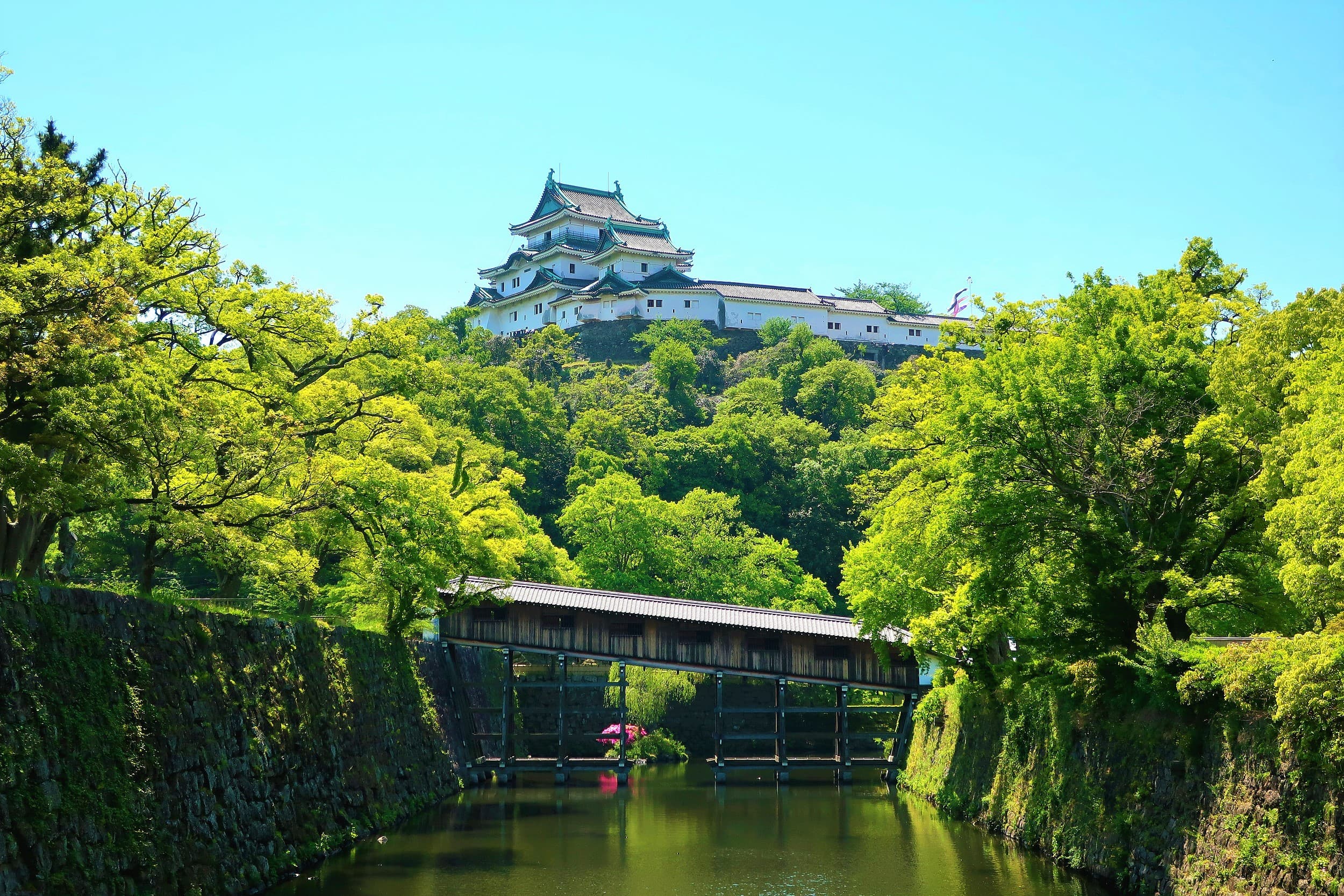
Momijidani Garden, also known as Nishinomaru-Teien Garden, is a traditional Japanese garden located within the grounds of Wakayama Castle. Established by Tokugawa Yorinobu, the first lord of the Kishu Tokugawa clan, as a retirement retreat, it is celebrated for its meticulously designed landscape that creates an illusion of greater space than its actual size. Its name, meaning "Garden of the Valley of Maple Leaves," highlights its particular beauty during the autumn season when the maple trees display their vibrant colors.
Visitors frequently commend the garden for its tranquil ambiance and picturesque scenery. Many reviewers highlight the autumn foliage as a major draw, suggesting that late November or early December is the ideal time for viewing the red leaves. Despite its small footprint, the garden is noted for its intricate design, featuring a pond, a covered bridge, stone lanterns, and a traditional tea house. Reviewers often describe it as a "hidden gem" or the "highlight of the castle grounds," appreciating the quiet solitude it offers compared to the busier areas of the castle park.
To make the most of your visit, allocate about 30 minutes to an hour to leisurely explore the garden. While a matcha and cake experience is available at the pavilion, some visitors find it not entirely worth the cost. The garden's paths are often stone-paved and can be slippery when wet, so comfortable, non-slip footwear is advisable, especially on rainy days. Due to the narrow and sometimes uneven paths, visitors with large luggage might find it more comfortable to store their bags in a coin locker before entering. The garden is generally quiet, making it an ideal spot for those seeking relaxation and introspection.
Momijidani Garden is conveniently located within the Wakayama Castle compound, near the castle's back exit. Wakayama Castle is accessible via public transport; the nearest train station is Wakayama Station. From there, local buses can take you closer to the castle grounds. The garden is easily reachable on foot once you are within the castle park. Signage within the castle grounds may refer to it as "Nishinomaru Teien," so be aware of both names.
A common point of confusion for visitors is the signage regarding admission fees. While some signs might suggest a fee, numerous reviewers confirm that admission to Momijidani Garden is free. It is advisable to confirm this upon arrival, but generally, visitors can enter without charge. The garden's compact size means it can feel crowded during peak autumn viewing times, so consider visiting earlier in the morning or later in the afternoon for a more peaceful experience.