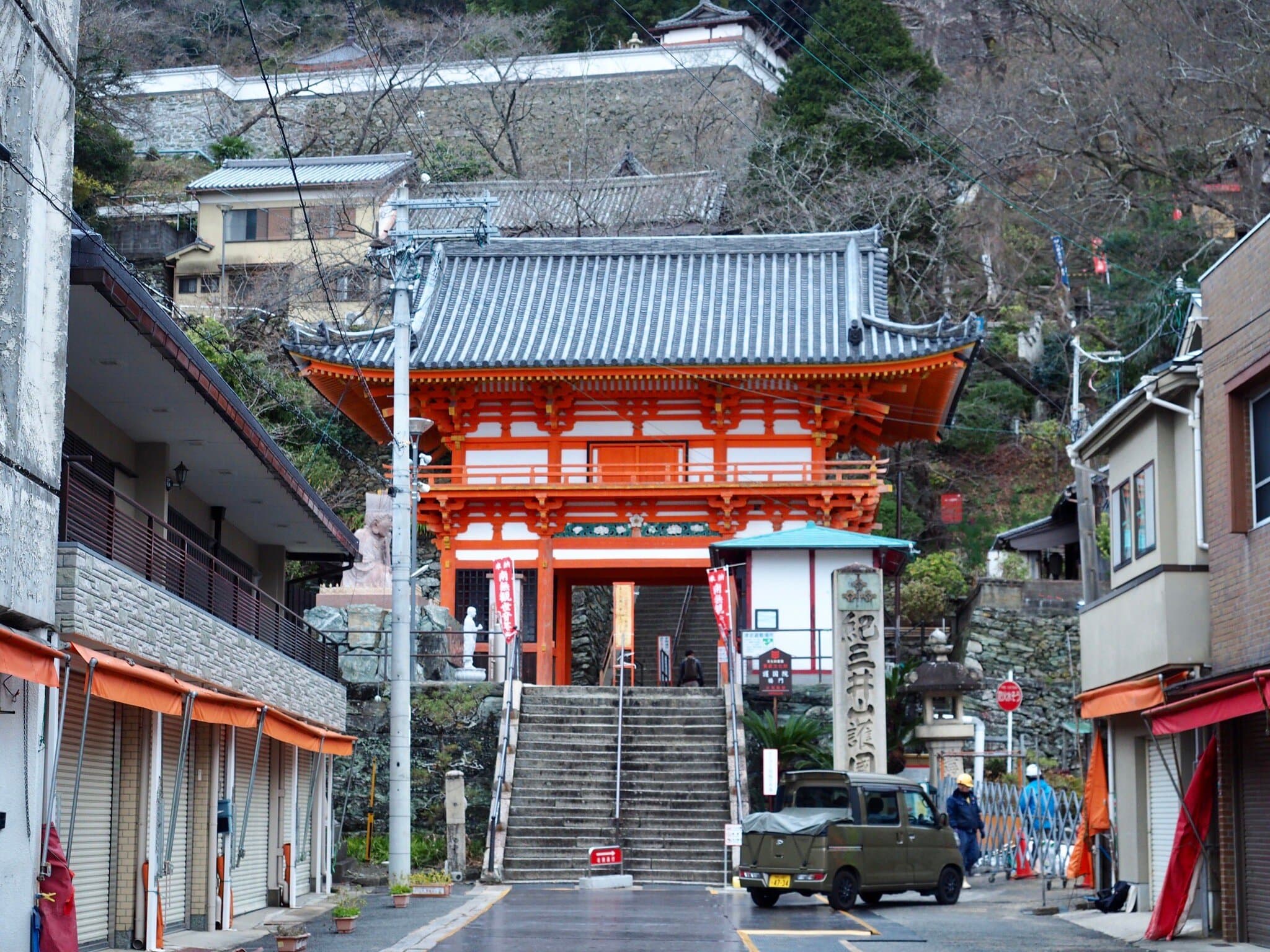
Kimii-dera, officially known as Kimii-dera Gokokuin, is a historic Buddhist temple founded in 770 AD. It is the second temple on the Saigoku Kannon Pilgrimage, one of Japan's oldest pilgrimage routes, and is particularly famous for its early-blooming cherry blossoms. The temple's name, meaning "temple with three wells in Kishu," refers to three ancient wells within its grounds that still provide clean water, recognized as one of Japan's top 100 famous waters.
Visitors consistently praise the temple for its breathtaking panoramic views of Wakayama City and Utamara Bay, which are accessible from various points on the mountainside. Many reviewers highlight the beauty of the approximately 1,200 cherry trees, making it a highly recommended destination during the spring cherry blossom season. The temple's serene atmosphere, even when busy, is frequently mentioned, with some noting its quiet charm when not in peak season. The presence of the largest Kannon statue in Wakayama is also a point of interest for those who appreciate Buddhist art.
To make the most of a visit, plan to spend about 1 to 3 hours exploring the grounds. While the temple is located on a mountainside, a cable car is available for a round trip, costing 400 yen, which can save visitors from a steep climb. An additional 100 yen allows access to climb a tower for even more expansive views, which many reviewers found worthwhile. The best time to visit is undoubtedly during early spring for the cherry blossoms, but the views and historical buildings are enjoyable year-round. New Year's is also a popular time, with many Japanese visitors coming to worship.
Kimii-dera is conveniently accessible by public transport. Many visitors mention taking the JR line, indicating its proximity to a JR station. From the JR station, it is generally considered convenient to reach the temple. For those who prefer not to walk the entire way up the mountain, the cable car provides an easy alternative. The address is 1201 Kimiidera, Wakayama, 641-0012, Japan.
While most reviews are positive, some visitors noted difficulty in finding the famous "three wells" despite the temple's name. It is advisable to look for signs or ask staff if locating these specific features is a priority. The entrance fee is 400 yen, which is generally considered reasonable for the experience offered.
