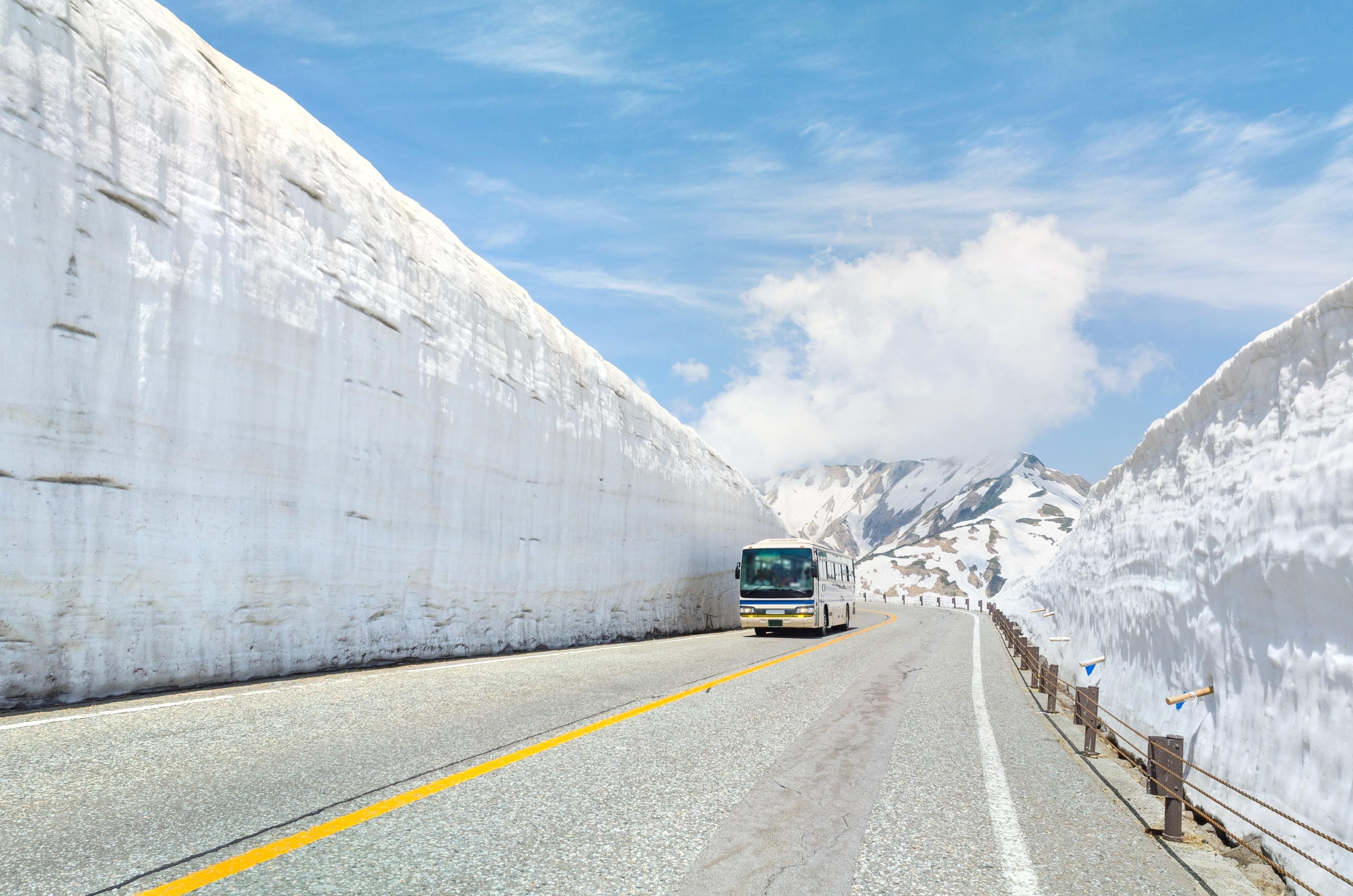
The Tateyama Kurobe Alpine Route, often referred to as the 'Roof of Japan,' is a unique mountain sightseeing route traversing the Northern Japan Alps. It connects Toyama Prefecture with Nagano Prefecture and is renowned for its stunning natural beauty, particularly the towering snow walls (Yuki-no-Otani) that form in spring. This route is not merely a scenic drive but an immersive experience, showcasing Japan's spiritual mountains and engineering marvels like the Kurobe Dam.
Visitors consistently praise the breathtaking scenery, describing it as 'absolutely breathtaking' and 'magnificent.' The highlight for many is the snow wall walk, available from mid-April to mid-to-late June, which reviewers find 'shocking' and 'a unique wonder.' Beyond the snow walls, the route offers diverse landscapes, from autumn leaves around Kurobe Dam to the vastness of the mountain ranges, making it a 'very different experience of traveling in Japan.' The journey itself, involving six different modes of transport—including cable cars, trolley buses, and ropeways—is a significant part of the appeal, with many finding the transitions and views from each vehicle 'unforgettable' and 'exciting.'
To make the most of your visit, plan for a full day, as the journey can take 'nearly six hours' or even '1-2 days' if you choose to stay overnight. Reviewers suggest arriving early, especially if visiting during peak snow wall season, to avoid crowds and ensure smooth transfers. Dress warmly, even in late spring, as it can be 'very cold' and 'snow is everywhere' at higher altitudes. Sunscreen and sunglasses are also recommended due to strong ultraviolet rays at 2,390 meters above sea level. While the route is generally well-organized, some visitors note that it can be physically tiring, especially if navigating in rain or snow. Consider purchasing a regional pass like the Tateyama Kurobe, Takayama, and Matsumoto Area Pass, as the entrance fee, including all transport, can be substantial (around 12,950 yen).
The Alpine Route can be accessed from either Tateyama Station in Toyama Prefecture or Ogizawa Station in Nagano Prefecture. From Tokyo, visitors can take the Shinkansen to Toyama, then a local train to Tateyama Station. Alternatively, for the Nagano side, take the Shinkansen to Nagano Station, then a bus to Ogizawa. Reviewers mention that transportation is not overly complicated, especially with dedicated passes. The journey involves multiple transfers between different vehicles, which are clearly signposted. Driving to the foot of the mountain is an option, but many recommend using public transport due to the linear nature of the route and the convenience of the passes.
A common complaint is the potential for crowds, especially during the snow wall season and autumn foliage. To mitigate this, consider visiting on weekdays or outside of major Japanese holidays. Some reviewers also mention that the weather can be unpredictable, with heavy snow or rain impacting visibility and comfort. Checking the weather forecast beforehand is advisable. While the snow wall might be 'a bit short' in some years, visitors still find it impressive. The cost is also a factor for some, but the consensus is that the experience is 'worth it' despite the price.