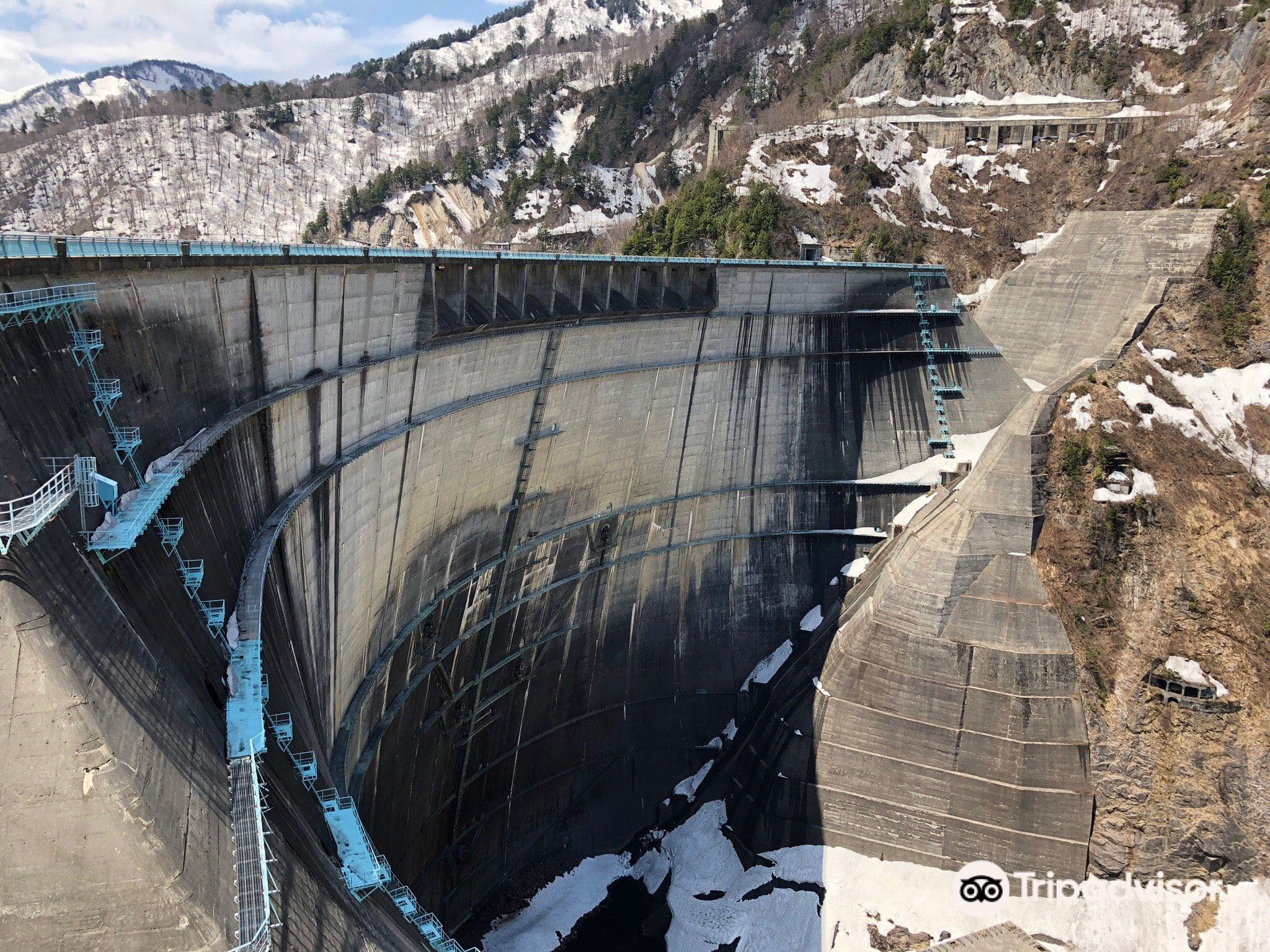
The Kurobe Dam, Japan's tallest at 186 meters, is a monumental arch dam completed in 1963 after immense engineering challenges and significant human effort. It stands as a testament to post-war Japanese ingenuity and dedication, nestled dramatically within the rugged Japanese Alps. Beyond its functional role in hydroelectric power, the dam has become a major tourist attraction, particularly as a key stop on the renowned Tateyama Kurobe Alpine Route.
Visitors consistently praise the dam's sheer scale and the magnificent mountain scenery that surrounds it. Many describe the experience as 'breathtaking' and 'awe-inspiring,' often highlighting the spectacular tourist water discharge (from late June to mid-October) which creates rainbows. The engineering achievement itself is a recurring theme, with many reviewers expressing admiration for the human effort involved in its construction. The opportunity to walk across the dam and take a sightseeing boat on the reservoir are also frequently mentioned as enjoyable activities. Reviewers often recommend visiting during autumn for the vibrant fall foliage, or in spring when snow still caps the surrounding peaks, offering a dramatic contrast.
To make the most of your visit, plan to spend at least 1.5 to 2 hours exploring the dam area, including walking across the dam, visiting the observation decks, and perhaps enjoying a meal at one of the rest houses. Many visitors recommend climbing the 220-280 steps to the observation decks for the best panoramic views; however, those with mobility issues or who are already fatigued from other parts of the Alpine Route should be aware of the physical exertion required. Dress in layers, as the altitude (1,500 meters) means it can be windy and cold, even in summer. Reviewers frequently suggest checking the weather forecast, as rain or fog can obscure the views. Don't miss trying the local specialty, Kurobe Dam Curry, which is often mentioned as a fun and tasty experience.
Kurobe Dam is an integral part of the Tateyama Kurobe Alpine Route. Access is primarily via electric bus from Ogisawa Station (approximately 16 minutes, 3,200 yen round trip) or via cable car and ropeway from the Tateyama side of the route. If driving, parking is available at Ogisawa Station, with some free options further away from the main entrance. The dam itself is a walk from the bus/cable car stations, and visitors should be prepared for significant walking and stair climbing, especially to reach the various observation points. The entire Alpine Route involves multiple modes of transport, so managing time between connections is crucial.
A common complaint among visitors is the potential for crowds, especially during peak season (late June to mid-October for water discharge, and autumn for fall foliage). To mitigate this, consider visiting early in the morning or later in the afternoon. Some reviewers also note that the views are less impressive outside the water discharge season or on foggy/rainy days. Checking the dam's official website for water discharge schedules and weather conditions before your visit is highly recommended to ensure the best experience.