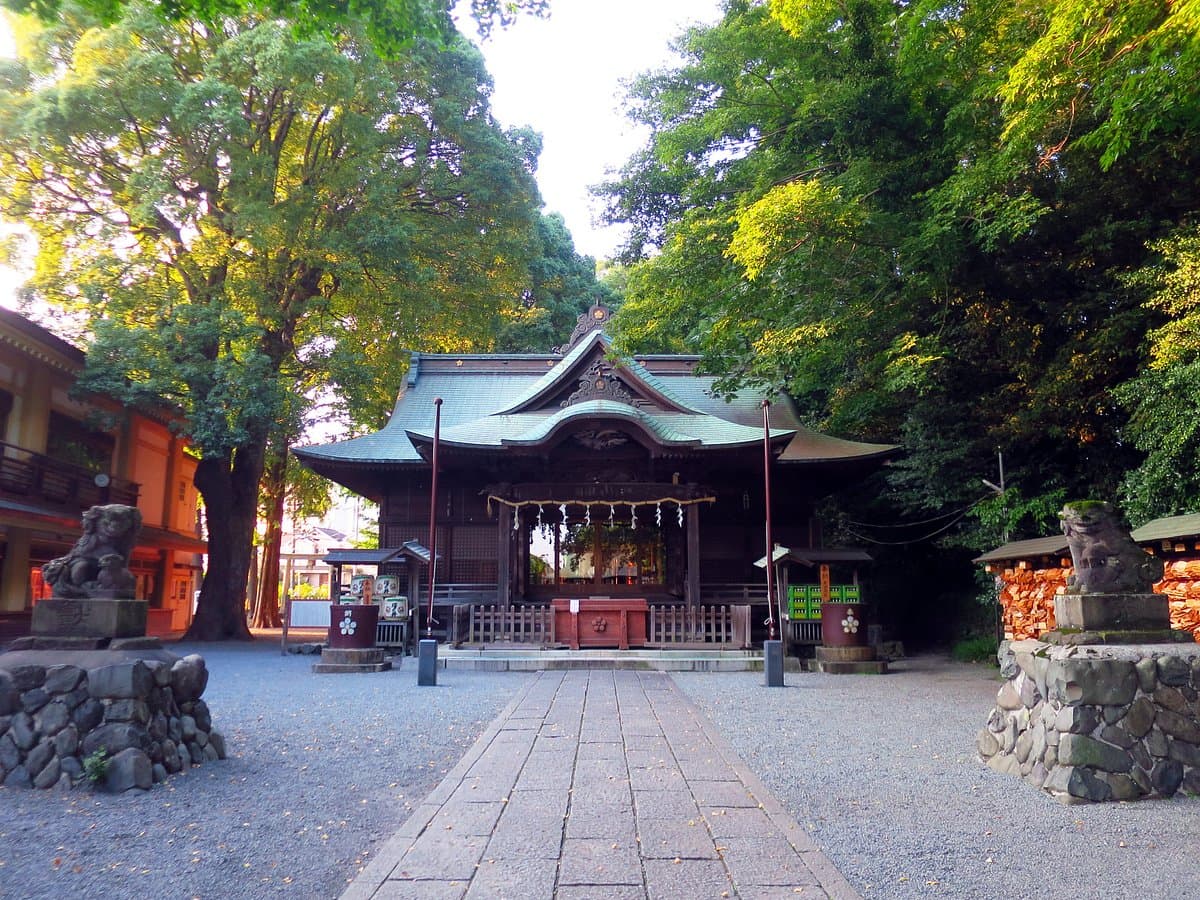
Yabo Tenmangu is one of the oldest Tenmangu shrines in Eastern Japan, dedicated to Sugawara no Michitake, the third son of the revered scholar Sugawara no Michizane. It holds historical significance as one of the Kanto San Tenjin (Three Great Tenjin Shrines of Kanto), alongside Yushima Tenjin and Kameido Tenjin. Unlike its more central counterparts, Yabo Tenmangu offers a serene escape, preserving a quiet atmosphere that reflects its ancient origins.
Visitors consistently praise the shrine's peaceful ambiance, noting that even on holidays, it remains relatively uncrowded. The path from the torii gate to the main hall is shaded by trees, creating a refreshing environment with the pleasant sound of wind rustling through leaves. A unique charm mentioned by several reviewers is the presence of free-roaming chickens within the shrine grounds, whose calls occasionally echo through the area. The plum garden, though not vast, is a highlight in late February when the blossoms are in full bloom, offering a beautiful, albeit brief, spectacle.
To make the most of a visit, consider going in late February to witness the plum blossoms. The shrine is best experienced during quiet hours, perhaps in the morning or late afternoon, to fully appreciate its tranquility. There are no specific items to bring, but comfortable walking shoes are advisable. A visit typically lasts about 20-30 minutes if only exploring the main grounds and plum garden. While the shrine hosts an annual big festival with lion dancing and lantern processions, this is an exception to its usual quietude and would involve large crowds.
Yabo Tenmangu is located in a residential area, quite a distance from central Tokyo. Public transport is the most practical way to reach it. The nearest station is Yaho Station on the JR Nambu Line. From Yaho Station, the shrine is approximately a 10-15 minute walk. While driving is possible, parking can be limited in residential areas, so public transport is generally recommended for ease of access.
The primary 'complaint' or observation from visitors is its remote location, making it less convenient for tourists focused on central Tokyo attractions. To mitigate this, combine a visit to Yabo Tenmangu with other activities in the Kunitachi or Tachikawa areas, rather than making a dedicated long trip solely for the shrine.