The Waseda El Dorado building, also known as Rhythms of Vision, stands out as a remarkable architectural anomaly in Tokyo's Waseda university district. Designed by Von Jour Caux, often dubbed the "Gaudí of Japan," this 1983 structure is a testament to his philosophy of countering modernist uniformity with inspiring living spaces. Its exterior is a canvas of intricate, almost surreal decorations, featuring elements like a tattooed female torso and marble faces emerging from the walls, all blending Art Nouveau with Edo-period aesthetics.
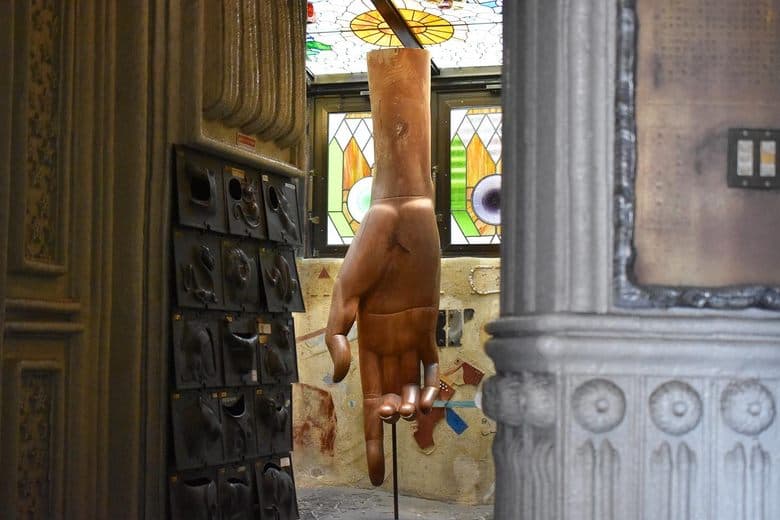
Visitors consistently praise the building's unique and imaginative design, highlighting its distinctiveness from typical Tokyo architecture. Many are captivated by the detailed artistry visible even from the street. The ground floor, which houses an art gallery, an antique shop, and a beauty salon, offers a more immersive experience. Here, guests can encounter a mosaic recreation of the Gorgoneion, abstract murals, and colorful stained-glass windows, creating an atmosphere reminiscent of a Gothic cathedral. The enigmatic sculpture of a hand pointing downwards in the lobby often sparks curiosity.
For a fulfilling visit, allocate about 30-60 minutes to appreciate the exterior details and explore the ground-floor establishments. The best time to visit is during daylight hours to fully appreciate the intricate designs and stained glass. While the upper floors are private residences and not accessible to the public, the ground floor and exterior provide ample visual interest. There's no entry fee for viewing the exterior or browsing the shops, making it an accessible cultural stop.
The El Dorado building is conveniently located about a 5-minute walk from Waseda Station. Visitors can reach Waseda Station via the Tokyo Metro Tozai Line. Upon exiting the station, head towards Sodai-dori Street, where the building is prominently situated. Its distinctive appearance makes it easy to spot. Public transport is the most recommended way to access this area of Tokyo.
A common point of clarification for visitors is the limited public access; only the ground floor is open, and the upper floors are private residences. This can sometimes lead to disappointment for those expecting a fully explorable museum-like experience. However, managing expectations by focusing on the exterior and ground-floor art and shops can ensure a positive visit.