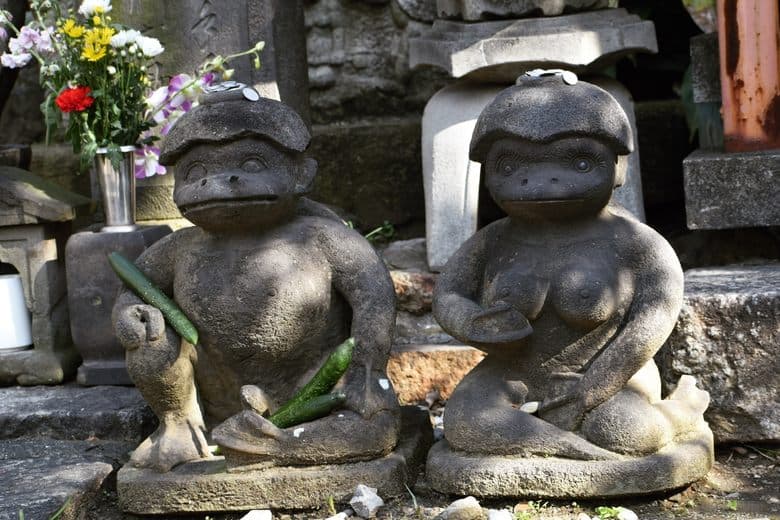
Sōgenji Temple, more famously known as Kappa-Dera, holds a unique place in Tokyo's cultural landscape as a shrine dedicated to the kappa, mythical bipedal, turtle-like aquatic goblins from Japanese folklore. This 17th-century temple became associated with kappa after Kappaya Kihachi, a local merchant who funded a canal project (reportedly with the help of kappa), was buried here. It serves as a fascinating, if somewhat unusual, repository of local legends and cryptozoological curiosities.
Visitors consistently highlight the temple's quirky charm and its deep connection to the kappa myth. The altar, often adorned with offerings of cucumbers (said to be kappa's favorite food), and the display of antique scroll-drawings depicting these creatures are frequently mentioned as points of interest. The most talked-about exhibit is undoubtedly the purported mummified arm of a kappa, which many find both intriguing and a little unsettling. Reviewers appreciate the temple's role in preserving a lesser-known aspect of Japanese folklore, offering a distinct contrast to more conventional religious sites.
To make the most of your visit, allocate about 30-60 minutes. The temple itself is relatively small, but the surrounding Kappabashi district, with its numerous kappa statues outside shops, is worth exploring for its unique atmosphere. There is no entry fee, making it an accessible cultural stop. Consider visiting during daylight hours to fully appreciate the details and the surrounding neighborhood. While there are no specific items to bring, an open mind and an interest in the unusual will enhance the experience.
The temple is conveniently located just west of the Asakusa district. For public transport, it's a 15-minute walk from Ueno JR station, which is served by the Yamanote and Keihin-Tohoku lines. Alternatively, it's a 10-minute walk from Iriya Station (Hibiya line) and Inaricho Station (Ginza line) on the Tokyo Metro. The Asakusa station of the Tsukuba Express line is also a 7-minute walk away. If you prefer a taxi, it's about a five-minute ride from the Asakusa district.
Common complaints are rare, but some visitors might find the temple smaller or less grand than expected, given its unique reputation. Managing this by setting appropriate expectations for a niche, folklore-focused site rather than a major religious complex can help. The focus here is on the legend and its artifacts, not architectural grandeur.