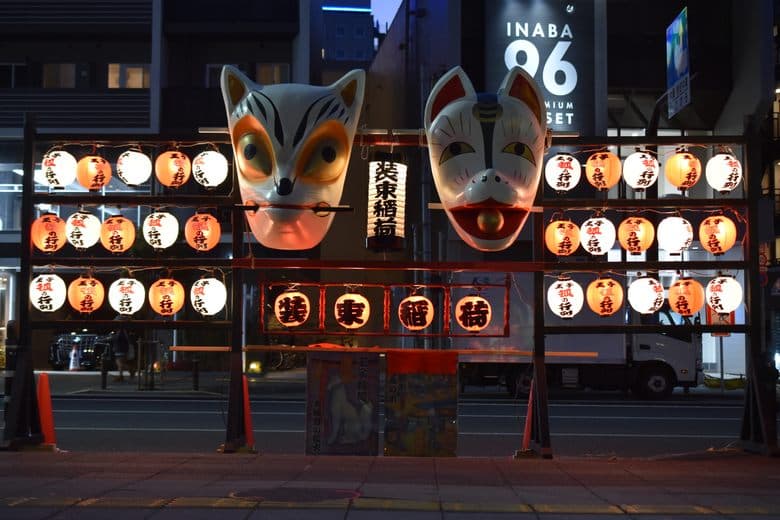
Shōzoku Inari-jinja Shrine is a modest yet culturally rich site in Tokyo's Ōji district, established to honor the legendary 'Garment Hackberry' tree. This tree was once the mythical gathering point for foxes from across the Kantō region on New Year's Eve, who would then parade to Ōji Inari Shrine. This enchanting folklore, immortalized by ukiyo-e artist Utagawa Hiroshige, forms the core identity of this shrine, even though the original tree was cut down in 1929.
Visitors consistently praise the shrine's unique connection to the Kitsune no Gyoretsu (Fox Parade) tradition. Many find the story fascinating and appreciate the local efforts to keep the legend alive through the annual New Year's Eve parade, where participants wear fox masks. Reviewers often highlight the charm of the nearby pottery shop, Yamawa, which is renowned for its extensive collection of fox masks, offering a tangible piece of this local heritage. The shrine itself is noted for its peaceful atmosphere, providing a quiet escape from the bustling city.
For a truly immersive experience, plan your visit around New Year's Eve to witness the Kitsune no Gyoretsu parade, which starts at this shrine at midnight. During other times of the year, a visit of 30-60 minutes is sufficient to appreciate the shrine and its surroundings. Consider visiting the Yamawa pottery shop to browse or purchase a fox mask as a unique souvenir. There are no specific items to bring, but comfortable shoes are always advisable for exploring Tokyo.
The shrine is easily accessible by public transport. It is located within walking distance of Ōji Station, which is served by the JR Keihin-Tohoku Line, the Tokyo Metro Namboku Line, and the Toden Arakawa Line (tram). From Ōji Station, it's a short and pleasant walk through the neighborhood. Driving is generally not recommended in central Tokyo due to traffic and limited parking, and public transport is highly efficient.
Common complaints are few, mainly stemming from the shrine's small size and the fact that the original legendary tree no longer stands. Visitors expecting a grand, sprawling complex might be underwhelmed. To mitigate this, approach the visit with an appreciation for its historical and folkloric significance rather than its physical grandeur. The true highlight is the story it tells and the cultural event it hosts.
