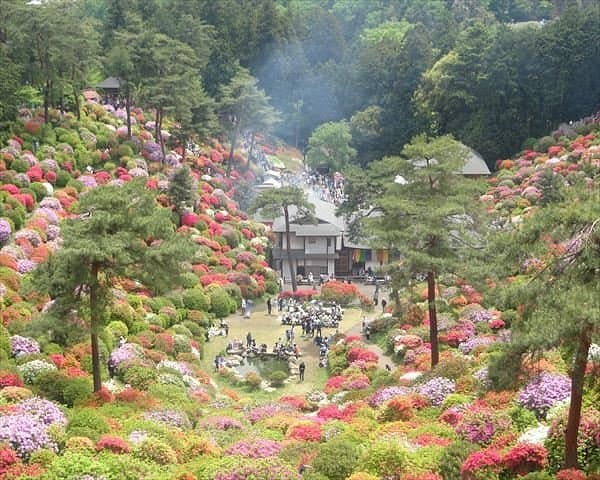
Shiofune Kannon Temple, with a history dating back to the mid-7th century, is a significant Buddhist temple in Ome, Tokyo. It is particularly celebrated as a "temple of flowers," drawing visitors primarily for its expansive and meticulously maintained azalea gardens. The temple's historical depth combined with its natural beauty makes it a notable cultural and scenic destination.
Visitors consistently highlight the temple's azalea festival, which typically runs from late April to early May, as its main draw. Reviewers describe the experience as a "fabulous color overload" with 17,000 azalea bushes of 15 different types creating a breathtaking spectacle. Many consider it one of Japan's best azalea gardens, even surpassing more famous ones. Beyond the flowers, the temple offers a serene atmosphere, with some visitors enjoying a "real Japanese temple experience" and the opportunity to walk through beautiful gardens leading to a dramatic shrine with great views. The presence of a giant Buddha statue and a bell also adds to the experience.
To make the most of your visit, timing is crucial. Aim for late April to early May to witness the azaleas in full bloom; even if slightly past peak, the display remains impressive. Visitors suggest allocating at least an hour, or more, to leisurely explore the park, including the bell and the Buddha. The temple is generally not overly crowded, even during peak season, which enhances the peaceful experience. There are souvenir shops and food stalls offering Japanese snacks and drinks, which can be a pleasant addition to your visit.
The temple is located at 194 Shiobune, Ome, Tokyo Prefecture. While specific public transport details are not extensively mentioned in reviews, Ome is accessible by train from central Tokyo. From Ome Station, local buses or a taxi would likely be required to reach the temple, as it is situated in a more rural part of the city. Some visitors mention a nearby hiking path, suggesting the area is conducive to walking and enjoying nature.
The primary complaint, or rather a missed opportunity, is visiting outside the azalea blooming season. While the temple still offers a "real Japanese temple experience" and the bushes change colors with the seasons, the "wow" factor of the azaleas is seasonal. To mitigate this, ensure your visit coincides with late April to early May if the azaleas are your main interest. Otherwise, be prepared for a quieter, less visually spectacular, but still historically rich temple visit.