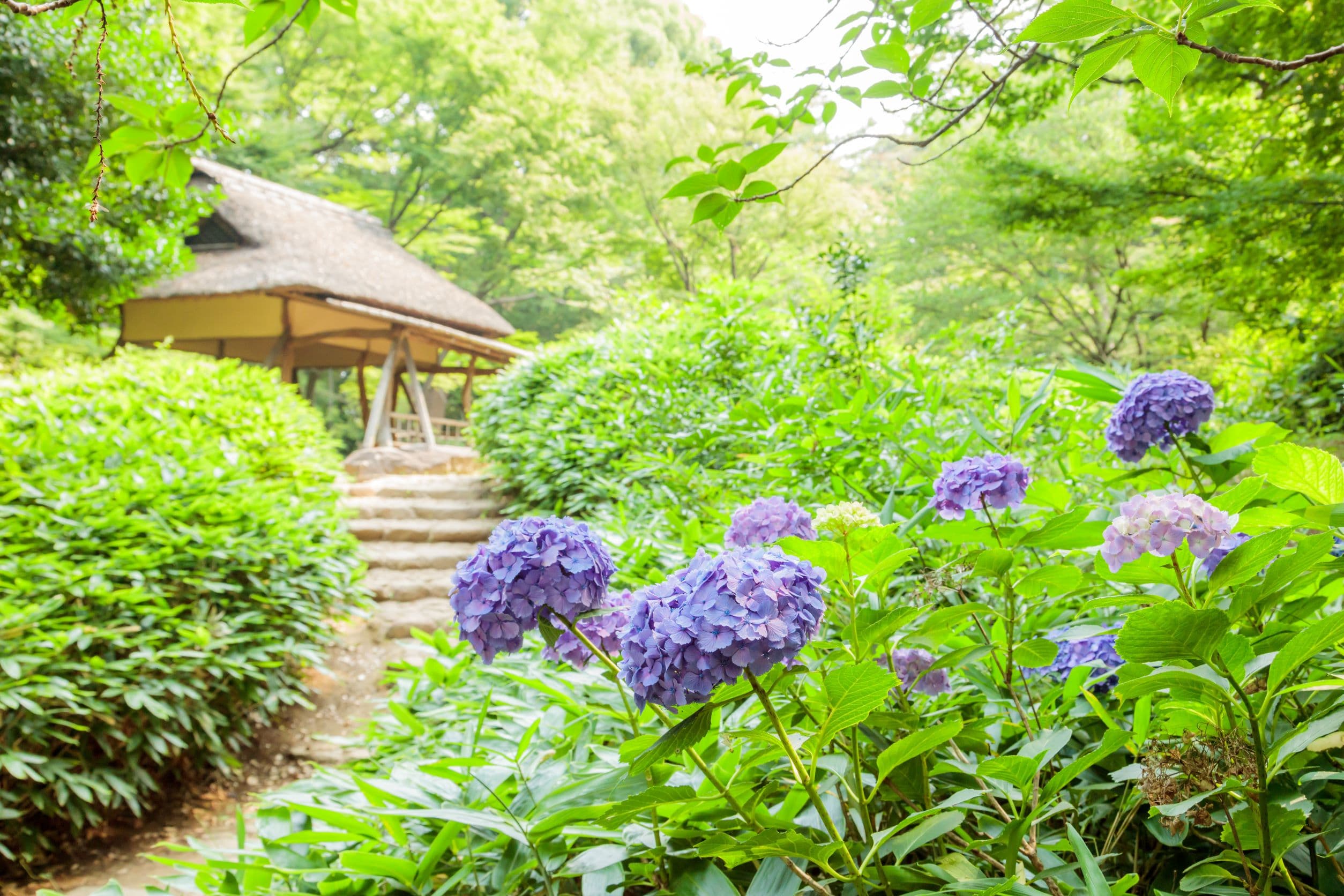
Rikugien Gardens, one of Tokyo's two great Edo-period gardens, is a masterpiece of traditional Japanese landscape design. Created in 1702 by Yanagisawa Yoshiyasu, a trusted confidant of the fifth shogun Tokugawa Tsunayoshi, the garden is a 'walk-around style' garden featuring a large central pond, man-made hills, and intricate pathways. Its design subtly incorporates 88 miniature scenes from famous Japanese poems, offering a deep cultural and aesthetic experience.
Visitors consistently highlight the garden's serene and tranquil ambiance, describing it as an 'oasis in the city center' that allows one to 'forget the hustle and bustle of the city.' The seasonal beauty is a major draw, with many reviewers recommending visits during autumn for the stunning red maple leaves and in spring for the magnificent weeping cherry blossoms. The special nighttime illuminations during these peak seasons are frequently mentioned as a 'magical' and 'breathtaking' experience, transforming the garden into a 'very large light show.' The presence of tea houses within the garden, offering matcha and traditional sweets, is also a popular feature, providing a relaxing spot to enjoy the views.
For an optimal experience, plan your visit during late November to early December for autumn foliage or late March to early April for cherry blossoms. Many suggest arriving before dusk during illumination periods to witness the transition from day to night. Allow at least 1.5 to 2 hours to fully explore the garden at a leisurely pace, including time for photos and a tea break. While the garden is beautiful year-round, some visitors note that mid-August can be very hot and less vibrant. Consider joining a free guided tour, often available on weekends, to gain deeper insights into the garden's history and design, as recommended by several reviewers.
Rikugien Gardens is easily accessible by public transport. The closest station is Komagome Station (JR Yamanote Line and Tokyo Metro Namboku Line). From Komagome Station, the main gate is approximately a 7-minute walk. Some reviewers mention a slightly closer, unofficial entrance if coming from Komagome Station, advising to turn right immediately after exiting. For those coming from Sengoku Station, it is also within walking distance. The garden is well-signposted from Komagome Station, though some visitors noted a slight lack of signage for the last 200 meters.
A common complaint, particularly during peak seasons like cherry blossom or autumn illumination, is the crowds. Reviewers advise that while it can be busy, the garden is spacious enough to find quiet spots. For those seeking a less crowded experience, visiting early on a weekday morning is recommended. Some visitors also expressed mild disappointment if they visited outside of peak bloom times, finding the garden 'not spectacular' or 'overrated' without the vibrant colors. To mitigate this, check seasonal bloom forecasts before your trip and manage expectations if visiting during off-peak periods.