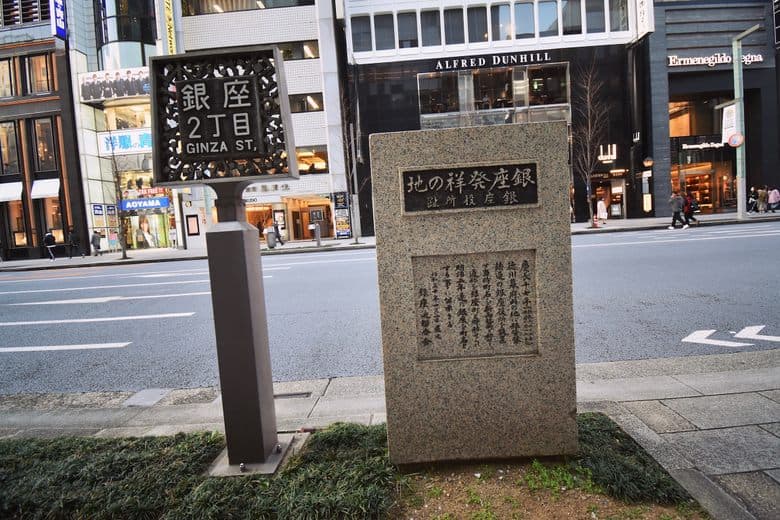
The Origin of Ginza Monument, also known as the Ginza Hasshō-no-chi no Kinen-hi or Monument of Ginza Birth Place, marks the historical significance of the Ginza district. While today Ginza is synonymous with luxury shopping and modernity, this unassuming stone monument serves as a quiet reminder that the area's name, derived from 'gin' (silver) and 'za' (guild), directly refers to its Edo period function as a prominent silver mint. It's a subtle nod to the district's long-standing association with commerce and wealth.
Visitors who notice the monument often appreciate the historical depth it adds to their understanding of Ginza. It's not a grand attraction, but rather a point of interest for those curious about the city's past. Reviewers suggest that its charm lies in its understated presence, offering a moment of reflection on how a bustling modern district evolved from a specific historical function. There are no particular praises or warnings beyond its small size and easy-to-miss nature.
To best experience the monument, allocate only a few minutes for a quick stop. It's best visited during daylight hours when the surrounding shops are open, allowing for a natural integration into a Ginza shopping or sightseeing itinerary. There are no specific items to bring, and no entry fee as it is a public outdoor monument. It's an ideal spot for a quick photo and a moment of historical contemplation.
The monument is conveniently located and easily accessible. It is approximately a three-minute walk from Ginza Station. Visitors can use various subway lines that serve Ginza Station, making it a straightforward destination via Tokyo's extensive public transport network. Once at Ginza Station, follow signs towards the main shopping streets; the monument is situated in front of a Tiffany store, which acts as a recognizable landmark.
The primary 'complaint' or observation from visitors is that the monument is very small and can be easily overlooked amidst the grandeur of Ginza's modern architecture. To mitigate this, actively look for it in front of the Tiffany store. It's not designed to be a focal point, but rather a historical footnote for those who seek it out.