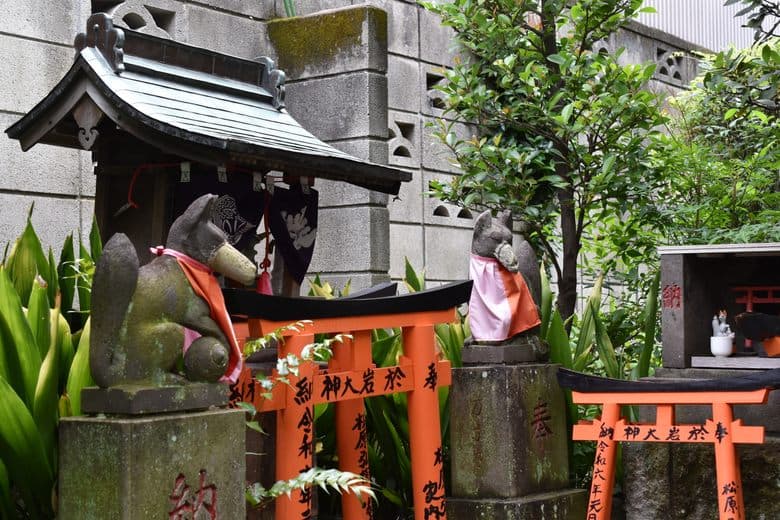
The Oiwa Inari Shrines are a pair of historically significant, albeit niche, sites in Tokyo, deeply intertwined with the legendary Japanese ghost story, Yotsuya Kaidan. This tale of betrayal and ghostly revenge, centered around Lady Oiwa, has permeated Japanese culture for centuries, influencing countless theatrical and cinematic adaptations. The existence of two rival shrines, each asserting its connection to Lady Oiwa, highlights the enduring cultural impact of the story and the complex interplay between folklore and local history.
Visitors primarily come to these shrines out of a specific interest in the Yotsuya Kaidan legend or Japanese ghost stories in general. Reviewers often describe the experience as atmospheric and intriguing, particularly for those who appreciate the darker, more mysterious side of Japanese culture. The quiet, unassuming nature of the shrines, tucked away in residential areas, contributes to their eerie charm. Some visitors find the concept of rival shrines fascinating, reflecting on the historical and cultural dynamics that led to their parallel existence. However, those unfamiliar with the legend might find the shrines less impactful, as their significance is heavily reliant on prior knowledge of the story.
To fully appreciate the Oiwa Inari Shrines, it is highly recommended to familiarize oneself with the Yotsuya Kaidan story beforehand. A visit typically takes a short amount of time, perhaps 15-30 minutes for each shrine, as they are small and primarily offer a contemplative experience rather than extensive exhibits. There are no specific items to bring, but a quiet demeanor is appropriate. The best time to visit would be during daylight hours for ease of navigation, though some might prefer the late afternoon for a more atmospheric experience. As these are not major tourist attractions, they are generally uncrowded.
The shrines are located in the Yotsuya district of Shinjuku City. The nearest major train station is Yotsuya Station, served by the JR Chuo Line and Tokyo Metro Marunouchi and Namboku Lines. From Yotsuya Station, the shrines are typically a 10-15 minute walk. Specific directions can be found using online maps, as they are situated within residential streets. Driving is generally not recommended due to limited parking and the excellent public transport network in Tokyo.
A common complaint among visitors is the lack of information in English at the shrines themselves, which can make it challenging for international tourists to fully grasp their historical context without prior research. To mitigate this, visitors should read up on the Yotsuya Kaidan legend and the history of the shrines before their visit. Additionally, some reviewers note that the shrines are quite small and may not meet expectations for those anticipating a grander attraction; managing expectations by understanding their modest scale is key.