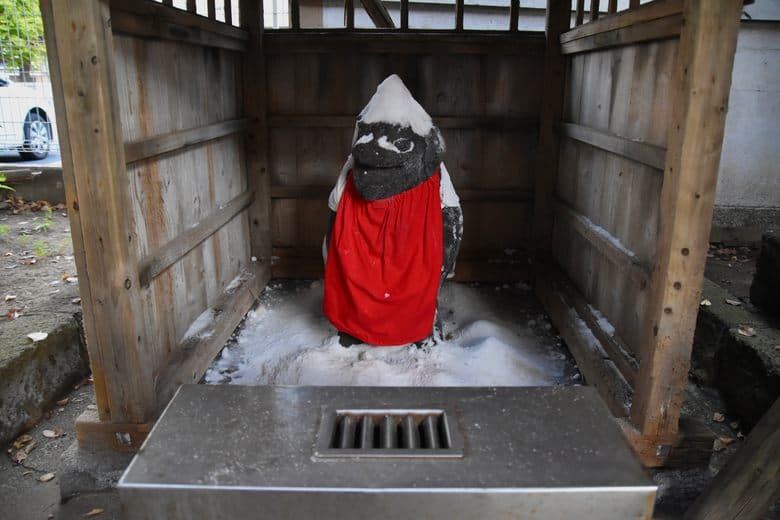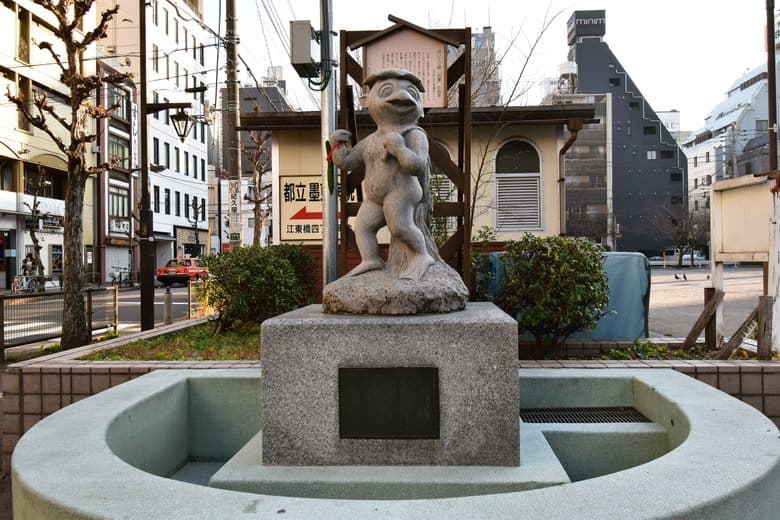
Oiteke Bori refers to a series of monuments and a statue that commemorate a fascinating 19th-century Japanese urban legend. This tale, which became part of the Honjo Nanafushigi (Seven Wonders), describes a mysterious voice that would demand fish from passersby near a canal in the Edo period. The story has given rise to the idiom "oiteke-bori," meaning "to leave behind," and offers a glimpse into traditional Japanese folklore involving shapeshifting creatures like kappa, tanuki, and mujina.
Visitors consistently find the concept intriguing, especially those with an interest in local legends and the more unusual aspects of Japanese culture. The kappa statue in Kinshibori Park is often highlighted as a charming and easily identifiable representation of the legend. Reviewers appreciate the opportunity to connect with a piece of Tokyo's historical storytelling, even if the physical sites are modest. However, some visitors note that without prior knowledge of the legend, the sites themselves might seem unremarkable, emphasizing the importance of understanding the backstory.
To fully appreciate Oiteke Bori, it is highly recommended to research the legend beforehand. A visit typically takes about 30-60 minutes, allowing time to locate both the kappa statue in Kinshibori Park and the monument near Daisan Kameido Junior High School. There is no entry fee for either location. The best time to visit is during daylight hours to easily find the monuments. Consider bringing a small guide or using a smartphone to read about the legend on-site, as interpretive signs may be limited.
Kinshibori Park, where the prominent kappa statue is located, is approximately a five-minute walk from Kinshicho Station. Kinshicho Station is a major hub served by the JR Chuo-Sobu Line and the Tokyo Metro Hanzomon Line, making it easily accessible by public transport. The other monument, near Daisan Kameido Junior High School, is about a 10-minute walk from Kinshibori Park, across the Yokojukken River. Walking is the primary mode of transport between these two sites. Parking in the area can be challenging, so public transportation is the most convenient option.
A common complaint is that the sites themselves are not grand or overtly spectacular. To mitigate this, manage expectations by focusing on the historical and cultural significance rather than expecting a large-scale attraction. The value lies in the story and its connection to Japanese idiom and folklore, not in the visual grandeur of the monuments.