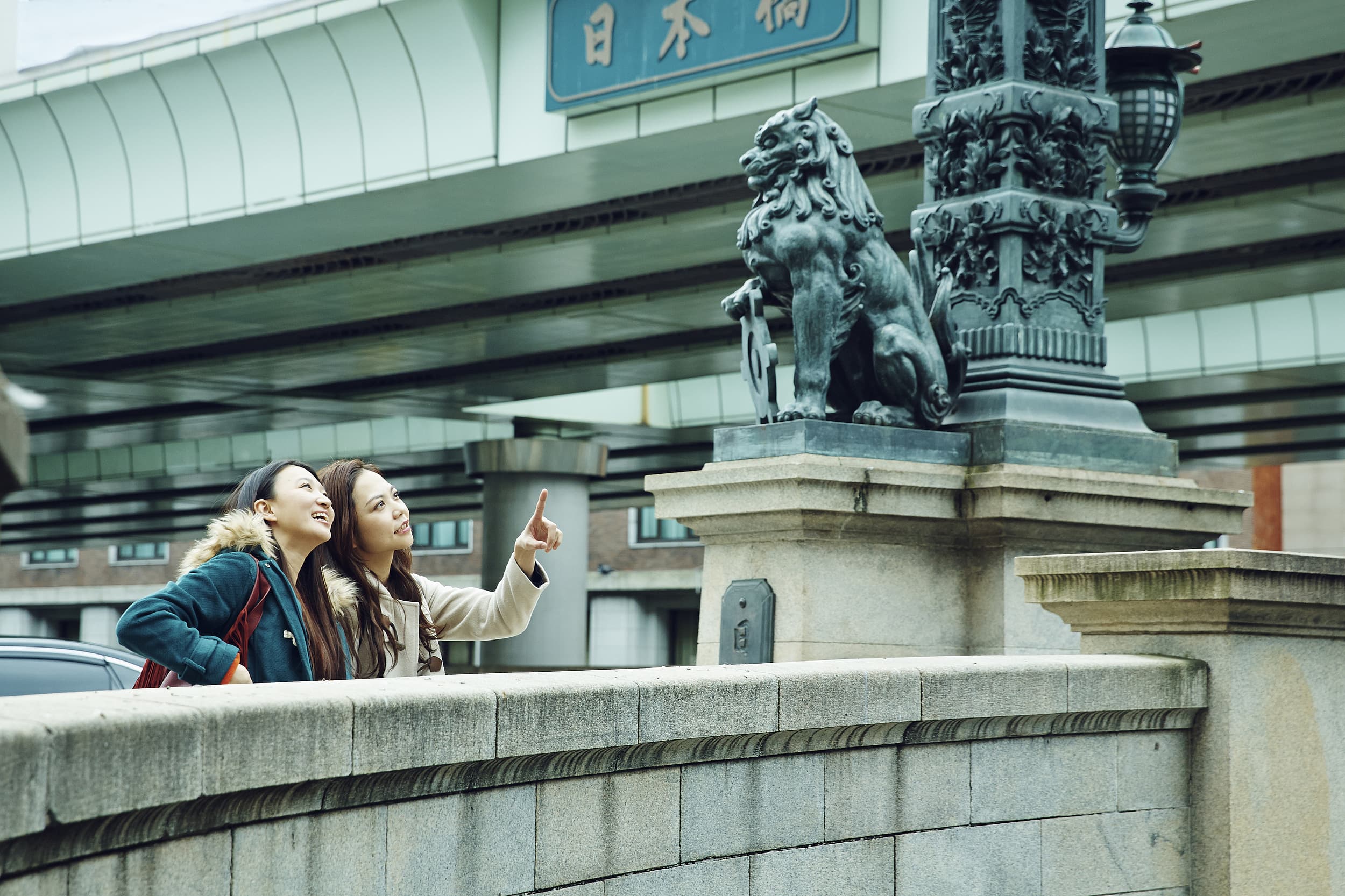
Nihonbashi, meaning 'Japan Bridge,' is not just a bridge but also a historic district in Tokyo. Originally constructed in 1603, it served as the bustling center of Edo and the starting point for the five main roads connecting the capital to other provinces. Today, it remains the 'kilometer zero' marker for Japan's national highway network, symbolizing its enduring importance as a transportation and commercial hub. The current stone bridge, completed in 1911, showcases a distinctive blend of Japanese and Western architectural elements, adorned with symbolic bronze statues of lions and winged Kirin.
Visitors frequently praise the bridge's historical significance and its unique architectural details, particularly the Kirin statues. Many are drawn to Nihonbashi due to its connection with Keigo Higashino's mystery novel, 'The Wings of the Kirin,' seeking out the mythical creatures depicted on the bridge. Reviewers often highlight the area's atmosphere, noting its blend of traditional shops and modern financial centers, offering a more subdued and dignified Edo cultural experience compared to the extravagance of Ginza. The surrounding district is also appreciated for its shopping opportunities, including department stores and specialty shops, and for being less crowded than areas like Shinjuku or Shibuya, allowing for more leisurely exploration.
While the bridge itself can be viewed in 15-30 minutes, many suggest allocating more time to explore the surrounding Nihonbashi district. This allows for leisurely walks, shopping, and enjoying local cuisine. The area is particularly pleasant for a quiet stroll, especially for those who prefer a less bustling environment. Reviewers recommend visiting during the cherry blossom season for a picturesque experience, though the bridge's night view is also noted as beautiful. There are sightseeing boats near the bridge, offering a different perspective of the area.
Nihonbashi is conveniently located in central Tokyo and is easily accessible by public transport. The Nihonbashi Station serves multiple subway lines, including the Ginza Line, Tozai Line, and Asakusa Line, making it a central hub. Many visitors mention that they often pass by the bridge while exploring other nearby attractions like Ginza or Tokyo Station, which is right next door. From Tokyo Station, it's a short walk to Nihonbashi. The area is well-connected, and walking is a popular way to explore the district's various shops and historical markers.
A common sentiment among reviewers is that while Nihonbashi is historically significant, it might appear 'just a bridge' if one makes a special trip solely to see it without understanding its context. Some express that it's located under an overpass, which can detract from its grandeur. To mitigate this, it's recommended to approach Nihonbashi not just as a standalone attraction but as part of a broader exploration of the surrounding historic district, appreciating its role as a cultural and commercial landmark rather than expecting a grand, visually overwhelming structure. Reading up on its history or the novel 'The Wings of the Kirin' beforehand can also enhance the visit.