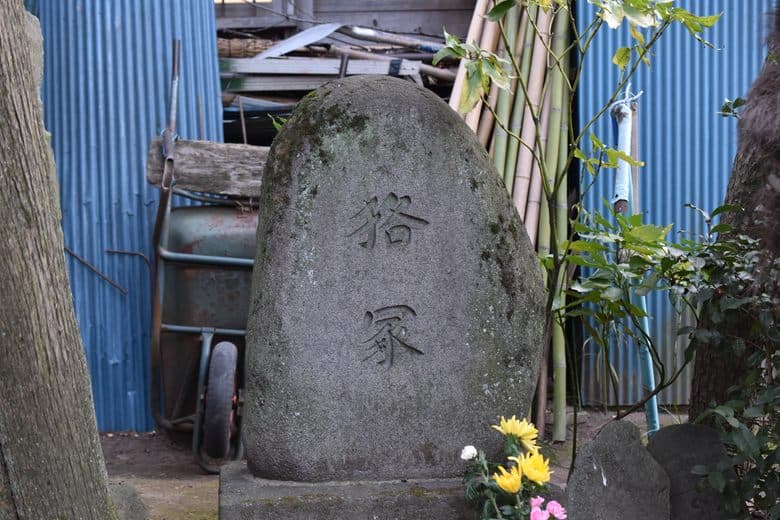
Mujinazuka at Kenshō-ji is a fascinating, albeit obscure, historical marker tied to a unique Japanese urban legend from the Meiji period. It commemorates a tanuki, a supernatural raccoon dog, believed to be the 'Nise-kisha' or 'false steam train' that haunted the Joban Line. This site offers a tangible link to a time when traditional folklore intersected with the advent of modern technology, providing a rare glimpse into the cultural anxieties and beliefs surrounding Japan's rapid modernization.
Visitors interested in the quirky side of Japanese history and folklore will appreciate the story behind this unassuming grave. While there are no extensive facilities or interpretive displays, the appeal lies in discovering a piece of local legend. The monument itself is a simple stone stele, marked with the characters 狢冢, which translates to 'badger tomb'. It's a quiet spot, allowing for personal reflection on the tale it represents.
To make the most of a visit, it's recommended to research the Nise-kisha legend beforehand to fully appreciate the significance of the Mujinazuka. Since it's a small, quick stop, combine it with other activities in the Kameari area. There's no specific best time of day, as it's an outdoor monument, but a clear day would be pleasant. Allow about 10-15 minutes for viewing and reflection.
The Kenshō-ji Temple, where Mujinazuka is located, is easily accessible. It's approximately a 10-minute walk from Kameari Station. Kameari Station is on the Joban Line, which can be reached from major Tokyo hubs. Once at the temple, look for the stone monument with the specific characters; while there isn't a dedicated sign for the grave, it's not difficult to locate within the temple grounds.
A common point for visitors is the lack of explicit historical information on site. To mitigate this, ensure you read up on the legend of the Nise-kisha and the tanuki's role before your visit. This preparation will significantly enhance your understanding and appreciation of this unique historical footnote.