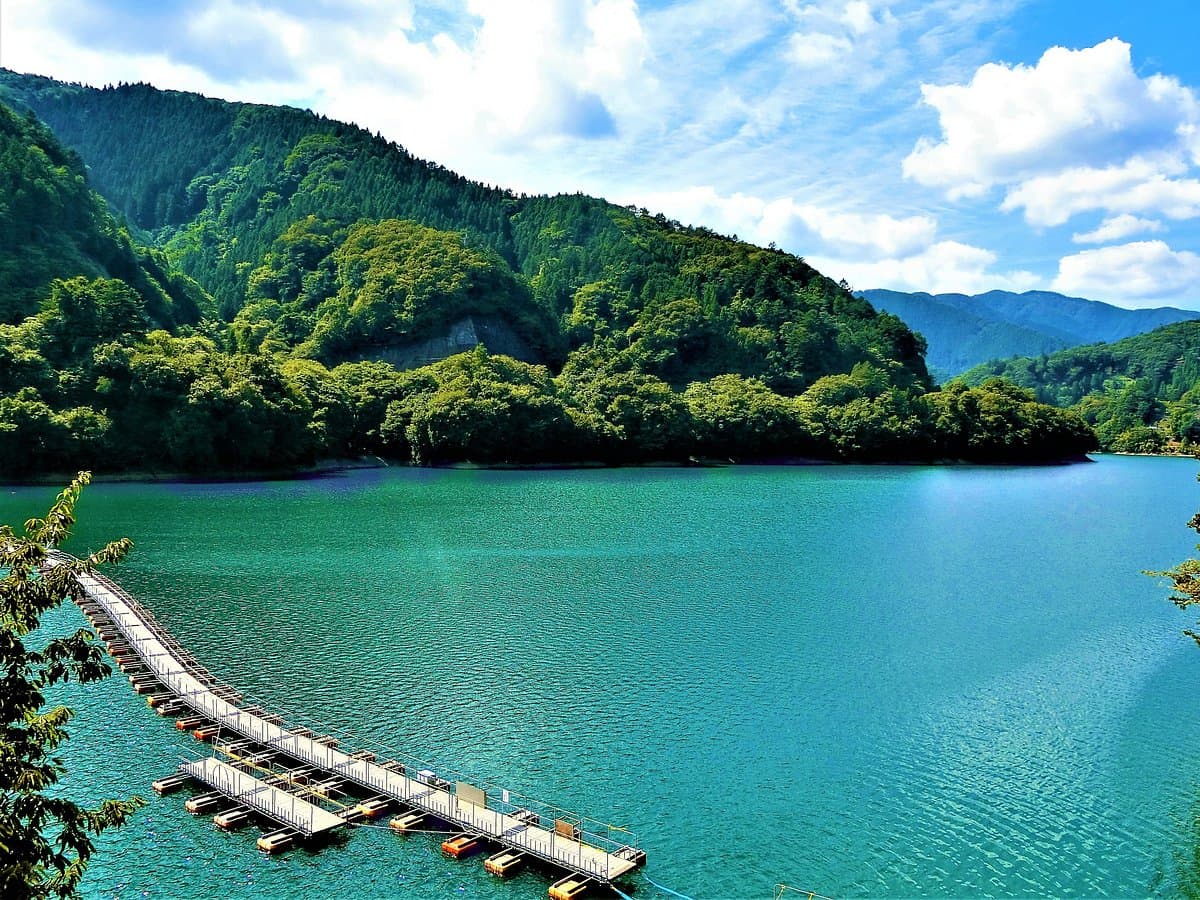
The Mugiyama Floating Bridge, also known as 'Drum Can Bridge' due to its construction from empty oil drums, is a distinctive pedestrian pathway stretching across Lake Okutama. It serves as both a functional crossing and a scenic attraction, offering panoramic views of the surrounding mountains and the expansive lake. This unique engineering marvel provides a memorable experience for those seeking a blend of natural beauty and unusual design.
Visitors consistently praise the bridge for its picturesque setting and the sense of adventure it provides. Many describe the walk across as enjoyable and relaxing, highlighting the clear waters and lush greenery. The bridge's slight sway, a characteristic of its floating design, is often mentioned as a fun and unique aspect of the experience. Reviewers frequently recommend combining a visit to the bridge with other attractions around Lake Okutama, such as the Okutama Dam or nearby hiking trails, to make the most of the trip.
For a comfortable visit, it is advisable to wear sturdy walking shoes, as the path can be uneven. The best time to visit is during daylight hours, particularly in spring for cherry blossoms or autumn for vibrant fall foliage, when the natural scenery is at its peak. While the bridge itself is a relatively short walk, allocating at least 30 minutes to an hour allows for enjoying the views and taking photographs. There are no specific items to bring other than standard day-trip essentials like water and perhaps a camera.
The Mugiyama Floating Bridge is located in the Okutama area. Access is primarily by bus from JR Okutama Station. Visitors often take a bus towards Okutama Lake or the Okutama Dam, and the bridge is a short walk from one of the bus stops along the lake. Some visitors mention walking for an extended period (around 40 minutes for 4-5 km) from the dam if they miss a bus, indicating that walking between attractions is feasible but requires time. Driving is also an option, with parking available near the dam or other points around the lake, though specific parking for the bridge itself is not prominent.
Common complaints are few, but some visitors might find the bridge's swaying motion unsettling, especially those prone to motion sickness. Additionally, during peak seasons, the area can attract more visitors, potentially diminishing the sense of tranquility. To mitigate this, consider visiting during off-peak hours or weekdays. The remote location means public transport can be infrequent, so checking bus schedules in advance is crucial to avoid long waits or unexpected walks.