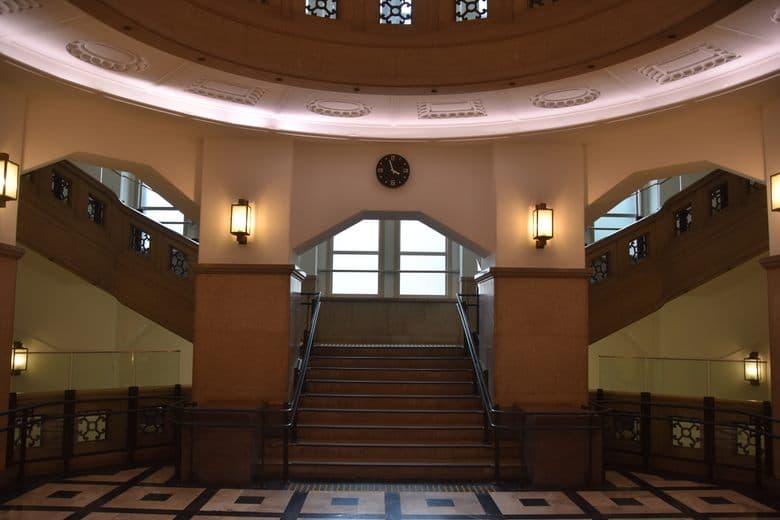
The Minato City Local History Museum is not just a repository of local history; it is an architectural marvel in its own right. Housed in the former Institute of Public Health, a grand, castle-like seven-story estate built in the Uchida-Gothic style in 1938, the building itself is a significant historical artifact. Funded by the Rockefeller Foundation to aid in Tokyo's recovery after the 1923 Great Kantō earthquake, it survived air raids and subsequent earthquakes, standing as a testament to early 20th-century academic and public health efforts in Japan.
Visitors consistently praise the building's stunning architecture, from its elegant hallways to the impressive lecture hall, often noting that the building itself is the main attraction. The museum's galleries detail the history of Minato City, featuring locally found artifacts, preserved sections of shell middens, a whale skeletal specimen, and ancient pottery that visitors are encouraged to touch. This hands-on approach to history is often highlighted as a positive aspect, making the exhibits more engaging, especially for families. Reviewers frequently mention the quiet atmosphere, making it a peaceful escape from the bustling city.
To make the most of your visit, allocate approximately 1.5 to 2 hours to explore both the building's architecture and the historical exhibits. The museum is generally uncrowded, allowing for a relaxed pace. Photography is permitted inside, except in specific exhibit rooms, and professional portraiture requires prior permission. Consider visiting on a weekday morning for the quietest experience. While the permanent exhibits are modest in scale, the architectural beauty of the building offers ample visual interest. Bringing a camera is recommended to capture the building's unique features.
The museum is easily accessible by public transport. It is a short walk from Shirokanedai Station. Specific train lines or bus routes are not detailed in reviews, but Shirokanedai Station is well-connected within Tokyo's extensive subway system, making it straightforward to reach from most parts of the city. As it's located within Minato City, it's also relatively central for those staying in Tokyo.
A common complaint, if any, is that the historical exhibits, while informative, might not be as extensive or grand as those in larger national museums. However, this is often mitigated by the sheer beauty and historical significance of the building itself. Visitors should manage expectations regarding the exhibit content and focus on appreciating the unique blend of history and architecture. The relatively low admission fee also makes it an accessible cultural experience.