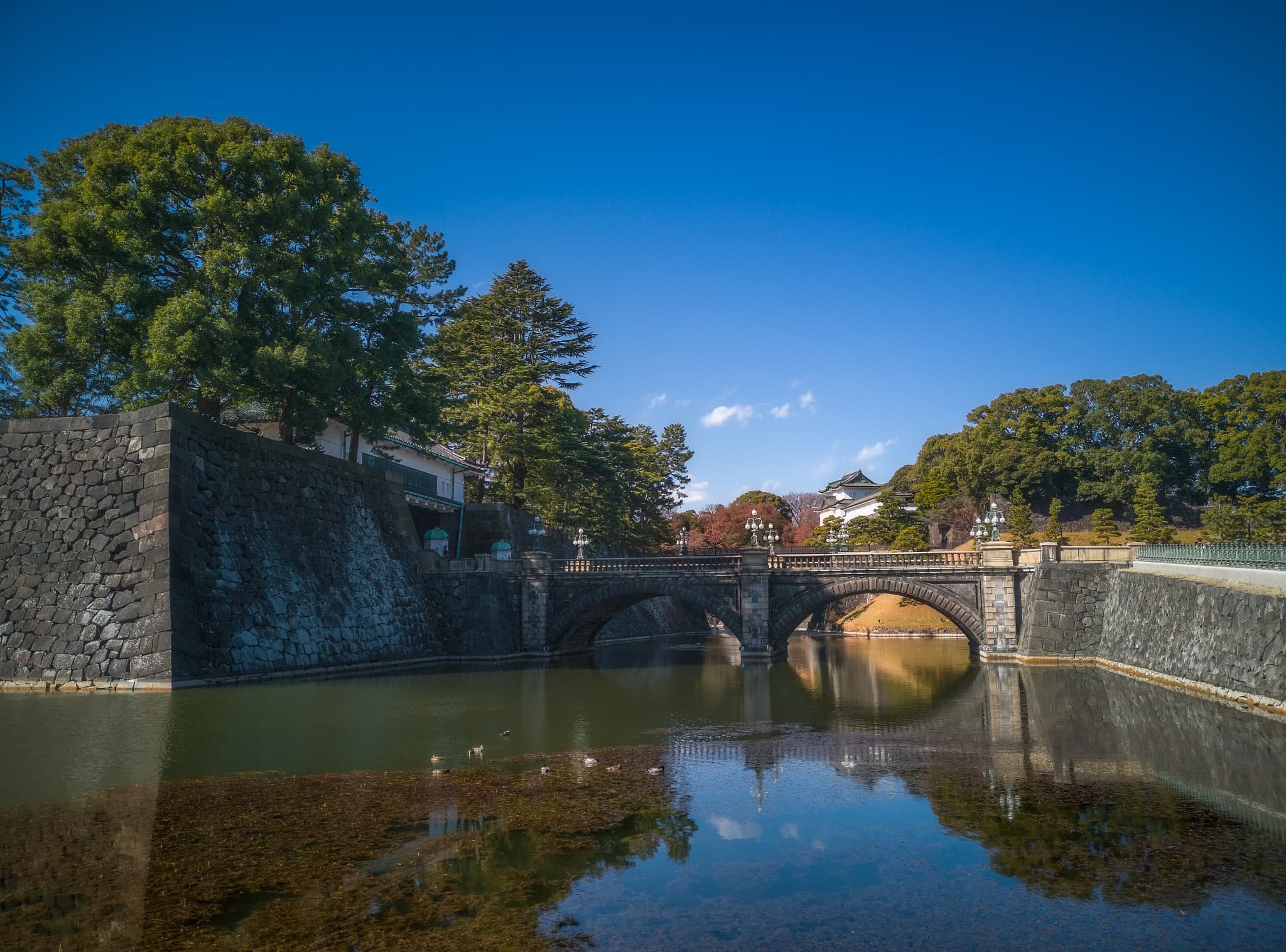
Kokyo Gaien National Garden serves as the expansive outer grounds of the Imperial Palace, a site deeply intertwined with Japan's imperial history. It encompasses the former Edo Castle grounds, offering visitors a tangible connection to the Tokugawa Shogunate era before it became the residence of the Emperor. The garden is characterized by its vast open spaces, meticulously shaped pine trees, and historical structures like the ancient city walls and moats, making it a significant cultural and historical landmark in Tokyo.
Visitors consistently praise the garden for its serene and spacious environment, a welcome contrast to Tokyo's urban density. Many highlight the beauty of the 'Black Tiger Pine' trees, often described as resembling giant bonsai, and the impressive views of the Nijubashi Bridge, a popular spot for photography. The historical significance, particularly the remnants of Edo Castle and the stories of the gravel paths designed to alert guards to intruders, also resonate strongly with reviewers. The fact that it's a free attraction is frequently noted as a significant plus, offering excellent value for money.
To make the most of your visit, allocate about 1-2 hours for a leisurely stroll. The garden is open 24/7, but mornings are often recommended for a quieter experience and better light for photography. Reviewers suggest wearing comfortable shoes, as there is a fair amount of walking, much of it on gravel paths. While the Imperial Palace itself often requires advance booking or is closed to the public, the outer garden provides ample opportunities to appreciate its grandeur from the outside. Consider bringing a water bottle, especially during warmer months, as amenities within the garden are limited. Some visitors mention a tea house nearby that sells ice cream, including a popular gold-leaf variety.
The garden is exceptionally well-connected by Tokyo's subway system. Many reviewers note that it's just a short walk from Nijubashi Station (Tokyo Metro Chiyoda Line) or Tokyo Metro Station. It's also accessible from Akasaka. The area is pedestrian-friendly, with roadblocks preventing vehicle access to much of the green space, ensuring a pleasant walking experience. Public transport is the most convenient way to reach Kokyo Gaien, as parking in central Tokyo can be challenging and expensive.
A common observation from visitors is that while the outer garden is beautiful and historically rich, the Imperial Palace itself is largely inaccessible. Some express minor disappointment at not being able to enter the palace grounds freely. To mitigate this, focus on appreciating the exterior architecture, the historical context of the outer garden, and the natural beauty. Remember that the main gate is typically only opened for special events. Embrace the experience of the expansive, open green space rather than expecting an interior palace tour.