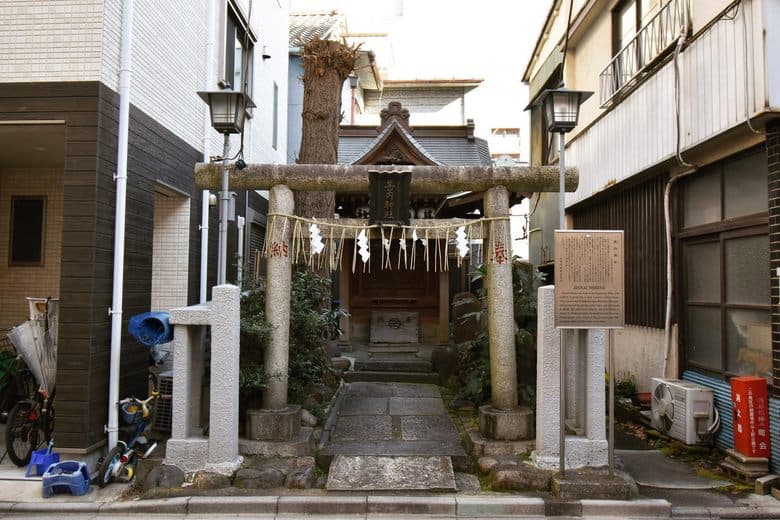
Jinnai Shrine is a small but historically significant site in Tokyo, dedicated to Kōsaka Jinnai, a notorious 17th-century swordsman, mercenary, and thief. According to legend, Jinnai, before his execution, claimed his spirit would remain to heal those suffering from ague (malaria). This unique origin story has made the shrine a pilgrimage site for those seeking good health, particularly on the anniversary of his death on August 12th.
Visitors consistently describe the shrine as very small and not immediately noticeable, often requiring the use of navigation apps to locate. Despite its modest size, many appreciate the quiet atmosphere and the chance to connect with a lesser-known piece of Tokyo's history. Reviewers often highlight the shrine's unique backstory as its main draw, contrasting it with more prominent, grander shrines in the city. There are no specific warnings about the shrine itself, but its hidden nature means visitors should manage expectations regarding its scale.
To make the most of a visit, allocate about 15-30 minutes. It's best visited during daylight hours for easier navigation. Since it's a small, outdoor shrine, there's no need to bring anything specific beyond a smartphone for navigation. There are no entry fees or specific dress codes. Combining a visit with exploration of the surrounding Akihabara or Asakusabashi areas is highly recommended, as the shrine itself does not offer extensive activities.
The shrine is conveniently located within walking distance of major public transport hubs. It's approximately a 10-minute walk from Asakusabashi Station and about 15 minutes from Akihabara Station. Both stations are served by multiple JR and subway lines, making it easily accessible from various parts of Tokyo. Using Google Maps or a similar navigation app is strongly advised due to the shrine's inconspicuous location among urban buildings.
The primary complaint from visitors is its small size and difficulty in finding it. To mitigate this, ensure your navigation app is active and follow directions carefully. Do not expect a grand temple complex; instead, approach it as a historical marker with a fascinating story.