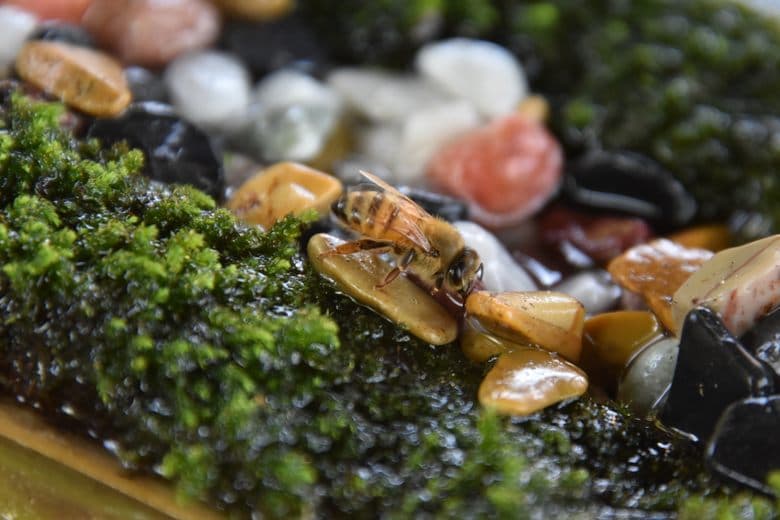
The Honeybee Drinking Fountain is a unique, seasonal feature at the Hitokotonushi Shrine in Jōsō, Ibaraki Prefecture. It's a small, specially designed watering spot for bees and wasps, set up annually during the summer. This thoughtful initiative, which began in 2016 and has been consistently reappearing since 2020, highlights a harmonious coexistence with nature within a traditional Japanese spiritual site.
Visitors consistently praise the heartwarming and unusual nature of this attraction. Many find it a charming and serene sight, appreciating the shrine's dedication to supporting local insect populations. The fountain's platform, crafted from bamboo and moss, is often described as creating a 'fairytale scene,' providing a stable footing for the insects. While primarily for honeybees, paper wasps are also frequently observed using it, carrying water back to their hives to regulate temperature during hot weather. Reviewers often mention the peaceful atmosphere and the simple beauty of this small act of kindness.
For those planning a visit, it's crucial to note that the fountain is seasonal, typically set up by late July and removed by September. Its exact dates vary, so checking the shrine's social media for updates is highly recommended. Visitors should be mindful that the fountain is attached to the chōzu-ya (ablution pavilion), which is actively used by worshippers. It is advised to observe the bees and wasps respectfully and from a distance, avoiding any actions that might disturb or startle them, as they may sting if intimidated. There is no entry fee for the shrine or to see the fountain.
Reaching Hitokotonushi Shrine without a car can be challenging. From the nearest bus stop, "Shizen Hakubutsukan Iriguchi," visitors must purchase a 750 yen ticket to the Ibaraki Nature Museum. This route involves crossing a long footbridge over the Sugao Marsh and walking past the Asunaro no Sato park. It's important to retain the museum ticket for re-entry if needed. Driving is generally considered the most convenient way to access the shrine.
A common complaint is the difficulty of access via public transport and the limited seasonal availability. To mitigate this, plan your visit during the summer months and confirm the fountain's operational status via the shrine's official channels before traveling. If relying on public transport, be prepared for a significant walk and consider the museum ticket requirement.