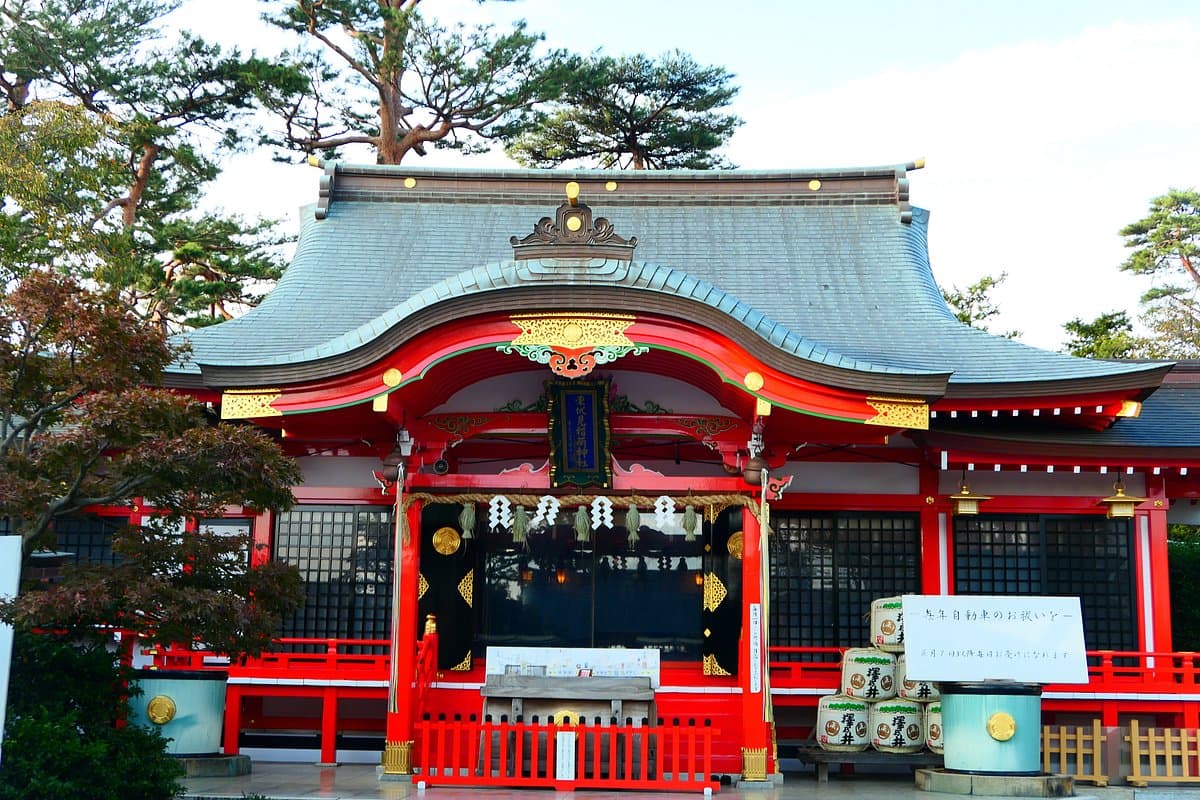
Higashifushimi Inari Shrine is a significant branch of Kyoto's renowned Fushimi Inari Taisha, dedicated to Inari, the deity of rice. While much younger, established in 1929, it serves as an important spiritual center for locals in Nishitokyo who sought their own Inari shrine. Unlike its mountainous Kyoto counterpart, this shrine is situated on a smaller hill, offering a more accessible and intimate experience of Inari worship.
Visitors consistently praise the shrine for its tranquil atmosphere and the impressive, albeit smaller, maze of red torii arches at the back. Many appreciate the opportunity to experience a traditional Inari shrine without the overwhelming crowds often found at more famous sites. Reviewers note that the grounds are particularly vibrant and engaging during local festivals, such as Shichigosan in mid-November, when families gather to celebrate. The presence of numerous fox statues, traditional symbols of Inari, adds to the shrine's unique charm.
For a fulfilling visit, allocate about 1-2 hours to explore the grounds, including the torii tunnel and the 18 undershrines for the 'otsuka-mairi' pilgrimage. The best time to visit is during the morning or late afternoon to avoid any potential crowds, though it generally remains less busy than major Tokyo attractions. Bringing comfortable walking shoes is advisable, especially if you plan to navigate the torii maze. There are no specific items to skip, as the entire site offers a cohesive experience.
The most convenient way to reach Higashifushimi Inari Shrine is by public transport. Reviewers confirm that the nearest station is Higashifushimi Station on the Seibu Shinjuku Line. From the station, the shrine is within easy walking distance, making it readily accessible for those relying on Tokyo's extensive train network. Driving is also an option, though parking availability might be limited, and public transport is generally recommended for ease of access in Tokyo.
While generally positive, some visitors might find the shrine less grand or extensive than the original Fushimi Inari Taisha, which could lead to a sense of unmet expectations if they are anticipating a similar scale. To mitigate this, it's best to approach Higashifushimi Inari Shrine as a distinct, local spiritual site with its own unique character and charm, rather than a direct replica of its Kyoto predecessor. Its value lies in its peaceful ambiance and local significance.
