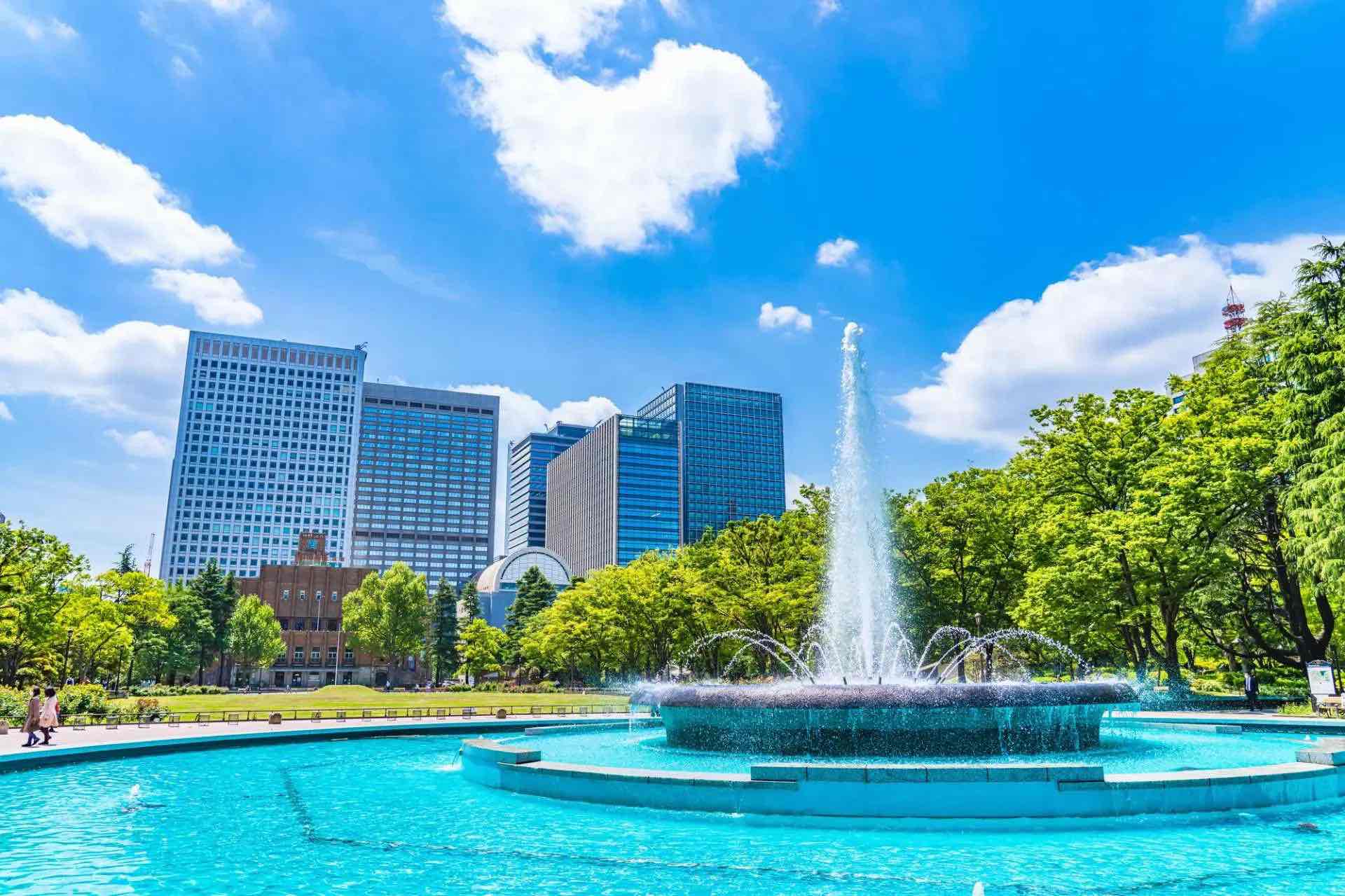
Hibiya Park is Japan's first Western-style modern park, established in 1903 on what was formerly a military muster ground during the Meiji period. Located directly south of the Imperial Palace in Chiyoda ward, it spans approximately 16.5 hectares and has evolved into a beloved urban refuge for Tokyo residents and visitors alike. The park's significance lies not only in its historical role as a pioneering public space but also in its unusual collection of stone monuments from around the world—including a Rai stone from Micronesia (once used as ceremonial currency), an authentic Antarctic rock, a Nordic runestone, and a 30-50 million-year-old fossilized pinewood.
Visitors consistently highlight the park's tranquil atmosphere despite its central location surrounded by high-rise buildings and department stores. The most praised features include seasonal flower displays (particularly nemophila and tulips in April-May, chrysanthemums in autumn, and ginkgo trees in fall), a central fountain plaza, a pond called Heart Pond, and well-maintained walking paths lined with mature trees. Several reviewers note that the park functions as a genuine working space: office workers frequent it during lunch breaks with bento boxes, families bring children for weekend activities, and the park regularly hosts cultural events ranging from beer gardens to organic food expos, high school singing competitions, and international festivals. This authentic integration into Tokyo's daily rhythm is what many visitors find most appealing—it feels lived-in rather than manicured for tourists.
For practical planning, visitors should know the park is open year-round, 24/7, and entirely free to enter. Most visitors spend 1-2 hours here, though this depends on whether you're simply strolling or attending a specific event. The best times to visit are spring (cherry blossoms and spring flowers, though reviewers note cherry blossoms are not abundant here compared to other Tokyo parks) and autumn (ginkgo foliage and comfortable temperatures). Midday offers the most peaceful experience if you prefer solitude, as office workers and tourists create a gentle crowd during lunch hours. The park contains a library, public tennis courts, restaurants, a flower shop, and an open-air concert hall, so you can easily spend time browsing or dining. Reviewers recommend checking the local calendar in advance if you want to catch specific events or exhibitions. Bring comfortable walking shoes, as the park has numerous paths to explore, and consider bringing a picnic lunch to experience the park as locals do.
Access to Hibiya Park is straightforward via public transportation. The nearest station is Tokyo Metro Hibiya Station (Hibiya Line, Chiyoda Line, Marunouchi Line), which is directly adjacent to the park—visitors simply exit the station and the park entrance is immediately visible. From Tokyo Station, it's a short walk or one metro stop away. The park is also within walking distance of Ginza (approximately 10-15 minutes), Roppongi, Toranomon, and Shimbashi, making it easy to incorporate into a larger sightseeing route. There are no gates or boundary walls, so the park blends seamlessly into the surrounding urban landscape. Driving is not recommended given Tokyo's congestion and limited parking; public transit is far more efficient.
Common visitor complaints center on the park's compact size—some expect a larger, more expansive green space and find it underwhelming compared to other Tokyo parks. A few reviewers mention the grass can look unkempt in certain seasons and that the park sometimes feels ordinary without an event happening. To mitigate disappointment, set realistic expectations: this is an urban pocket park designed for daily use, not a destination park. Visit during a seasonal peak (spring flowers, autumn foliage) or when an event is scheduled to maximize the experience. The park's real value lies in its historical significance, unusual monuments, and role as an authentic slice of Tokyo life—not in grand vistas or extensive grounds.