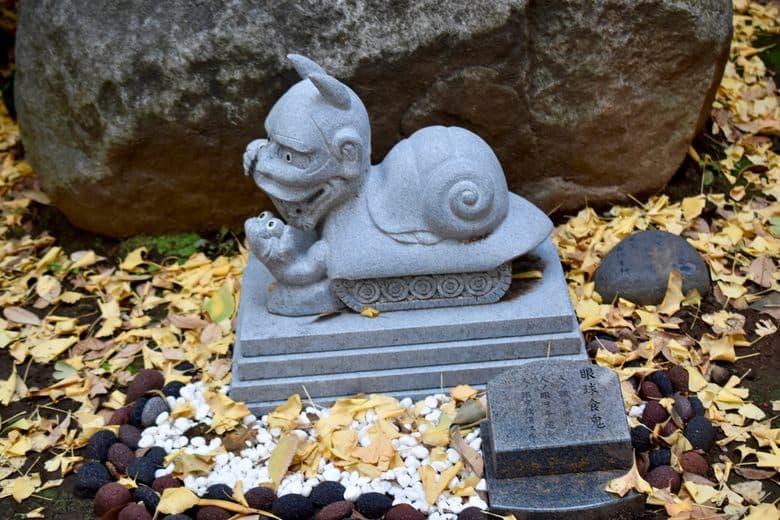
The Eye-Eating Demon of Inari Kio is a curious, modern addition to the historic Inari-Kio Shrine, located amidst the bustling Shinjuku-Kabukicho district. While the shrine itself dates back to 1653 and is dedicated to various deities, this particular sculpture, presumed to be named Gankyū Shokuki, stands out due to its unusual appearance and mysterious origins. It's a snail-like figure with Muppet-esque googly eyes and a caterpillar track, resembling a Hannya mask but with a comical twist, and is believed by some to possess eye-healing properties.
Visitors are often drawn to its unique, almost whimsical nature, finding it a surprising and amusing discovery within the traditional shrine grounds. Many appreciate the juxtaposition of ancient spirituality with this distinctly contemporary, quirky art piece. The lack of clear folklore or history surrounding the demon only adds to its intrigue, making it a conversation starter and a memorable, if brief, encounter.
To best experience the Eye-Eating Demon, allocate about 10-15 minutes for a quick visit and photos. It's best seen during daylight hours to appreciate its details. There's no entry fee, and it's a completely free attraction. Since it's a small, outdoor sculpture, weather-appropriate clothing is advisable. Consider combining your visit with exploring the vibrant Kabukicho district or other nearby attractions in Shinjuku.
The Inari-Kio Shrine is conveniently located in Shinjuku, a major transportation hub in Tokyo. The nearest train stations are Shinjuku Station (various JR lines, Odakyu, Keio, Tokyo Metro Marunouchi Line, Toei Shinjuku Line, Toei Oedo Line) and Seibu-Shinjuku Station (Seibu Shinjuku Line). From Shinjuku Station, it's approximately a 5-10 minute walk, depending on your exit. Look for the shrine entrance, often described as a 'wooded oasis' amidst the surrounding nightlife. The demon sculpture is typically found near the back entrance, to the left as you enter.
A common 'complaint,' if it can be called that, is that many visitors simply miss it due to its relatively small size and the overwhelming nature of the surrounding area. To avoid this, specifically look for the Inari-Kio Shrine and then search for the sculpture within its grounds, particularly near the back entrance. It's not a grand, imposing statue, but rather a charming, hidden gem.