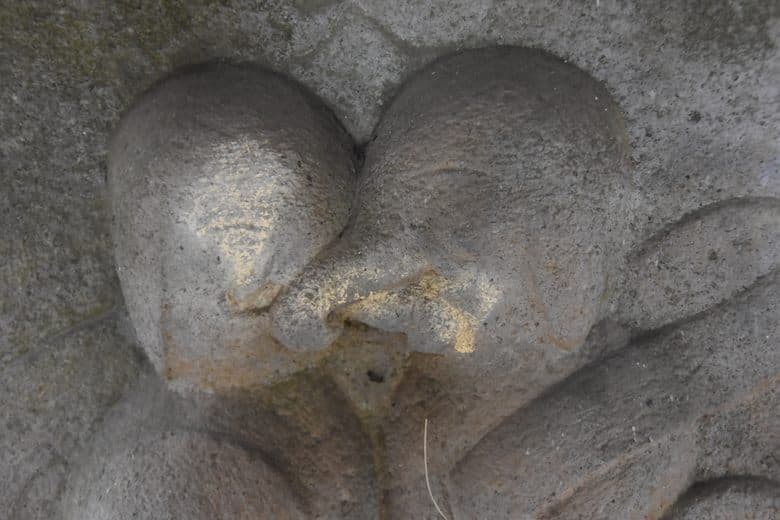
The Embracing Kangiten of Torimi Shrine is a distinctive religious artifact, notable for being one of the few publicly displayed effigies of this particular deity in Japan. Kangiten, the Japanese Buddhist equivalent of the Hindu god Ganesha, is typically depicted as two elephant-headed figures in an embrace. Traditionally, such effigies are kept hidden within temple treasuries due to their sensual nature and the deity's association with pleasure, making this public display at Torimi Shrine a significant rarity.
Visitors interested in religious history and unique cultural artifacts will find this site compelling. The statue, dating back to 1771, was originally housed at Sairin-ji Temple before being moved to Torimi Shrine. Its public accessibility allows for a direct encounter with a deity that is usually shrouded in mystery and religious restriction. Reviewers often highlight the unusual nature of the depiction and the historical context of its display.
To make the most of a visit, allocate approximately 30-60 minutes to appreciate the effigy and the shrine grounds. The best time to visit would be during daylight hours, as the statue is outdoors. There are no specific items to bring, but comfortable shoes are always advisable for exploring shrine grounds. Since this is a niche attraction, it's recommended to combine a visit with other activities in the Shiroi area rather than making it a standalone trip from distant locations.
Torimi Shrine is located in Shiroi, Chiba Prefecture. While specific public transport details are not widely available in reviews, Shiroi is accessible by train. Visitors would likely need to take a local bus or a taxi from the nearest train station to reach the shrine, which is approximately two miles from the former location of Sairin-ji Temple. Driving is also an option, though parking availability at the shrine itself might be limited.
A common consideration for visitors is the remote location and the lack of other major tourist attractions in the immediate vicinity. To mitigate this, plan your visit as part of a broader exploration of the Chiba prefecture, or specifically if you have a deep interest in esoteric Buddhism or unique religious art. Manage expectations regarding the size of the shrine and the effigy; it is a historical artifact rather than a grand monument.