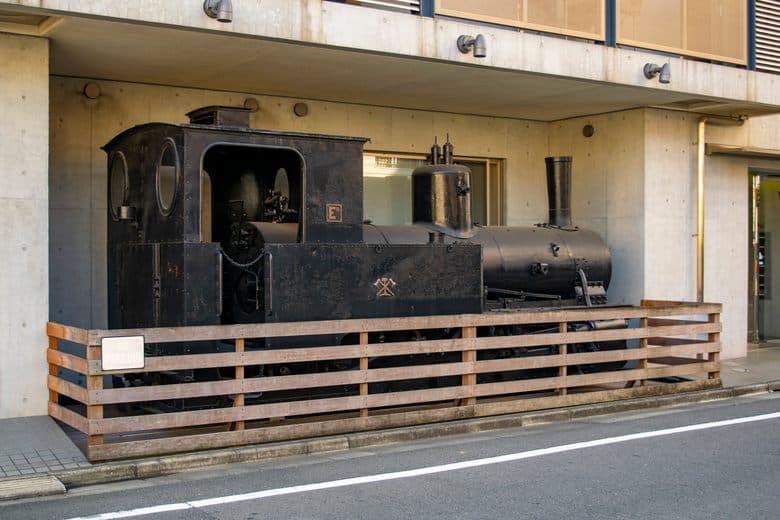
The E18 War Train is a unique historical artifact: a 600mm narrow-gauge steam engine originally ordered from Germany in 1921 for the Japanese Army. It played a role in the Sino-Japanese Wars, designed for rapid track laying and supply delivery in challenging terrain. Today, this piece of history is surprisingly located under an apartment building on a quiet, tree-lined street in Tokyo's Egota neighborhood, offering a poignant contrast to its wartime past.
Visitors consistently praise the train's unexpected and somewhat hidden location, describing it as a fascinating discovery for those who seek it out. Many appreciate the opportunity to see such a well-preserved piece of early 20th-century military and railway technology up close. The display is simple but effective, allowing for good photographic opportunities. Reviewers often highlight the peaceful residential setting, which adds to the unique charm of the visit.
As this is an outdoor display, there's no entry fee or specific opening hours, making it accessible at any time. A visit typically lasts only 10-20 minutes, as it's purely a viewing experience. There are no facilities or interactive elements. It's best visited during daylight hours for clear viewing and photography. Consider combining this visit with a stroll through the local neighborhood to experience a quieter side of Tokyo.
The E18 War Train is conveniently located within a 10-minute walk from two different train stations. You can reach it from Shin-Egota Station on the Toei Oedo Line or from Ekoda Station on the Seibu-Ikebukuro Line. Both stations offer straightforward walks through residential streets. Using Google Maps to search for 'Former Army railway Rentai E18 type locomotive' or the GPS coordinates (35°44'02.8"N 139°40'18.7"E) is highly recommended, as the train is tucked away and not immediately obvious from main roads.
The primary 'complaint' or rather, expectation management, is that this is a very small, static display. Visitors should not expect a museum experience or extensive information panels. It is simply the train engine itself. Those expecting a larger exhibition might be underwhelmed, so approach it as a quick, interesting historical photo stop rather than a major attraction.