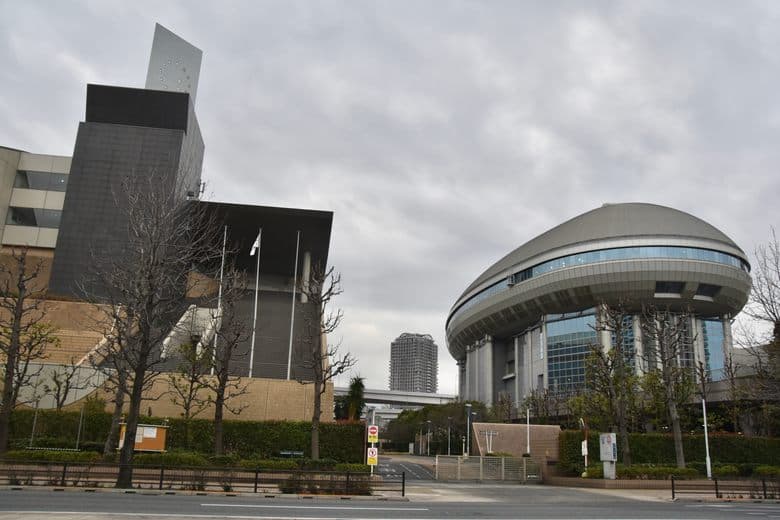
The Ariake Incineration Plant is a functional waste management facility in Tokyo's Odaiba waterfront district, notable primarily for its distinctive 460-foot (140-meter) smokestack. Since its completion in 1995, the chimney has featured an enigmatic dot-based clock that remained unexplained to the public for nearly two decades until the plant's operators confirmed its purpose in 2014. This unusual timekeeping device represents a rare intersection of industrial engineering and public art.
The clock operates on a simple but unconventional system: the circular arrangement of 12 dots indicates the hour (if five dots are illuminated, it is 5 o'clock), while the vertical line of 12 dots shows five-minute intervals (three lit dots indicate 10-15 minutes past the hour). Visitors note that the clock is difficult to read from ground level and often appears to light up randomly to those unfamiliar with its logic. The plant itself is not open to tourists, and the clock is best viewed from the adjacent Ariake Sports Center or from the surrounding waterfront promenade. The structure has become a minor point of interest among architecture enthusiasts and those seeking unusual urban curiosities, though it remains largely unknown to mainstream tourists.
Plan to spend 10-15 minutes observing the chimney clock, ideally during daylight hours when the illuminated dots are most visible against the sky. The best vantage point is from the Ariake Sports Center plaza or the waterfront walkway that runs along the bay. Visit during late afternoon or early evening when the dots are more clearly visible. There is no entry fee, as viewing is entirely from public spaces. Bring a camera with zoom capability if you want to capture details of the clock face, as the chimney stands quite tall and distant from ground level.
The Ariake Incineration Plant is located in Odaiba, accessible via the Yurikamome automated light rail line. Exit at Ariake Station (approximately 2 minutes walk from the plant) or Odaiba Kaihinkoen Station (approximately 10 minutes walk). By car, the area has limited parking, but several paid parking facilities serve the Ariake Sports Center and surrounding commercial areas. The site is also reachable by bus; several Tokyo Metro bus routes serve the Odaiba district. From central Tokyo, allow 20-30 minutes travel time via public transport. The waterfront location makes it convenient to combine with visits to other Odaiba attractions such as the Ariake Sports Center, nearby shopping facilities, or a broader waterfront walk.
Common complaints from visitors include difficulty reading the clock from ground level due to distance and glare, confusion about how the clock actually works (even after learning the system), and disappointment that the plant itself cannot be toured. To mitigate these issues, research the clock's logic before visiting so you understand what you're observing, bring binoculars or a telephoto lens for better viewing, and plan your visit as part of a larger Odaiba exploration rather than as a standalone destination. The clock is most rewarding for those with an interest in unusual urban design or industrial aesthetics rather than for casual sightseers.