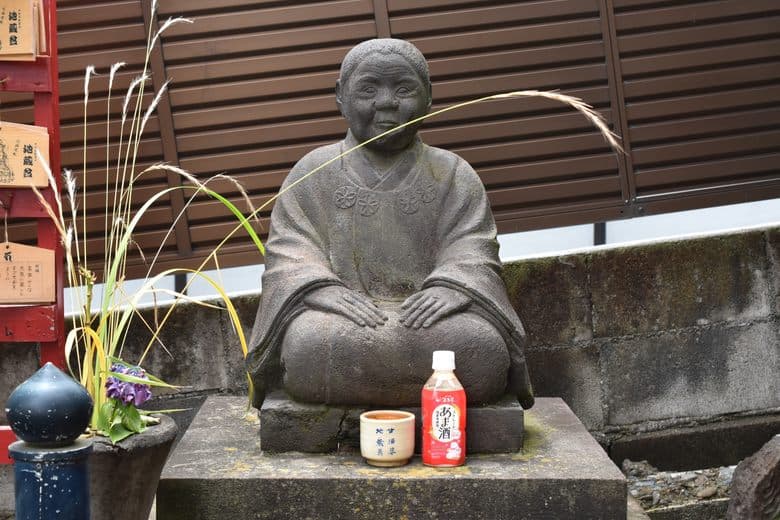
The Amazake-babaa statue is located within the Nichirin-ji Temple in Tokyo's Bunkyō ward. It represents a unique local interpretation of a yōkai (supernatural being) from Japanese folklore. Unlike its northern counterparts, where the Amazake-babaa is a harbinger of bad luck, the Tokyo version is revered as a guardian deity. Legend has it that she was once a human amazake seller who died from a cold and cough, and was subsequently deified to protect children from similar ailments. This statue is a rare visual depiction of the Amazake-babaa, making it a point of interest for those keen on obscure cultural artifacts and local legends.
Visitors interested in the statue often appreciate its unusual nature and the quiet, contemplative atmosphere of the small temple. It's consistently described as an off-the-beaten-path discovery, offering a contrast to Tokyo's bustling main attractions. Reviewers note that the temple itself is modest and not heavily trafficked by tourists, which contributes to a more authentic and peaceful experience. There are no specific warnings from visitors, but its niche appeal means it won't resonate with everyone.
For those planning a visit, allocate a short amount of time, perhaps 15-30 minutes, as the temple and statue are small. There are no specific items to bring, but respectful attire is always appropriate for a temple visit. The best time to visit would be during daylight hours, as the temple is not typically illuminated for evening viewing. As it's a free attraction, there are no money-saving tips beyond general travel budgeting.
Nichirin-ji Temple is accessible via public transport. The nearest subway station is Myogadani Station on the Tokyo Metro Marunouchi Line. From there, the temple is approximately a 10-15 minute walk. Alternatively, Edogawabashi Station on the Tokyo Metro Yurakucho Line is also within walking distance, though slightly further. Driving is generally not recommended in central Tokyo due to traffic and limited parking, but if necessary, local paid parking lots might be available in the vicinity.
Common complaints are not typically voiced about the Amazake-babaa itself, but rather the potential for visitors to find the site underwhelming if they are expecting a grand, prominent landmark. To mitigate this, approach the visit with an appreciation for its historical and folkloric significance rather than its scale or visual spectacle. It is a quiet, reflective spot rather than a major tourist draw.