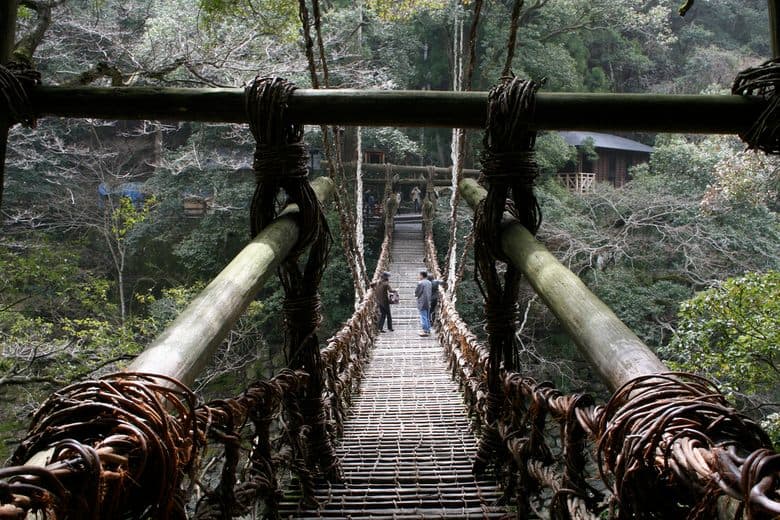
The Vine Bridges of Iya Valley are not merely crossings; they are living relics of Japan's remote past, deeply intertwined with the region's folklore and history. These wisteria vine bridges, particularly the Iya Kazurabashi Bridge, offer a unique glimpse into how ancient inhabitants navigated the rugged terrain of one of Japan's three 'hidden valleys.' Originally designed to be easily cut down in times of conflict, they represent both ingenuity and a connection to a bygone era.
Visitors consistently praise the exhilarating experience of crossing these swaying bridges, noting the thrill of the gaps between the planks and the impressive height above the river. Many describe it as a 'must-do' for those seeking adventure and a break from typical tourist sites. However, several reviewers caution that the experience is not for the faint of heart or those with a fear of heights, as the bridges can feel quite unstable and the views down are significant. The surrounding natural beauty of the Iya Valley, with its misty gorges and clear rivers, also receives high marks, making the journey to the bridges a scenic one.
To make the most of your visit, wear comfortable, closed-toe shoes with good grip, as the planks can be slippery, especially after rain. It's advisable to carry minimal belongings to keep your hands free for gripping the rails. Most visitors spend about 1-2 hours at the main Iya Kazurabashi bridge, including time for photos and exploring the immediate area. The best time to visit is during the shoulder seasons (spring or autumn) for pleasant weather and vibrant foliage, though summer offers lush greenery. Arriving early in the morning can help avoid crowds, especially on weekends. While there's an entry fee for crossing, the experience is generally considered worth the cost.
The Iya Valley is quite remote, and public transportation can be limited. Many visitors recommend renting a car for flexibility, as driving allows easier access to the various bridges and other attractions in the valley. The main Iya Kazurabashi bridge is about a two-hour drive from Tokushima City. For those relying on public transport, buses run from Awa-Ikeda Station, but schedules can be infrequent, so planning ahead is crucial. Parking is available near the main bridge, though it can fill up quickly during peak times. Be prepared for winding mountain roads, which can be challenging for inexperienced drivers.
A common complaint among some visitors is the feeling of being rushed by others on the bridge, especially during busy periods. To mitigate this, try to visit during off-peak hours or be prepared to take your time and let faster groups pass. Another point of concern for some is the perceived lack of 'authenticity' due to modern reinforcements; however, these are necessary for safety, and the core experience of crossing a vine bridge remains intact. Be aware that the gaps between planks are intentional and part of the thrill, so don't expect a solid walkway.