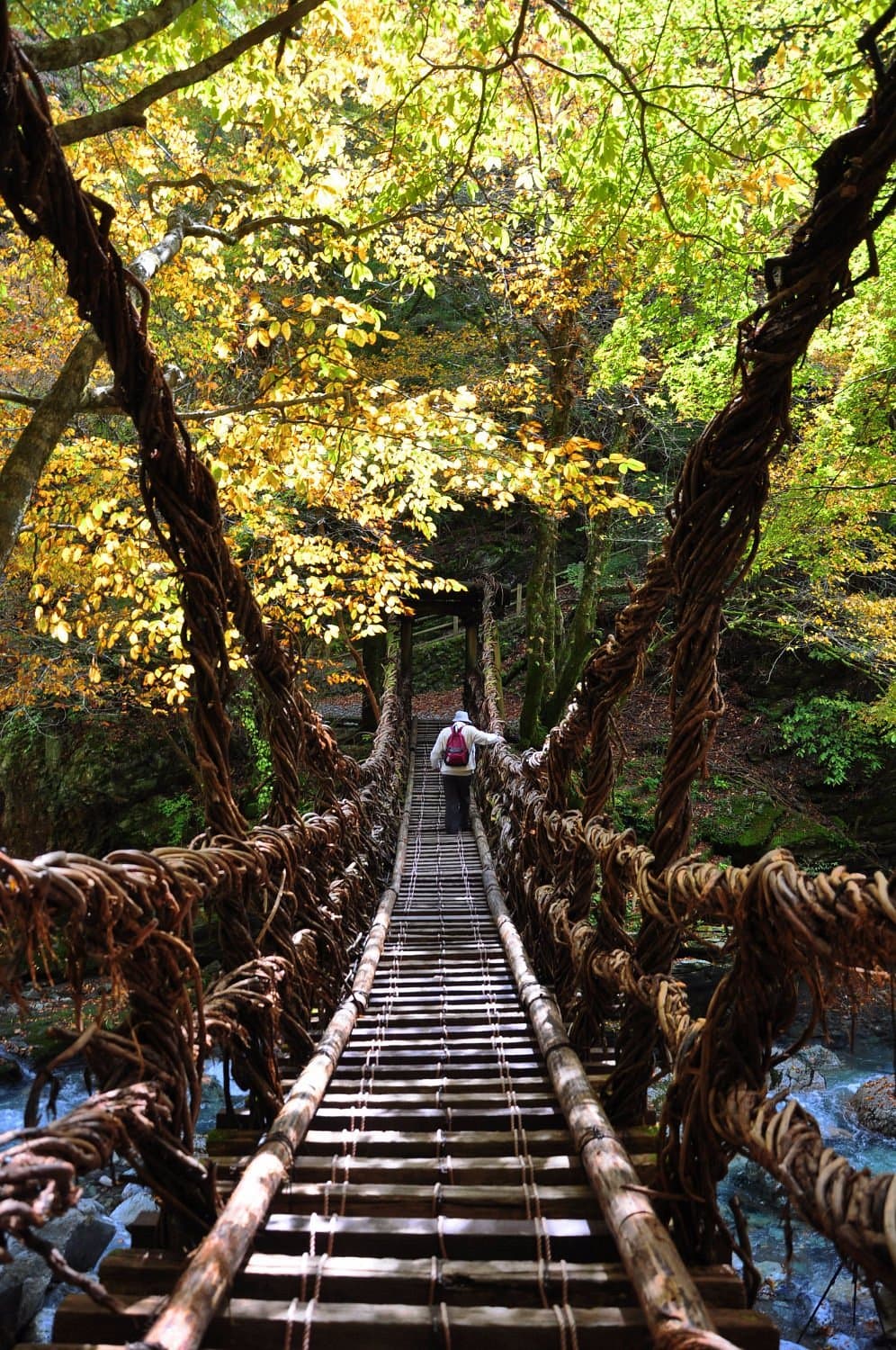
The Okuiya Niju Kazurabashi Bridge, often referred to as the 'Double Vine Bridges' or 'Husband and Wife Bridges,' is a significant historical and natural attraction nestled deep within the Iya Valley. These two vine bridges, along with a unique hand-pulled 'ya-en' cart, offer a glimpse into the region's past, believed to be connected to the hidden villages of the Heike clan. While the bridges are now reinforced with steel cables for safety, they retain their traditional appearance and provide an exhilarating experience over the clear river below.
Visitors consistently highlight the tranquil and less commercialized atmosphere of Okuiya Niju Kazurabashi compared to the more famous Iya Kazurabashi. Many reviewers describe it as a 'hidden gem' or 'more natural,' appreciating the absence of large tour buses and crowds. The thrill of crossing the bridges, with their widely spaced wooden slats and views of the river far below, is a common theme, with some admitting to being scared but ultimately finding it a rewarding experience. The hand-pulled 'ya-en' cart, which allows visitors to pull themselves across the river, is also frequently mentioned as a fun and unique activity.
For a comfortable visit, allocate about 1.5 to 2 hours to fully enjoy the bridges, the 'ya-en' cart, and the surrounding scenery. Early mornings are recommended to experience the bridges with even fewer people. Wear comfortable, sturdy shoes as the wooden slats can be slippery, especially if wet, and the path down to the bridges involves some walking. Reviewers suggest bringing a picnic to enjoy the serene environment, as food facilities nearby are limited. While the entrance fee is 550 JPY, many find it a worthwhile investment for the unique experience.
Reaching the Okuiya Niju Kazurabashi Bridge requires some effort due to its remote location. Many visitors recommend driving, noting that the roads in the Iya Valley can be narrow, winding, and sometimes single-lane with blind curves. A rental car offers the most flexibility. For those relying on public transport, some reviewers mention taking a bus from Oboke Station, though bus services are infrequent, so careful planning of schedules is crucial. Taxi tours are also an option, with some visitors mentioning 4-5 hour tours costing around 4000-5000 JPY per person. The bridges are located about 30km from the main Iya Kazura Bridge towards Mt. Tsurugi. Parking is available near the entry gate for a fee (around 400 JPY).
A common complaint is the challenging drive due to the winding, narrow roads. To mitigate this, drive cautiously, especially around blind curves, and be prepared to share the road with oncoming traffic. Some visitors also note that the bridges, while beautiful, are reinforced with steel cables, which might detract slightly from the 'authentic vine' feel for purists, though this ensures safety. The remote location means limited facilities, so it's wise to bring water and snacks.