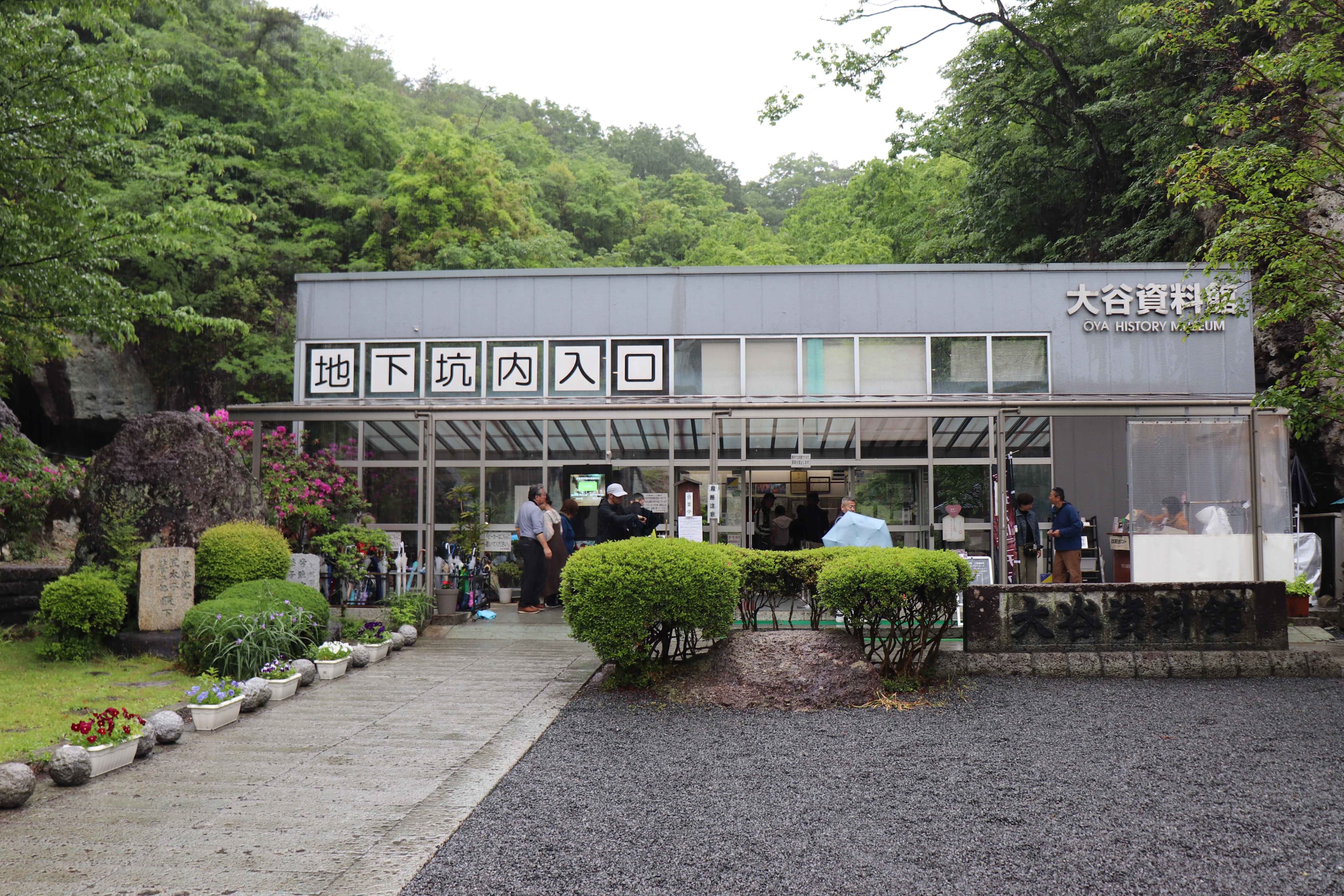
The Oya History Museum is not a typical museum but rather an extraordinary subterranean experience housed within a massive former quarry for Ōya stone. This igneous green tuff, famously used by Frank Lloyd Wright for the Imperial Hotel in Tokyo, has been extracted from this site for centuries. The museum showcases the history of Ōya stone mining, from ancient burial mounds to its use in modern architecture, but the true highlight is the vast underground space itself, often described as an 'underground temple' or 'underground city'.
Visitors consistently praise the awe-inspiring scale and unique atmosphere of the underground caverns. Many describe it as a 'mystical' or 'fantastic' space, enhanced by artistic lighting that creates photogenic scenes. The cool temperature inside, averaging around 8°C (46°F) year-round, is a recurring positive theme, making it a particularly popular destination during hot summer months. Reviewers frequently mention its use as a filming location for movies, TV dramas, and commercials, adding to its allure. The sheer size, with some areas reaching 60 meters underground and covering 20,000 square meters, leaves a lasting impression.
To make the most of your visit, several practical tips emerge from visitor experiences. Bring a jacket or sweater, even in summer, as the underground temperature is consistently cold. Some reviewers suggest wearing comfortable shoes due to stairs and potentially slippery paths from water droplets. While the main attraction is the underground quarry, the museum also offers insights into mining history and geology. Allow approximately 1 to 2 hours to explore the underground space thoroughly. Consider combining your visit with nearby attractions like the Ōya-ji Temple and the Heiwa Kannon statue, which are within walking distance.
The museum is located about 30 minutes by bus from Utsunomiya Station. From the station's West Exit, take Bus #45 (大谷経由・立岩) to the Shiryokan Iriguchi bus stop. Buses run approximately once or twice an hour. A convenient one-day pass (Oya Kanko Ichinichi Josha-ken) is available at the Kanto Jidosha Utsunomiya Station Ticket Center, which includes bus fare and entry to both the museum and Ōya-ji Temple. For those driving, free parking is available and generally ample, even on busy days. The walk from the bus stop or parking lot to the museum entrance offers views of the unique Ōya stone cliffs.
While overwhelmingly positive, some visitors note that the museum aspect is limited to a single room near the entrance, with the main draw being the quarry itself. A few mention that the 'free photo' offered is very small, encouraging purchase of a larger version. The dimly lit paths can be challenging for photography without proper equipment, and some areas might be humid, potentially causing camera lenses to fog. Despite these minor points, the unique experience of the Oya History Museum is widely considered well worth the trip.