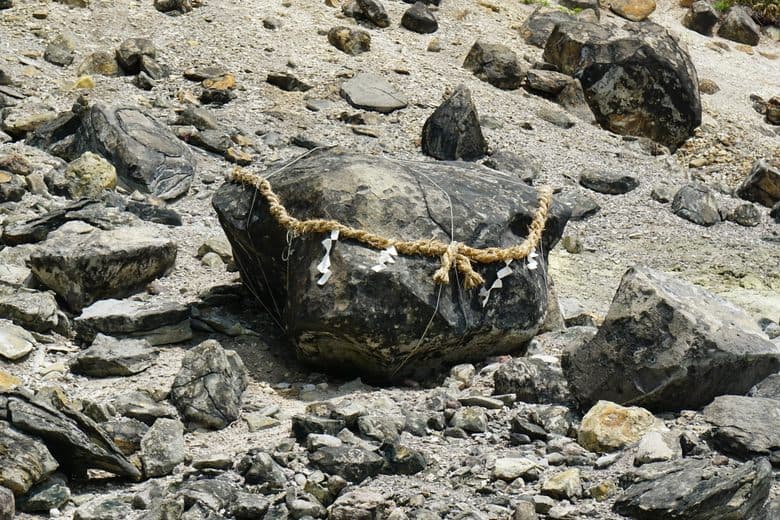
The Sesshōseki, famously known as the Killing Stone, is a significant natural and mythical landmark located near the Nasu hot springs in Japan. It is central to the legend of Tamamo-no-Mae, a powerful nine-tailed fox spirit who, after seducing emperors and causing chaos, was ultimately defeated. Her body is said to have transformed into this stone, which historically emitted poisonous gases, leading to the belief that it killed anyone who approached it. This site offers a unique blend of ancient folklore and geological phenomena.
Visitors are primarily drawn to the Sesshōseki for its intriguing backstory and the eerie atmosphere created by the surrounding volcanic activity. Many find the connection between the ancient legends and the natural emission of toxic gases, such as hydrogen sulfide and sulfur dioxide, particularly compelling. The recent splitting of the stone in March 2022 has added another layer to its mystique, with some believing it signifies the escape of Tamamo-no-Mae's spirit. Reviewers often highlight the nearby shrine dedicated to the Nine-tailed Fox as an interesting addition to the experience, providing further context to the legend.
When visiting, it is advisable to spend about 30 minutes to an hour exploring the stone and its immediate surroundings, including the fox shrine. The best time to visit is during daylight hours, allowing for clear views of the volcanic landscape. Due to the presence of natural poisonous gases, visitors should exercise caution and avoid prolonged exposure directly next to the stone. It is recommended to wear comfortable shoes as the area involves some walking on uneven terrain. There are no specific items to bring, but a camera is often mentioned for capturing the unique scenery.
The Sesshōseki is located in Nasu, Tochigi Prefecture. While specific public transport details are not frequently highlighted in reviews, the area is generally accessible by car, with parking available. For those relying on public transport, researching local bus routes from Nasu-Shiobara Station (a Shinkansen stop) to the Nasu Onsen area would be beneficial, followed by a short walk or taxi ride to the stone. The site is often visited in conjunction with the nearby Nasu hot springs, making it a convenient stop for those already in the area.
A common complaint, or rather a point of caution, is the strong smell of sulfur and the potential health risks associated with the volcanic gases. Visitors with respiratory sensitivities should be particularly mindful. To mitigate this, it is best to keep your visit brief and avoid lingering too close to the stone, especially on windy days when gases might be more concentrated. Despite the warnings, most visitors find the experience safe and fascinating, provided they respect the natural environment.