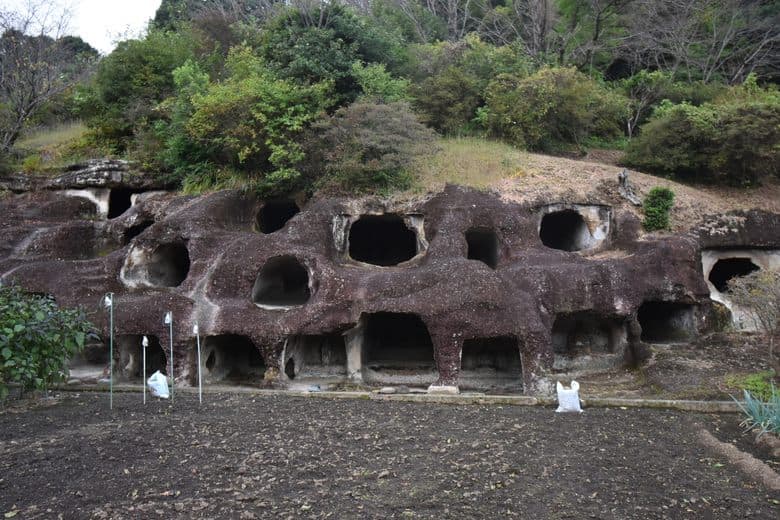
The Nagaoka Hyakuana Burial Mound is an archaeological site believed to be a familial tomb from the early 7th century, dating back to the late Kofun period. It features 52 man-made caves, or 'holes,' carved into the side of a tuff-stone hill. What makes this site particularly interesting are the stone sculptures found within nearly every cave, some depicting Buddhist figures like Ksitigarbha (Jizō) and Hayagriva, likely created much later during the Muromachi and Edo periods. It offers a tangible connection to ancient Japanese burial practices and the evolution of religious art.
Visitors consistently praise the site for its historical significance and the intriguing blend of ancient burial structures with later Buddhist iconography. Many appreciate the free access and the opportunity to explore at their own pace. However, some reviewers note that the caves and statues are in poor condition due to centuries of exposure to the elements, which can detract from the visual impact. The site is generally considered peaceful and less crowded than more prominent attractions, offering a quiet reflective experience.
For a visit, it's recommended to wear comfortable shoes as you'll be walking on uneven terrain. A flashlight might be useful for peering into the darker recesses of some caves, though most are adequately lit by natural light. Plan to spend about 1-2 hours here to comfortably explore all the accessible caves and appreciate the details. There are no facilities on site, so bring your own water and snacks if needed. The best time to visit is during daylight hours, as the site is freely accessible at all times but unlit at night.
To reach the Nagaoka Hyakuana Burial Mound, take a bus from Utsunomiya Station to the Toyosatodai-Iriguchi bus stop. The bus ride typically takes about 15 minutes. From the bus stop, it's approximately a 20-minute walk to the site, which is located along the side of the road. There is no dedicated parking mentioned, so public transport is the most recommended option.
A common complaint is the lack of detailed interpretive signage at the site, which can leave visitors wanting more context about the history and significance of the caves and sculptures. To mitigate this, it's advisable to do some research beforehand or bring a guidebook to enhance your understanding of what you are seeing.