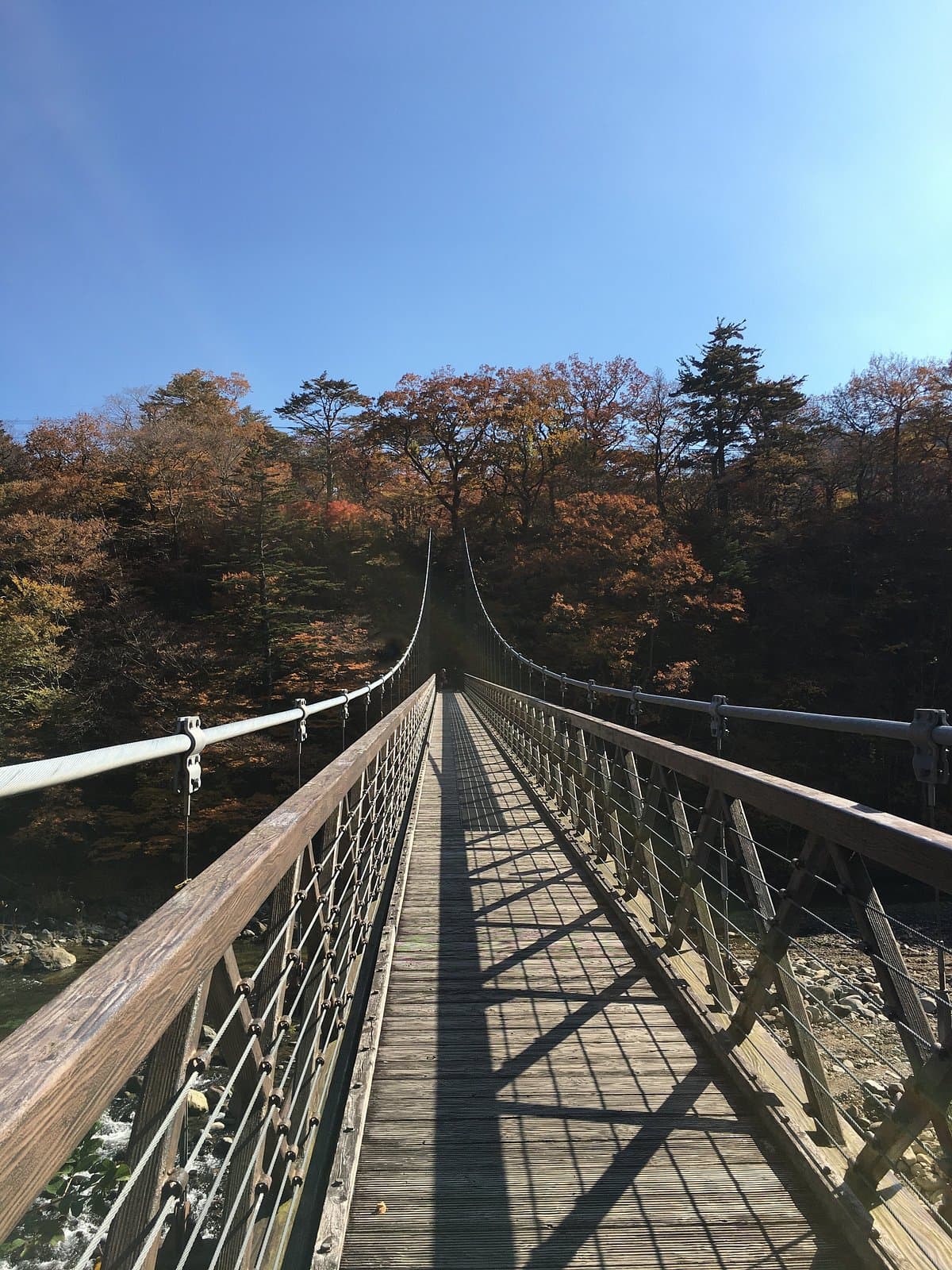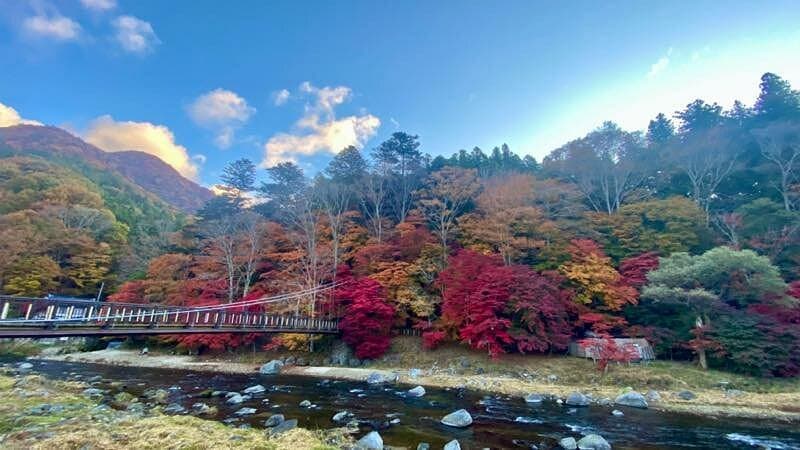
The Kurenai Bridge, or Crimson Bridge, is a 52.5-meter long suspension bridge spanning the Hoki River in the Nasushiobara Onsen area. Completed in 2003, it serves as a picturesque crossing and a gateway to a public onsen, but it is most celebrated as a prime spot for viewing the spectacular autumn foliage, attracting visitors who come to witness the fiery red maple leaves.
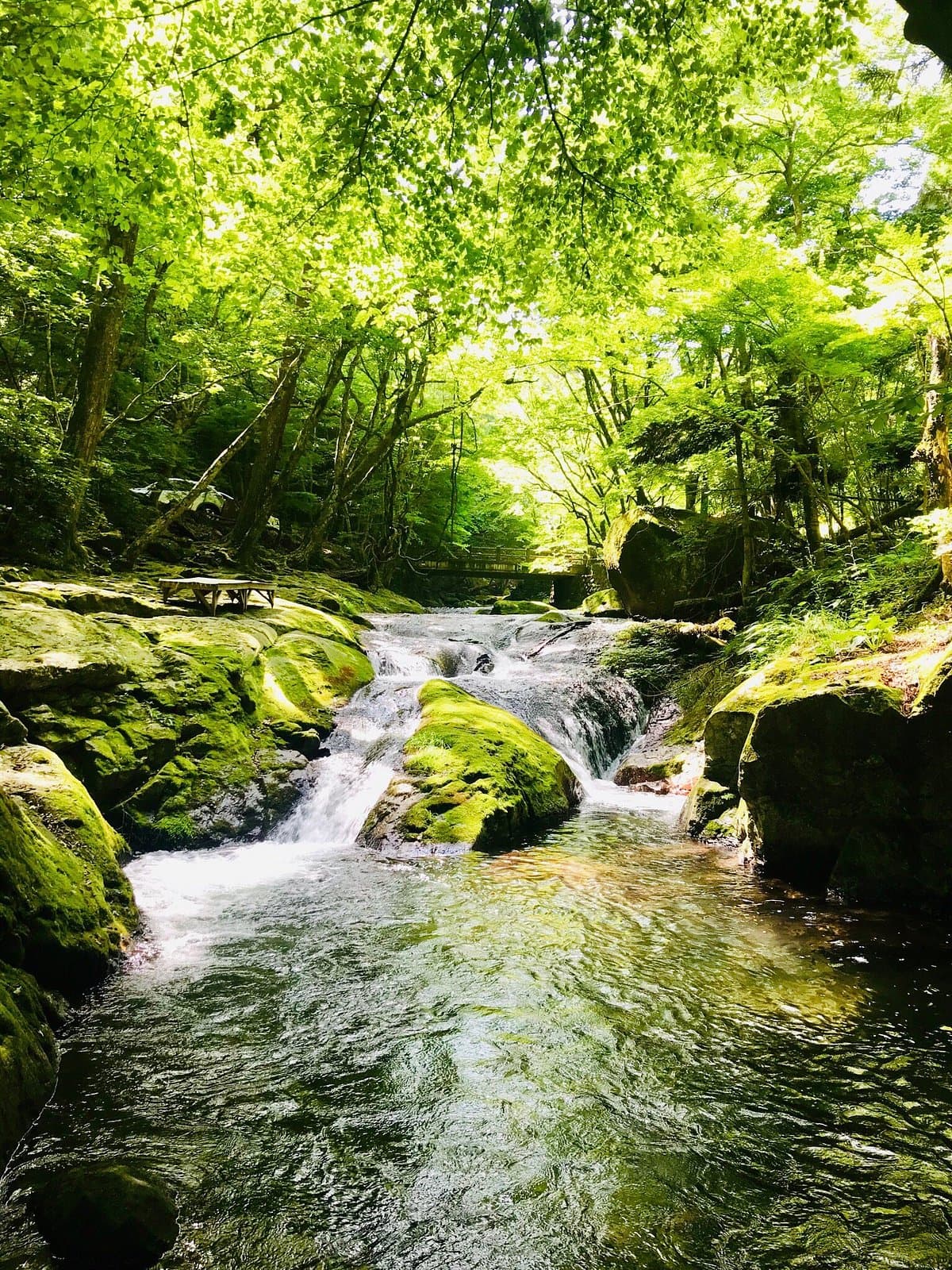
Visitors consistently praise the bridge for its stunning beauty, particularly during the autumn months when the surrounding trees transform into a vibrant display of yellow, orange, and red. Many find it an impressive and memorable sight, even on rainy days. Reviewers often highlight the clarity of the river water and the overall scenic quality of the area, making it a popular spot for leisurely walks and photography. The presence of various hiking courses, ranging from 40 minutes to 4 hours, is also a frequently mentioned positive, allowing visitors to tailor their experience to their fitness levels and available time.
For the best experience, plan your visit during the autumn season to witness the bridge's namesake crimson colors. While beautiful in December, as one reviewer noted, the autumn colors are the main draw. Bring comfortable walking shoes if you plan to explore the hiking trails. Allow anywhere from 40 minutes to a couple of hours, depending on whether you just want to admire the bridge and take photos or embark on a longer walk. There are souvenir shops and open-air baths nearby, though some visitors mention the onsen might require a bit of courage to enter.
The Kurenai Bridge is best accessed by car. Visitors mention ample parking available at the Shiobara Monogatari-kan Tourist Information Center, with approximately 20 parking lots. The address is Shiohara Furutamachi, Nasushiobara, Tochigi Prefecture. Public transport options are less frequently mentioned in reviews, suggesting driving is the most convenient way to reach this location.
Some visitors have noted that outside of peak autumn foliage, the colors might not be as vibrant, potentially due to unstable temperatures affecting the leaf change. To mitigate this, check local foliage reports before your visit if autumn colors are your primary reason for going. During off-peak seasons, while still a pleasant walk, the visual impact might be less dramatic.