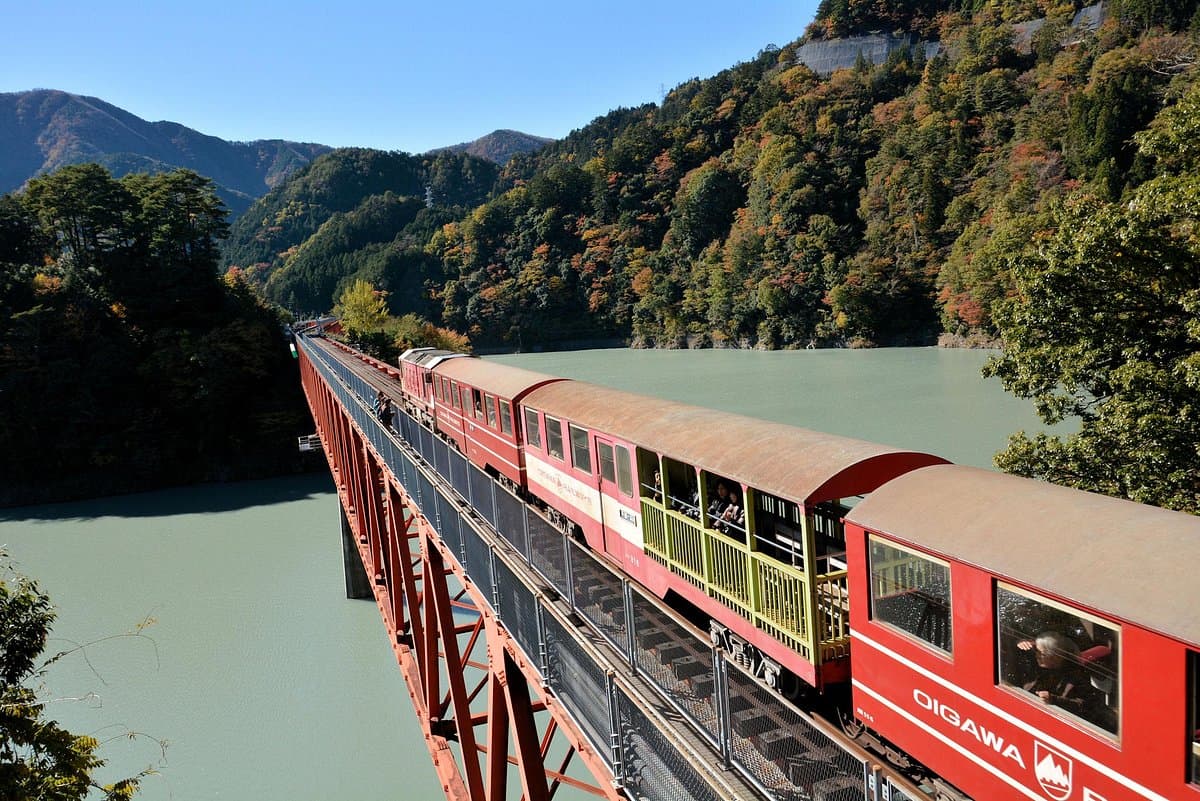
The Oigawa Railway is a historic railway line in Shizuoka Prefecture, Japan, renowned for operating a fleet of vintage steam locomotives, including the famous Thomas the Tank Engine. It provides a rare opportunity to experience rail travel as it was in a bygone era, traversing picturesque landscapes of tea plantations, mountains, and the Oigawa River. Beyond its nostalgic appeal, the railway serves as a gateway to the Southern Japan Alps, offering access to remote, scenic areas.
Visitors consistently praise the unique charm of the steam train ride and the beautiful scenery. Many highlight the 'Thomas the Tank Engine' experience as a major draw, especially for families with children, noting the attention to detail and the joy it brings. Reviewers frequently mention the cleanliness, organization, and punctuality typical of Japanese services. The staff's patience and helpfulness, even with limited English, are also appreciated. The journey itself is often described as a magical trip into childhood wonder, with some visitors enjoying the singing conductors and the special 'cage-like' carriages that offer unobstructed views for photography.
For a smooth visit, it's advisable to plan for an all-day trip, as the journey can be extensive, especially if exploring beyond Senzu station. Booking tickets in advance, particularly for the Thomas train, is crucial due to high demand; some non-Japanese speakers found a helpful PDF guide for booking. Bringing extra camera batteries is recommended for photography enthusiasts, as the scenery is stunning. While the steam locomotive is the main attraction, some visitors note that an electric locomotive occasionally assists from the rear on steeper sections. The best times to visit are summer or autumn for lush greenery and vibrant foliage, though spring also offers beautiful tea plantations.
To reach the Oigawa Railway, take the local train line (not Shinkansen) between Hamamatsu and Shizuoka and alight at Kanaya Station. From there, the Oigawa Railway office is located near the platform. Take their electric train one stop to Shin-Kanaya, where the steam trains typically depart. For those driving, large parking spaces are available, with parking fees around 800 yen for the day. The railway is accessible, but navigating the booking process and understanding the different lines (Oigawa Main Line to Senzu and the Ikawa Line beyond) might require some preparation for non-Japanese speakers.
A common complaint among some visitors is the difficulty of booking tickets without Japanese language skills, though this can be mitigated by using online translation tools or seeking assistance from a local. Another point of concern for a few reviewers was the occasional use of an electric locomotive to assist the steam engine, which some felt diminished the 'pure' steam experience. However, the overall sentiment remains overwhelmingly positive, with the scenic beauty and nostalgic ride outweighing these minor issues.