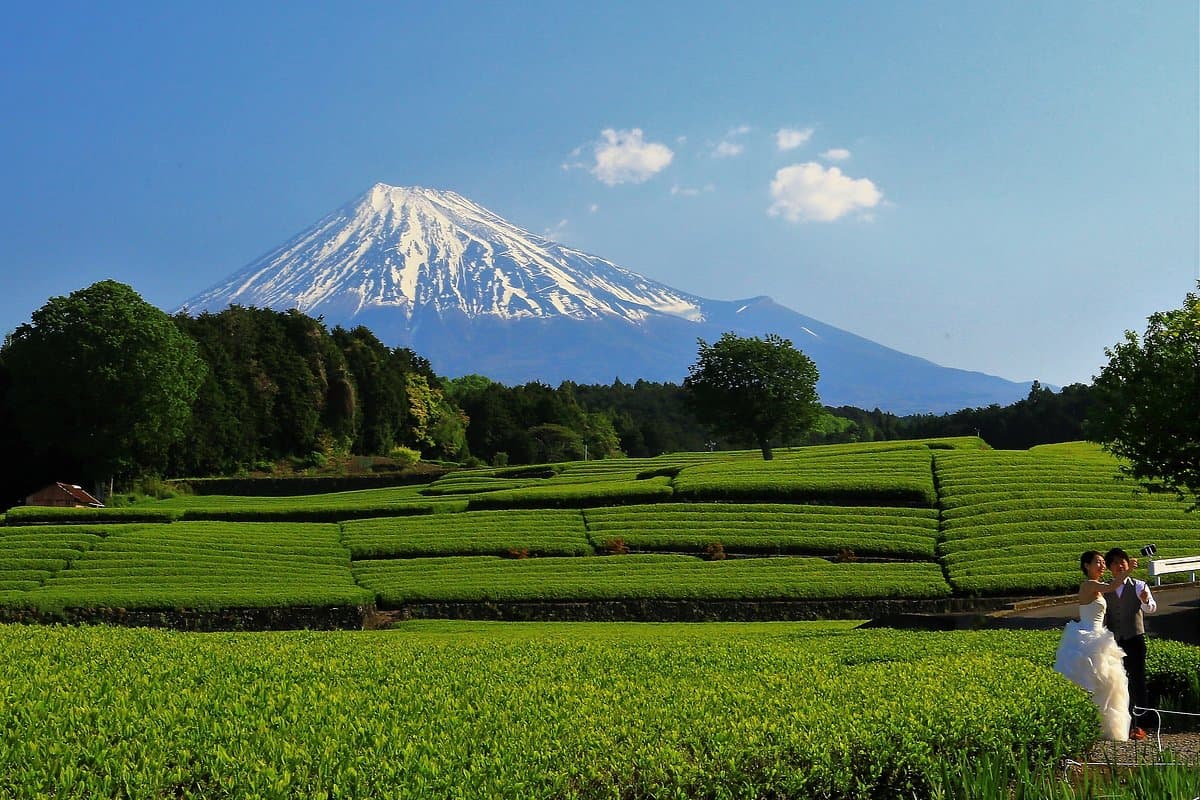
Obuchi Sasaba is a renowned viewpoint in Fuji City, Shizuoka Prefecture, famous for its iconic vista of Mount Fuji rising majestically behind expansive, verdant tea plantations. This location is particularly significant as the Obuchi area was a major producer of Yabukita tea after World War II, and it retains much of its traditional agricultural charm, offering a glimpse into Japan's rich tea-growing heritage.
Visitors consistently highlight the unparalleled photographic opportunities here. The combination of the meticulously maintained tea fields, often described as 'stunning green,' and the picturesque backdrop of Mount Fuji, creates a scene that many find truly breathtaking. Reviewers note the relative absence of telegraph poles in certain sections of the tea fields, which enhances the natural beauty of the landscape and makes for cleaner photographic compositions. The serene atmosphere and the sheer beauty of the natural setting are frequently praised, making it a popular spot for those seeking tranquility and iconic Japanese scenery.
To make the most of your visit, consider bringing a good camera to capture the panoramic views. The best time to visit for photography is often in the early morning or late afternoon when the light is softer and the chances of a clear view of Fuji are higher. Allocate at least an hour to fully appreciate the scenery and take photos. While there are no specific facilities, the focus here is purely on the natural landscape. There are no entry fees, making it an accessible and rewarding stop.
Obuchi Sasaba is located at 1516 Obuchi, Fuji, Shizuoka Prefecture. While specific public transport details are not widely mentioned in reviews, visitors often arrive by car, with a small parking lot available. Reviewers note seeing about five cars parked, suggesting it's manageable but can fill up. Driving offers the most flexibility to reach this somewhat rural location. It is advisable to use GPS navigation to find the exact spot.
Common complaints are minimal, primarily related to the weather's impact on visibility of Mount Fuji. To mitigate this, check the weather forecast for clear skies before heading out, as Fuji can often be obscured by clouds. Visiting during the cooler, drier months (late autumn to early spring) generally offers the best chances for a clear view.