Kinomiya Shrine is a significant Shinto shrine in Atami, deeply rooted in local tradition as the guardian deity of the Izu and Kinomiya regions. Its primary draw is the 'Okusu,' a colossal 2,000-year-old camphor tree, one of the largest and oldest in Japan. This ancient tree is considered a powerful 'power spot' and is central to legends of longevity, healing, and wish-granting, making the shrine a destination for both spiritual pilgrims and those seeking a connection with nature.
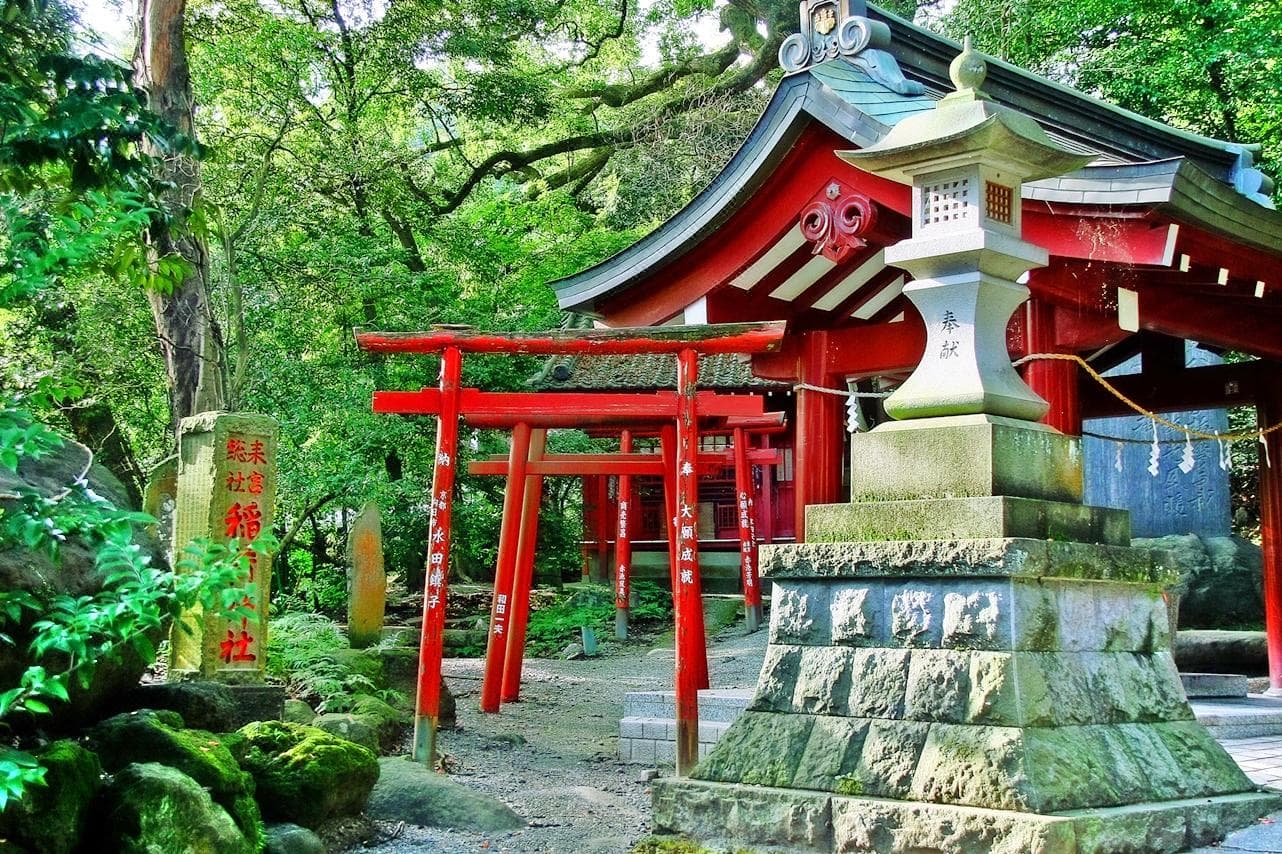
Visitors consistently praise the shrine's tranquil and green environment, noting the impressive size and spiritual aura of the ancient camphor tree. Many find the atmosphere serene and conducive to reflection, with some describing it as a 'spiritual energy place.' The shrine also caters to modern visitors with well-maintained grounds, numerous designated photo spots, and even a stylish cafe. Reviewers frequently mention the beautiful red torii gates and the overall aesthetic, making it a popular spot for photography. The presence of misting systems in summer helps keep the area comfortable, even on hot days.
To make the most of your visit, plan to spend about 1-2 hours exploring the grounds and circling the ancient tree. Many visitors recommend arriving early in the morning or later in the afternoon to avoid crowds, especially on weekends and holidays. The shrine is particularly atmospheric around sunset when it is illuminated. While the shrine is generally accessible, some reviewers note that the path around the tree is paved, but direct contact with the tree is not permitted. Consider bringing a camera or smartphone for the many photo opportunities, and perhaps a small offering if you wish to participate in the shrine's traditions.
Kinomiya Shrine is conveniently accessible. It is a 5-10 minute walk from Kinomiya Station. From Atami Station, it's about a 20-minute walk, which many find pleasant. Alternatively, several bus lines run directly from Atami Station to a stop right outside the shrine. For those driving, be aware that parking can be limited and fills up quickly on weekends and holidays, and some roads leading to the shrine are narrow. Public transport is generally recommended.
While most visitors have positive experiences, some find the shrine to be more 'commercialized' than traditional shrines, with a focus on Instagrammable spots and a shop. To mitigate this, focus on the natural beauty of the ancient tree and the spiritual aspects rather than the modern amenities. A few reviewers also noted that the shrine, while beautiful, might not stand out significantly if you have visited many other shrines in Japan. However, the unique ancient tree remains a compelling reason to visit.