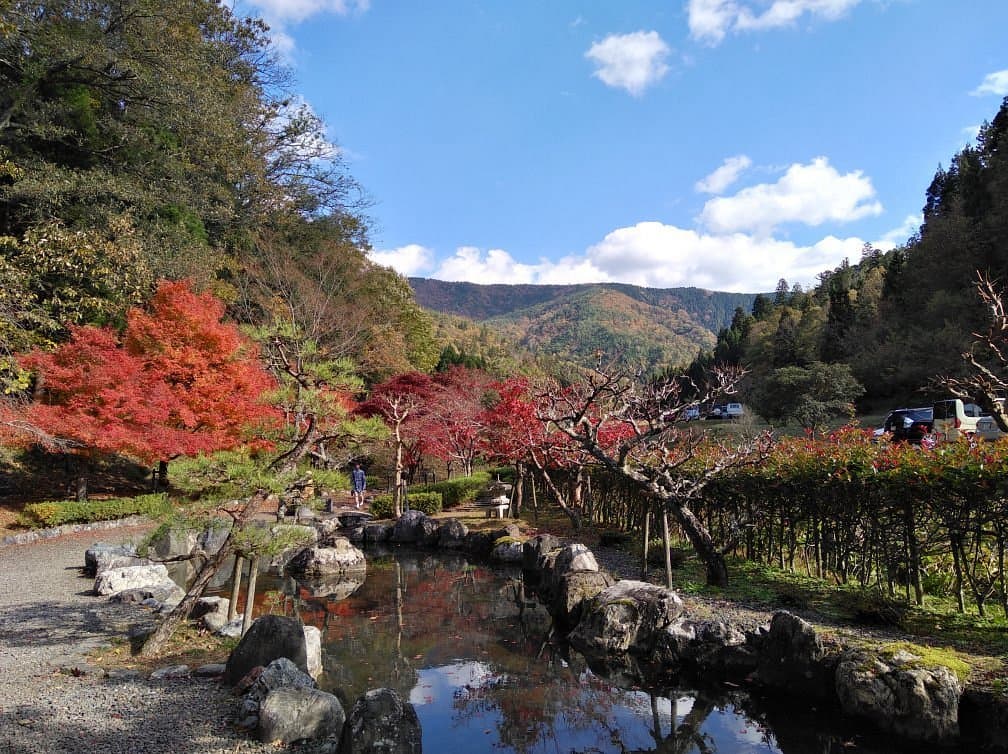
Shakudoji Temple is a modest Buddhist temple nestled in the rural landscape of Nagahama, Shiga Prefecture. It is particularly noted for housing an ancient eleven-headed Kannon statue, a significant piece of Buddhist art that draws visitors interested in Japan's religious heritage, especially during local festivals.
Visitors consistently describe Shakudoji as a small and somewhat secluded temple. Reviewers mention that it can be difficult to easily view the Buddha statues, suggesting that the display or access might be limited. During special events like the Kannon no Sato Furusato Matsuri, the temple experiences a significant increase in visitors, indicating that these festivals are a key draw for experiencing the temple's atmosphere and art. The temple's location at the end of a walking trail, which loops back to its starting point, suggests it's part of a larger exploration of the area rather than a standalone destination.
For a visit, it's advisable to combine Shakudoji with other attractions in the Kannon no Sato area, such as Keisokuji. Expect to spend a relatively short amount of time here, perhaps 30-60 minutes, unless you are deeply engaged in studying the Buddhist art. Bringing comfortable walking shoes is essential, as the temple is accessed via a walking trail. Visiting during local festivals might offer a more vibrant experience, but also means larger crowds.
Shakudoji Temple is located at 419 Kinomotochoishimichi, Nagahama, Shiga Prefecture. Accessing the temple primarily involves walking. Reviewers note that it is situated at the end of a walking trail that originates from Keisokuji. Therefore, visitors should plan to reach Keisokuji first, likely by local bus or car, and then proceed on foot. Public transport options directly to Shakudoji are likely limited, making a car or a combination of public transport and walking the most practical approach.
A common complaint, or rather an observation, is the difficulty in viewing the Buddha statues. Visitors should manage expectations regarding close-up or unobstructed views of the artifacts. Planning a visit during a festival might offer better viewing opportunities or at least a more lively atmosphere to compensate for any viewing limitations.