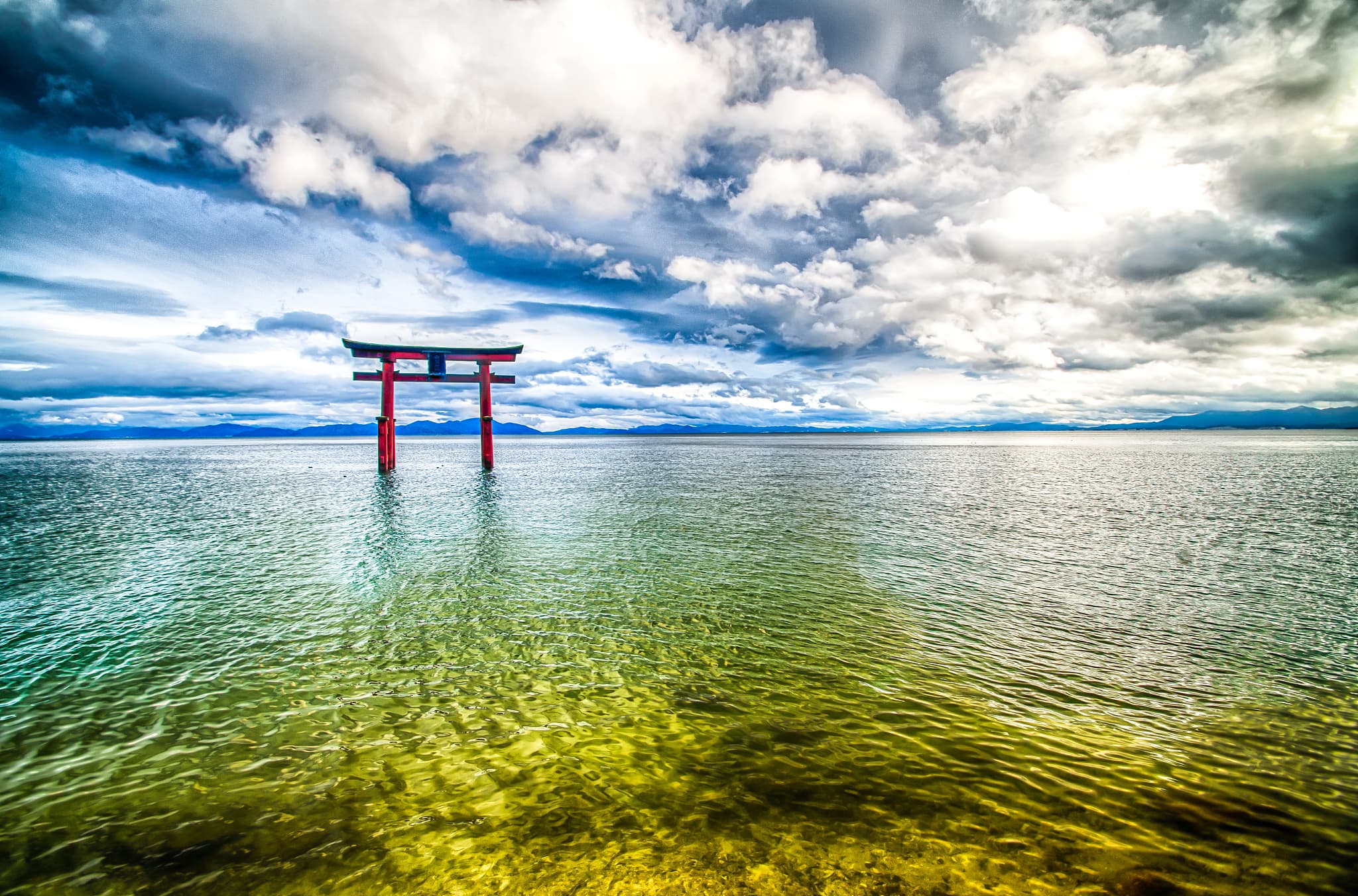
Lake Biwa is the largest freshwater lake in Japan, often referred to as the "Lake of Life" due to its vital role in supplying water to millions and its deep cultural significance. It forms the centerpiece of the Lake Biwa Quasi-National Park, surrounded by mountains and offering a vast natural landscape that contrasts sharply with Japan's urban centers.
Visitors consistently praise the lake's beautiful natural scenery and peaceful atmosphere, describing it as a refreshing escape from city life. Many highlight the expansive views, especially from elevated points accessed by cable car, which offer stunning panoramas of the lake and surrounding autumn foliage. Boat tours, including trips to Takeshima Island, are also popular, allowing for a closer experience of the lake's vastness. Reviewers often note the clear water and the pleasant feeling of the air, particularly in summer. However, some visitors mention that while the lake is vast, specific scenic spots can be spread out, and the overall impression might be less dramatic than expected for such a large body of water.
To make the most of a visit, consider renting a bicycle or driving, as many reviewers suggest this is the best way to explore the extensive lakeside and reach various points of interest. A boat trip, such as the one to Takeshima Island (around 3000 JPY), is highly recommended for a unique perspective. For panoramic views, take a cable car up a nearby mountain; some even have restaurants at the top where you can dine with a view. The best time to visit for autumn leaves is typically late autumn, though the lake offers beauty year-round. Early mornings are often described as particularly serene, with mist over the water.
Lake Biwa is accessible from major cities like Kyoto and Osaka. While specific public transport lines are not consistently mentioned in reviews, visitors often refer to taking a train to a station near the lake (e.g., Shiga Station for mountain views) and then transferring. Given the lake's size, reaching specific points of interest around its perimeter often requires local buses, taxis, or personal transport. Driving is frequently cited as the most convenient way to explore multiple locations along the shore.
A common complaint is that the lake's vastness means that individual scenic spots can feel somewhat isolated or less spectacular than anticipated, especially if one only visits a single point. Some also note that certain areas might have poor water quality or litter, though this is not a universal experience. To mitigate this, plan your visit to include specific attractions like Shirahige Shrine's torii gate in the water, or a cable car ride, rather than just expecting a single, overwhelming vista. Researching specific viewpoints or activities beforehand can greatly enhance the experience.