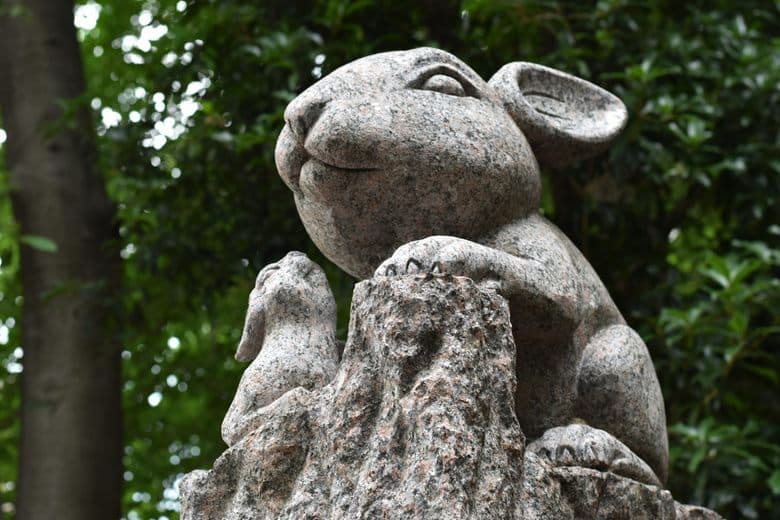
Tsuki Shrine, dating back to approximately 771, stands out among Japanese Shinto shrines due to its unique embrace of rabbits as divine messengers. Unlike most shrines that feature fierce 'komainu' guardian statues, Tsuki Shrine is adorned with numerous stone bunnies, a charming detail stemming from the shrine's name, which is a homophone for 'moon' (tsuki), and the East Asian folklore associating rabbits with the moon. This distinctive feature, along with the absence of traditional torii gates and pine trees, makes it a fascinating site for those seeking a less conventional spiritual experience.
Visitors consistently praise the shrine's peaceful atmosphere and the delightful presence of the rabbit statues. Many find the historical and linguistic explanations behind the rabbit motif and the shrine's unusual architectural elements to be particularly engaging. The shrine's connection to 'luck' (another meaning of 'tsuki') also draws local athletes seeking blessings before competitions, adding a layer of contemporary cultural relevance. Reviewers often highlight the photo opportunities with the various rabbit sculptures, making it a popular spot for unique souvenirs and social media content.
To fully appreciate Tsuki Shrine, visitors should allocate about 1 to 2 hours. The best time to visit is during the morning or late afternoon to enjoy the tranquility and avoid larger crowds. There are no specific items to bring, but comfortable walking shoes are advisable as you explore the grounds. While the shrine is relatively small, taking time to observe the details of the rabbit statues and read any available information (if provided in English) enhances the experience. Consider visiting during a weekday for a more serene atmosphere.
The shrine is conveniently located about a 10-minute walk from Urawa Station. Urawa Station is accessible via several JR lines, including the Keihin-Tohoku Line, Takasaki Line, and Utsunomiya Line, making it easy to reach from central Tokyo. Upon exiting Urawa Station, follow signs or use a navigation app to guide you to the shrine. Public transportation is highly recommended, as parking options in the immediate vicinity may be limited.
A common observation, rather than a complaint, is the shrine's relatively small size compared to larger, more famous temples. Visitors expecting a sprawling complex might find it modest. However, this intimacy is often seen as part of its charm. To mitigate any potential disappointment, approach Tsuki Shrine as a unique, focused cultural experience rather than a grand historical site, allowing its distinctive features to be the highlight.