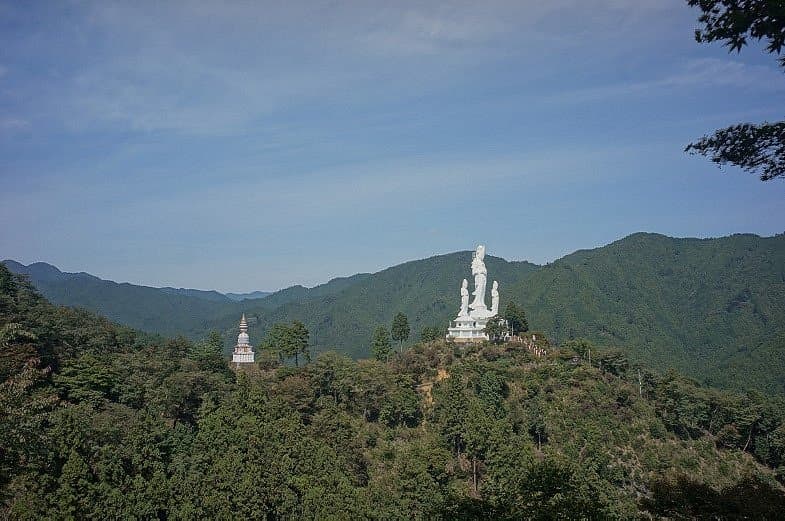
Torii Kannon is a distinctive temple complex located in Hanno, Saitama Prefecture, known primarily for its monumental 33-meter tall white Kannon statue and a five-story pagoda. Established by the founder of the Seibu Railway, it stands as a unique blend of religious devotion and grand architectural ambition, offering visitors a serene escape into a mountainous setting.
Visitors consistently praise the peaceful atmosphere and the impressive scale of the Kannon statue. Many find the site to be unexpectedly quiet and uncrowded, providing a contemplative experience. The surrounding natural beauty, especially during autumn with its changing leaves, is frequently highlighted as a major draw. Reviewers often mention the unique, almost surreal quality of the place, making it an interesting stop for those seeking something beyond the typical tourist circuit. However, some visitors note that beyond the main statue and pagoda, the complex itself is not extensively developed, and the overall experience might feel brief if not combined with other activities.
To make the most of your visit, allocate about 1 to 2 hours to explore the grounds and appreciate the Kannon statue and pagoda. Bringing comfortable walking shoes is advisable, as there are some inclines and stairs. Consider visiting in the morning for the best light for photography and to enjoy the tranquility before any potential, albeit rare, crowds. There are no specific food vendors on site, so bringing water or snacks is recommended, especially on warmer days. While the site is generally well-maintained, some areas might show signs of age, which some visitors find adds to its rustic charm.
Torii Kannon is located at 3198 Kaminaguri, Hanno. Reaching the temple without a car can be challenging. Public transport options are limited; visitors typically take a train to Hanno Station (Seibu Ikebukuro Line) and then a local bus or taxi. Reviewers often suggest that driving is the most convenient way to access the site, as it allows for greater flexibility and direct access to the parking area. Parking is usually available on site. The temple is situated in a somewhat remote, mountainous area, so expect a scenic but potentially winding drive.
A common complaint among visitors is the relative isolation and the difficulty of access without a private vehicle. To mitigate this, consider combining your visit with other attractions in the Hanno area, or plan your trip carefully using bus schedules if relying on public transport. Some visitors also mention that the entry fee might feel a bit high for what is offered, especially if you are not deeply interested in the religious aspects or the large statue itself. Manage expectations by viewing it as a unique, somewhat quirky destination rather than a grand, bustling temple complex.
