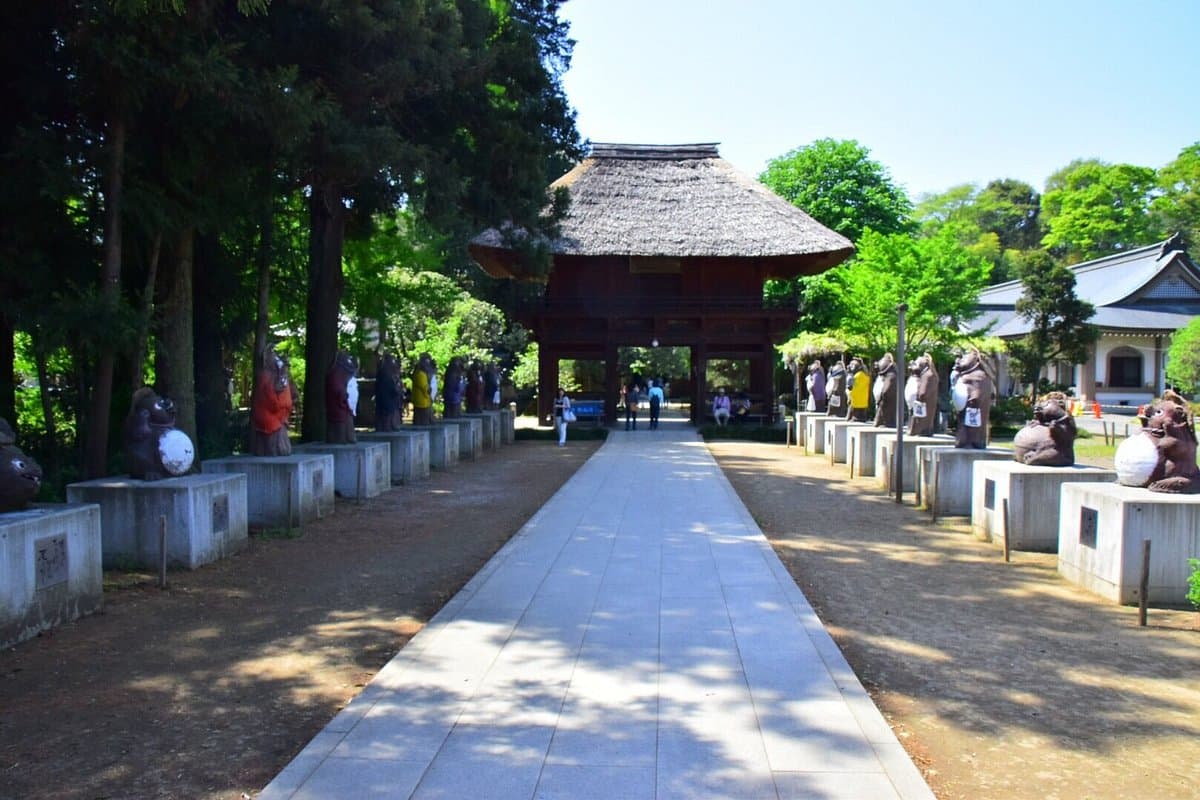
Morinji Temple is a historic Buddhist temple in Tatebayashi, Gunma Prefecture, renowned for its strong association with the beloved Japanese folktale, Bunbuku Chagama. This tale, known across Japan, tells of a magical teakettle and a shapeshifting tanuki (raccoon dog). The temple embraces this legend, making it a unique cultural destination where visitors can immerse themselves in a whimsical narrative.
Visitors consistently praise the temple's charming atmosphere and the abundance of tanuki statues that adorn the grounds, particularly the row of 21 Shigaraki-ware statues at the entrance. Many reviewers highlight the opportunity to see the legendary chagama (teakettle) in the temple's treasury-museum. The temple is also noted for its pleasant views, especially during the cherry blossom season, which adds to its appeal. Reviewers often mention the friendly cats found near the souvenir shops along the approach, contributing to the welcoming ambiance.
To make the most of your visit, plan to spend about 1 to 2 hours exploring the temple grounds and the museum. The best time to visit is during the cherry blossom season for scenic views, or any time of year for a quieter experience. It is advisable to bring comfortable walking shoes, as there is a 10-15 minute walk from the nearest station. While the main temple grounds are free, there is a small admission fee for the treasury-museum, which houses the famous teakettle. Several souvenir shops along the approach offer raccoon dog figurines and other themed items.
Morinji Temple is easily accessible by public transport. It is a 10-15 minute walk from Morinji-mae Station on the Tobu-Isesaki Line. Reviewers note that Morinji-mae Station is just one stop from Tatebayashi Station. This makes it a convenient stop for those traveling by train in the region.
Common complaints are few, but some visitors might find the temple relatively small compared to larger, more famous sites, and the appeal is largely dependent on an interest in the specific folklore. To mitigate this, approach the visit with an appreciation for the cultural narrative rather than expecting a grand, sprawling complex. The focus here is on the story and its charming representation.