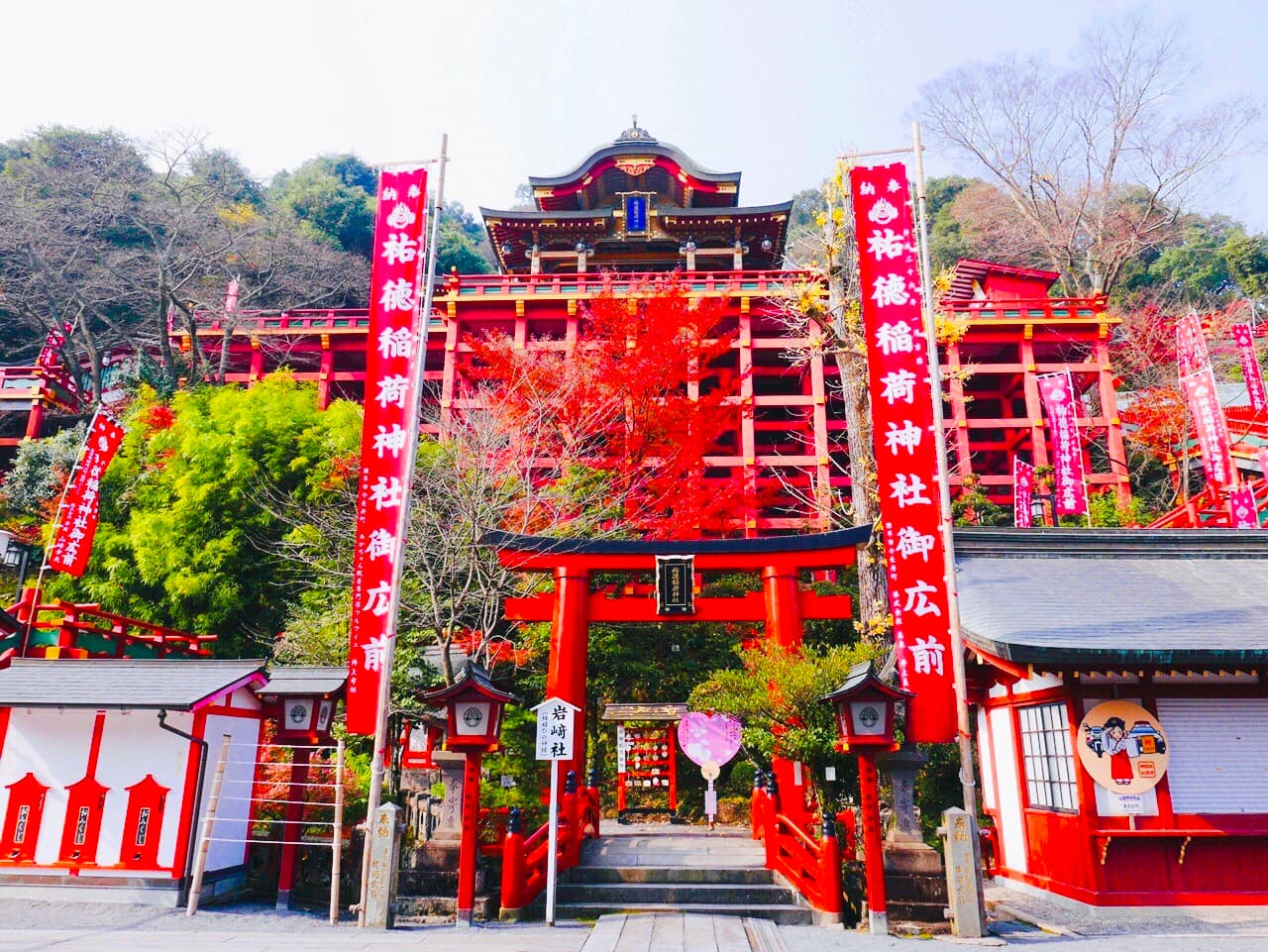
Yūtoku Inari Shrine is a prominent Shinto shrine located in Kashima City, Saga Prefecture, often referred to as "Chinzei Nikko" due to its striking resemblance to Nikko Toshogu Shrine. It stands as one of Japan's three major Inari shrines, alongside Fushimi Inari Taisha in Kyoto and Kasama Inari Shrine in Tochigi Prefecture. Dedicated to Inari Ōkami, the deity of rice, sake, and prosperity, the shrine attracts nearly 3 million visitors annually, making it a significant spiritual and cultural landmark in Kyushu.
Visitors are consistently captivated by the shrine's vibrant vermilion structures, particularly the main hall, which is built on stilts over a valley, reminiscent of Kyoto's Kiyomizu-dera. Many reviewers highlight the impressive Romon gate and the luxurious main hall as must-sees. The path leading up the mountain behind the main shrine, lined with numerous torii gates, is a popular feature, offering rewarding panoramic views from the top. The shrine's natural surroundings are also a major draw, with flowers blooming in succession throughout the seasons, creating a picturesque setting. Reviewers frequently mention the beauty of the autumn colors and the hydrangeas during the rainy season. The overall atmosphere is often described as peaceful and serene, providing a welcome escape from more crowded attractions.
For a fulfilling visit, allocate 1-3 hours to explore the main shrine, ascend the torii-lined path to the inner sanctuary, and enjoy the views. While the main shrine is accessible via stairs, an elevator is available for a fee, which many visitors find convenient, especially for those with mobility challenges. However, it's important to note that beyond the main hall, the path to the upper shrines consists only of stone staircases, which can be challenging for some. Wear comfortable shoes suitable for walking and climbing stairs. Many visitors recommend visiting during the shoulder seasons (spring or autumn) to enjoy the flowers or fall foliage, though the shrine is beautiful year-round. Consider bringing some cash for the elevator or souvenirs, as some smaller shops might not accept IC cards.
Getting to Yūtoku Inari Shrine requires a bit of planning, as it's located in a more rural area. The most common route involves taking a JR train to Hizen-Kashima Station. From there, a local bus service is available. Reviewers advise looking for the bus stop outside the station, often in front of the Yutoku building, and note that buses run approximately once an hour, costing around 320 yen for a 10-minute ride. For those driving, there are parking lots available, with some free options a bit further away and paid options closer to the shrine. Drivers should be aware that some paid parking lots may not accept certain IC cards like Suica. Several visitors suggest combining a visit here with a trip to nearby sake breweries or as a stop between Fukuoka and Nagasaki.
A common complaint among visitors is the limited public transportation, particularly the infrequent bus schedule from Hizen-Kashima Station, which can lead to long waits. To mitigate this, check the bus timetable in advance and plan your train arrival accordingly. Some reviewers also mention that the shopping street leading to the shrine can appear a bit rundown, but still offers interesting souvenirs. The hike to the very top of the mountain behind the main shrine can be strenuous, especially for young children or the elderly, and is not fully accessible by elevator. Those with limited mobility should manage their expectations for reaching the highest points.