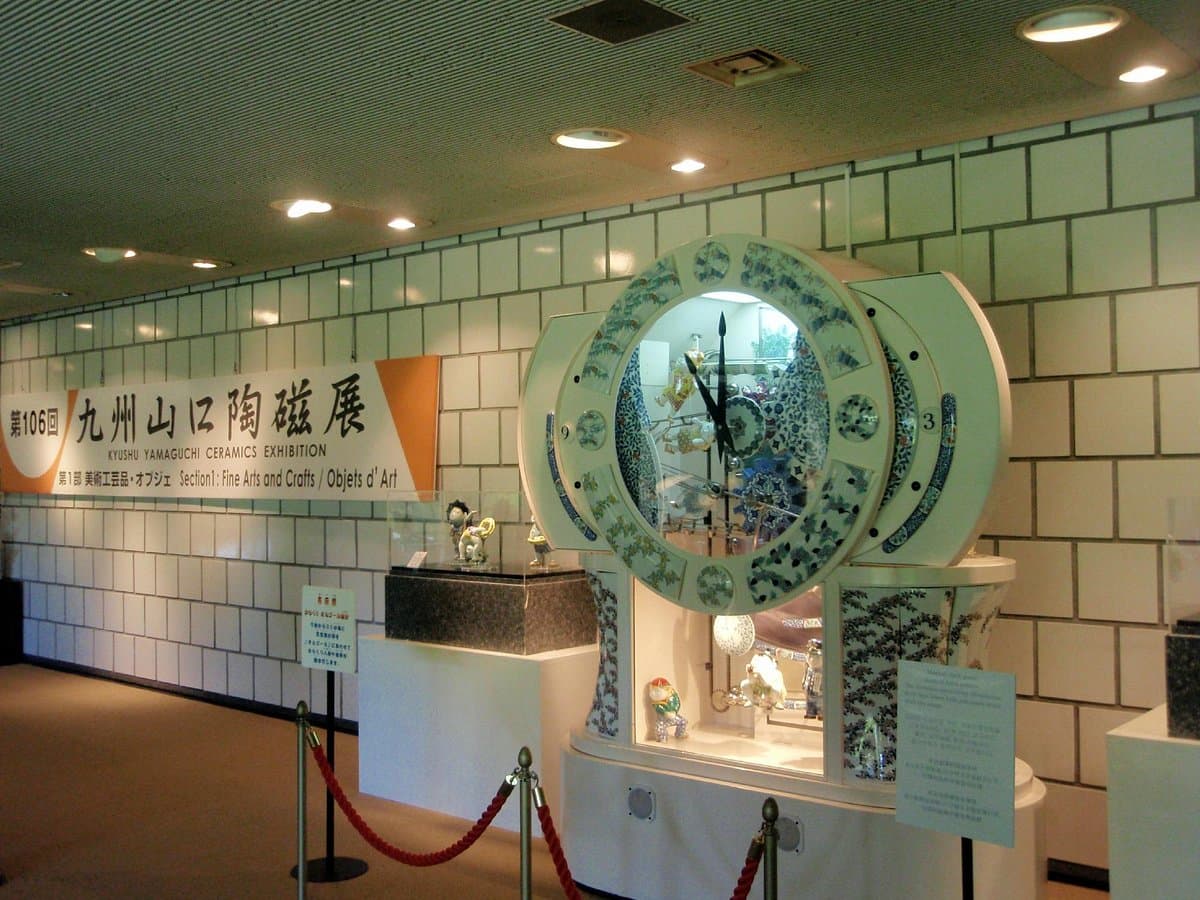
The Kyushu Ceramic Museum is a significant institution dedicated to preserving and showcasing the rich history and artistry of Japanese ceramics, with a particular focus on the renowned Arita ware. It serves as an excellent gateway for understanding the region's profound connection to pottery, from its earliest forms to contemporary masterpieces. The museum's collection spans centuries, offering a detailed narrative of how ceramic art evolved in Japan.
Visitors frequently commend the museum for its well-lit and thoughtfully arranged exhibits, which include English explanations alongside Japanese. Many reviewers highlight the benefit of free admission for the main exhibition, making it an accessible cultural experience. A consistent point of praise is the unique mechanical clock display that activates every 30 or 60 minutes, featuring ceramic bells and intricate movements; visitors recommend timing your visit to witness this spectacle. The museum is often suggested as an ideal starting point for exploring Arita, providing essential context before venturing into local shops and studios. While the main exhibits are free, temporary exhibitions may require a ticket.
To make the most of your visit, plan to spend about 1 to 2 hours exploring the five themed rooms and the special collection in the basement. Arriving around the top of the hour or half-hour is advisable to catch the clock performance. Photography without flash is generally permitted, allowing visitors to capture the intricate details of the ceramics. Reviewers suggest that while the museum is engaging for adults and those with an interest in ceramics, it might be less captivating for young children, though some video displays on pottery making could hold their attention.
The museum is conveniently located within walking distance of Arita Station. From the station, it's approximately a 10-minute walk. Visitors note a short, scenic walk involving a rather steep bridge and an uphill pathway to reach the museum entrance. This walk is described as manageable and pleasant. There is no specific mention of extensive public transport options beyond the train to Arita Station, suggesting walking from the station is the primary method of access.
While most visitors have positive experiences, some mention that not all descriptions are fully translated into English, particularly in the basement or for more detailed historical context. Those without a strong interest in ceramics might find the experience less engaging. To mitigate this, consider focusing on the visual aspects of the pottery and the main historical overview, which is well-supported with English signage.