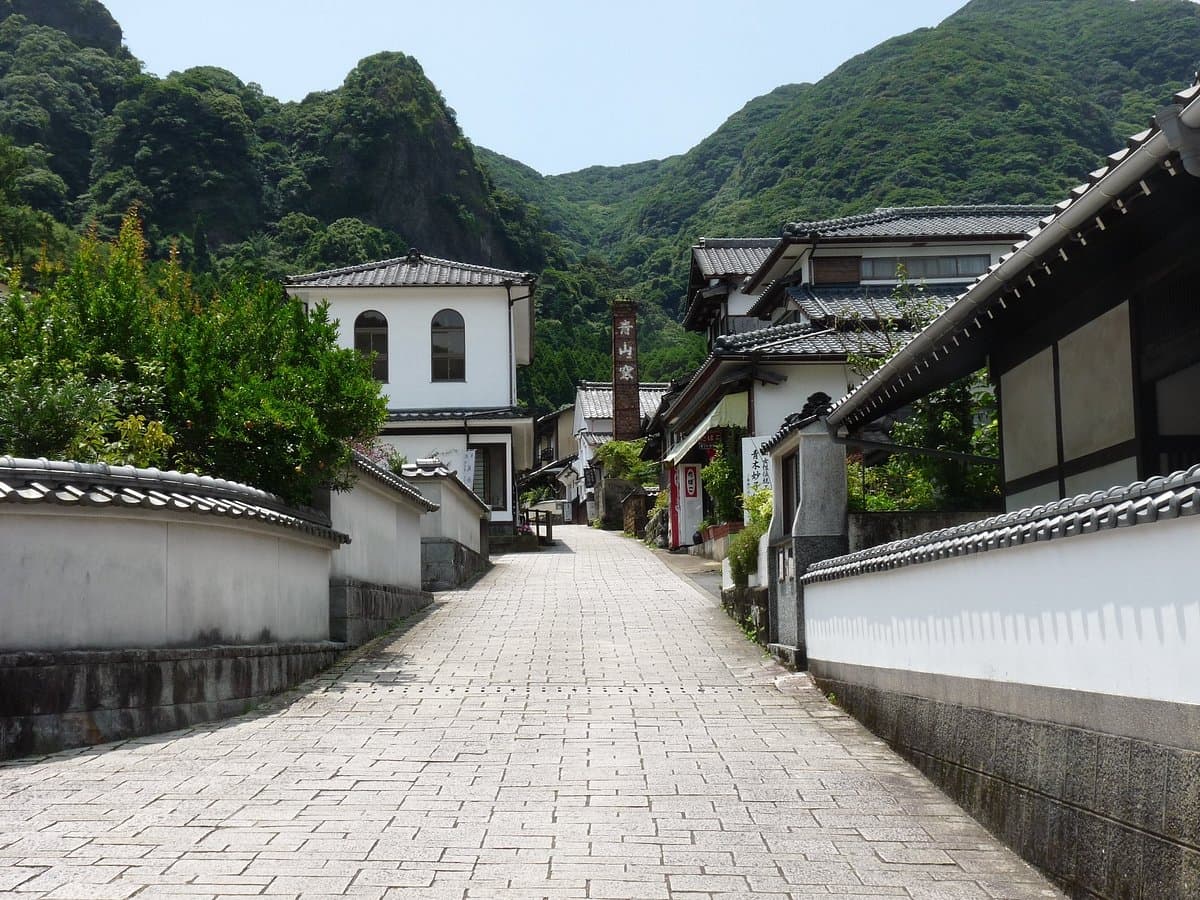
Imari Okawachiyama is a historic village renowned for its exquisite Imari porcelain, often referred to as the "Village of Secret Kilns." For over 400 years, this secluded mountain community has been a center for pottery production, originally supplying the Imperial court and feudal lords. Its historical significance lies in the closely guarded techniques that produced some of Japan's finest ceramics, which were also widely exported to Europe.
Visitors consistently praise the village's picturesque setting, with many noting the beautiful mountain backdrop and the unique ceramic decorations found on bridges and along riversides. The main draw is undoubtedly the numerous pottery shops, offering a wide range of Imari porcelain from affordable pieces to high-end collector's items. Reviewers highlight the opportunity to see the old kilns and the water wheel, providing a sense of the village's enduring craft. Many appreciate the quiet, uncommercialized atmosphere, describing it as a peaceful escape from busier tourist spots. Some visitors mention the "Wind Chime Festival" in early summer, where wind chimes showcasing different potters' techniques are displayed, adding a seasonal charm.
To make the most of your visit, plan to spend 2-3 hours exploring the village. While there are many shops, some visitors note a lack of diverse food options beyond a few cafes offering coffee and shaved ice, so it's advisable to eat before or after your visit. The village is small, essentially one main street, making it easy to navigate on foot. Many recommend visiting in late autumn for the beautiful fall foliage, or during the wind chime festival in early summer. Bring comfortable walking shoes as the village has some gentle inclines. While some shops offer very expensive items, there are also many affordable pieces, allowing visitors to find something within their budget.
Getting to Imari Okawachiyama requires a bit of planning. The village is a 30-minute bus ride from Imari Station, costing around 170 yen. Reviewers advise checking the bus schedule as buses run infrequently, sometimes only every two hours. The tourist information desk at Imari Station is a good resource for bus times. For those driving, the road to the village can be steep and narrow in places, making it challenging to pass oncoming cars. Parking is available, but space might be limited. Some visitors who missed the last bus opted for a taxi, noting it wasn't excessively expensive.
A common sentiment among reviewers is that the village is primarily for those interested in ceramics. If pottery is not a strong interest, some visitors found there wasn't much else to do or see, describing it as "okay" but not "super exciting." To mitigate this, consider combining your visit with other attractions in the Saga Prefecture, or approach it as a scenic walk through a historically significant craft village rather than a bustling tourist hub. While some wished to see working potters, this is not always a guaranteed experience, so manage expectations regarding live demonstrations.