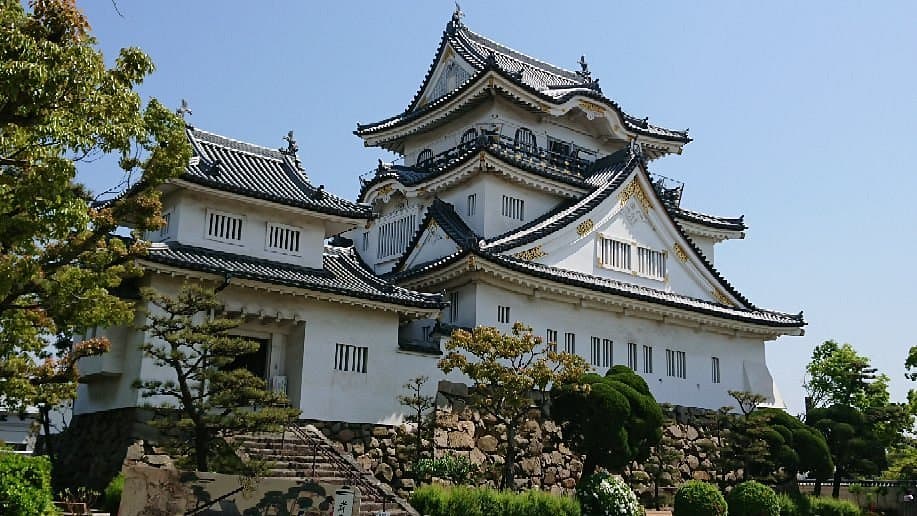
Kishiwada Castle, though a modern reconstruction, stands as a significant historical landmark in Kishiwada, offering a glimpse into Japan's feudal past without the overwhelming crowds often found at more famous castles. Its elegant features, including the moat and surrounding greenery, are well-preserved, making it a point of pride for the city.
Visitors consistently praise the castle for its intimate feel and the stunning rock garden, known as Hachijin-no-Niwa, located within its grounds. Many reviewers highlight the beautiful views from the top floor of the keep, which offers a panoramic perspective of the city and surrounding areas. The castle's smaller scale compared to its Edo-period predecessor (which had five floors) is noted by some, but this contributes to its less crowded and more relaxed atmosphere. The exhibitions inside are described as modest, focusing more on the castle's history and local culture, rather than extensive museum displays.
To make the most of your visit, allocate about 1-2 hours to explore the castle and its gardens. Reviewers suggest visiting in spring for the cherry blossoms, which create a particularly beautiful scene. The castle is generally less crowded than major attractions like Osaka Castle, making it suitable for a peaceful exploration. While English explanations inside are limited, the entry fee is modest, and the visual appeal of the architecture and gardens is considerable. Consider combining your visit with nearby attractions like the Gofuso gardens or exploring the local area, which some visitors note has good restaurants.
Kishiwada Castle is conveniently accessible by public transport. It is located about a 10-15 minute walk from Kishiwada Station on the Nankai Line. For those traveling from Kansai Airport, it's particularly convenient, being only two stations (approximately 10 minutes) away. This makes it an ideal stop for travelers with a few hours to spare before or after a flight. The walk from the station is described as easy, and the castle is also near a large temple.
A common point noted by visitors is that the main keep is a concrete reconstruction from 1954, not an original structure. While this might disappoint those expecting an authentic ancient building, the well-maintained grounds, the rock garden, and the historical context still offer a valuable experience. The limited English signage inside is another minor complaint, but the visual aspects and the overall ambiance are generally considered to outweigh this.