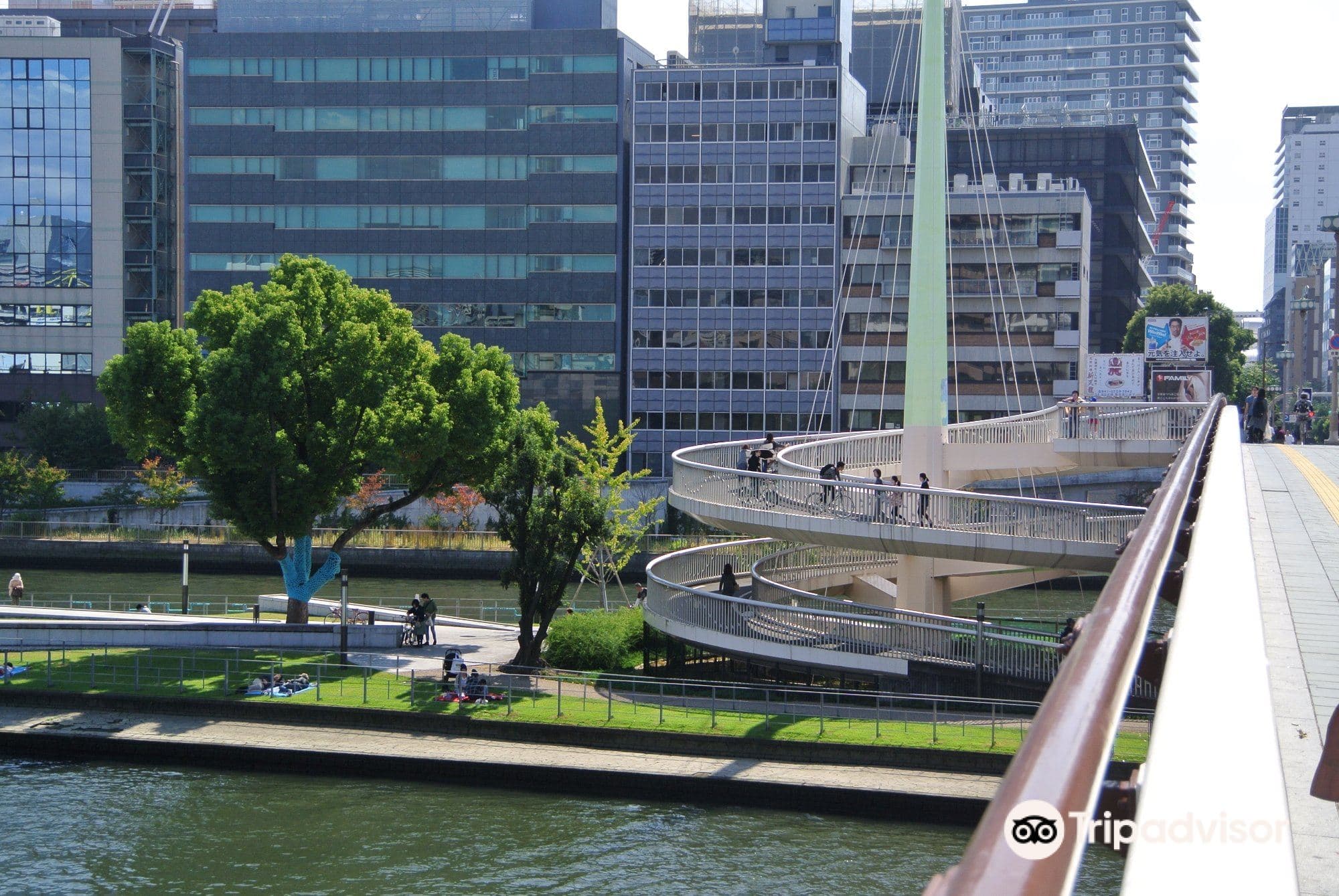
Tenjinbashi is a significant part of Osaka's urban landscape, particularly noted for its architectural design that harmonizes with the Nakanoshima area. As one of the 'Three Great Bridges of Naniwa,' it holds historical importance, connecting the bustling Kita Ward with the central island of Nakanoshima. Its low, airy arches are designed to complement the river scenery, reflecting Osaka's identity as a 'Water City.'
Visitors often appreciate the bridge for the scenic views it offers, especially of the surrounding river and the modern architecture along the banks. While there are no specific reviews detailing visitor experiences, the bridge is generally perceived as a pleasant spot for a leisurely stroll. It's a place where one can observe local life and enjoy the urban waterscape without the crowds typically found at more prominent attractions.
For those interested in architecture or urban planning, a brief stop of 15-30 minutes is sufficient to appreciate its design and the views. It's best visited during daylight hours to fully enjoy the river scenery. There are no specific items to bring, but comfortable walking shoes are always advisable for exploring Osaka. As it's an open public space, there are no entry fees or specific opening hours.
Tenjinbashi is located in Kita Ward, Osaka, making it easily accessible by public transport. The nearest major train stations, such as Osaka Station or Kitashinchi Station, are within a reasonable walking distance or a short subway ride. Several subway lines also have stations in the vicinity, allowing for convenient access from various parts of the city. Walking from Nakanoshima Park is a straightforward option, offering a pleasant riverside path.
Given its nature as a functional bridge, there are no common complaints from visitors. However, those expecting a grand, standalone attraction might find it less impactful than other historical sites. It's best approached as an integral part of Osaka's urban fabric rather than a primary destination.